Note You are currently viewing a previous version of this narrative statement as published in previous iterations of the KEF (KEF1 and KEF2). View the latest version
Institutional Context
Summary
Plymouth Marjon is a small, values-based university with a 180-year heritage of social justice and transformative education. We focus on the holistic development of our students; academically, socially and spiritually. Our civic commitments are at the heart of our knowledge exchange; they are built on our research and knowledge exchange excellence, engagement with our community and align to local and regional priorities. We have pledged commitment to; i) student success, social justice and tackling inequality, ii) lifelong health and wellbeing, iii) creativity, culture and development and iv) sustainability, innovation and clean growth. Our knowledge exchange approach is focused on co-creation, partnership and activities that are aligned to our civic commitments that lead to whole community benefits.
Institutional context
Plymouth Marjon University (trading name) has a 180-year heritage as a teaching-led Institution and is legally registered as the University of St Mark & St John. With the first students arriving in 1840 (St John’s, Battersea) and 1841 (St Mark’s, Chelsea), the Colleges were formed to respond to the demand for teacher training. The fundamental beliefs that inspired our inception: the transformative power of education, access for all and focus on student success, remain just as important at Marjon today. We place our values - humanity, curiosity, independence and ambition – at the centre of what we do. Recognising our history and size as a small Higher Education Institute we are a member of Cathedrals Group and Guild HE.
The 180-year history of delivering teacher training provides our longest standing academic discipline of Education. Today, we work in partnership with schools across the South West, in London and with British Forces overseas. In 1973, we relocated to a purpose-built campus, in Plymouth, which continues to provide excellent space for teaching, research and knowledge exchange and acts as a community venue for sport, culture and wellbeing. Our relocation to a purpose-built campus in Plymouth mean our locality is Plymouth City Council and broader region includes Devon and Cornwall and the Heart of South West Local Enterprise Partnership. The underpinning knowledge base in physical education and the green space for sports and recreation on the Plymouth campus meant Marjon quickly established a strong disciplinary base for sports education. Our disciplinary base has evolved, aligned to regional skills gaps, and we now have additional burgeoning research and knowledge exchange excellence in allied health, performing arts, business and social sciences. We have identified thematic civic commitments that are built on our research and knowledge exchange excellence, focus our public and community engagement and align to local and regional priorities (Figure 1).
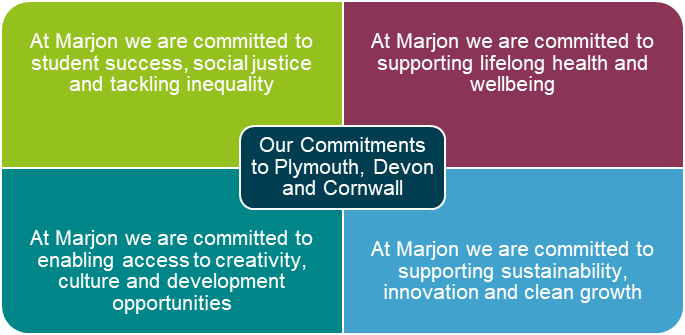
Figure 1: Marjon Civic Commitments
The ambition to grow research and knowledge exchange at Marjon was identified in the strategic plan launched in 2014 and is reinforced in our current strategy ‘Centred on Student Success’. This strategic plan identifies submission to REF2021, working towards Research Degree Awarding Powers and formalising our civic engagement as priorities. Due to the recency of our ambitions we have not yet benefitted from quality related research funding or higher education innovation funding. We have made progress towards our strategic goals with demonstrable research excellence in some disciplines, a growing base of post-graduate research students and fully embedded civic engagement in some areas, although others are emergent. More recently we launched our research and knowledge exchange strategy 2020-2025 ‘Building Knowledge Together’ which reinforces our approach to research and knowledge exchange (Figure 2). Our approach to knowledge exchange is focused on co-creation, partnership and activities that are aligned to our civic commitments that lead to whole community benefits and thus our students play a central role in knowledge exchange.
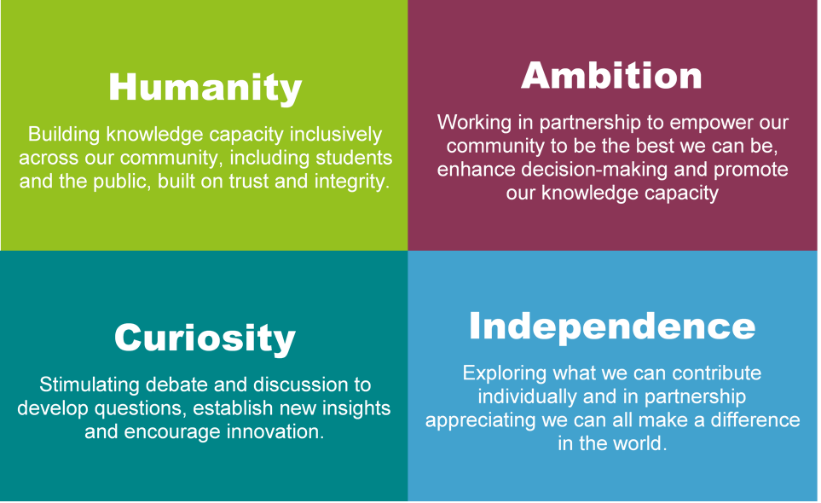
Figure 2: Knowledge Strategy Ambitions Aligned to Marjon Values
For further information, please send queries to research@marjon.ac.uk
Local Growth and Regeneration
Summary of approach
Plymouth Marjon is a small university with a 180-year heritage of social justice and transformative education. Our relocation to a purpose-built campus in Plymouth in 1973 mean our locality is Plymouth City Council and broader region includes Devon and Cornwall and the Heart of South West Local Enterprise Partnership. Our civic commitments align our research excellence with our regional priorities and focus on our commitment to; i) student success, social justice and tackling inequality, ii) lifelong health and wellbeing, iii) creativity, culture and development and iv) sustainability, innovation and clean growth. Our approach to local growth and regeneration centres around co-creation, partnership and activities that are aligned to our civic commitments that lead to whole community benefits.
Aspect 1: Strategy
Our civic commitments align our research excellence with our regional priorities (Figure 1). We view civic engagement as a key strategic priority and an important feature of student success. At Marjon we are in business primarily to create benefits for people and planet as illustrated through our Social Enterprise Mark. The strategic focus outlined in ‘Building Knowledge Together’ is that our research and knowledge exchange groups will be known regionally and Nationally for the positive impact they have on individuals and society and we will be a partner of choice for significant funding bids aligned to our expertise.
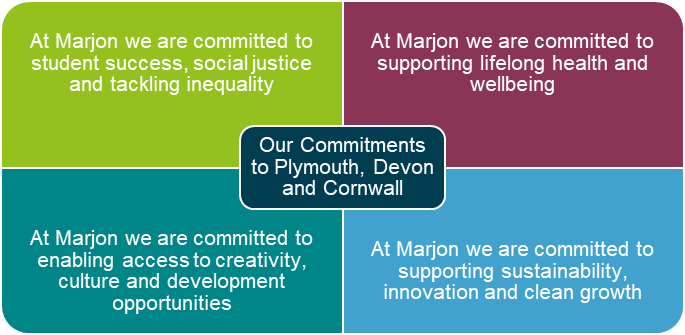
Figure 1: Marjon Civic Commitments
Our relocation to a purpose-built campus in 1973 means the unitary authority of Plymouth City Council are important strategic partners and we are represented across education, culture, sport, health and growth boards. Plymouth ranks as the 50th most deprived upper-tier local authority in England with 29% of lower-layer super output areas in the 20% most deprived. Employment, education and health are prevalent barriers to Plymouth residents. Our commitment to social mobility at Marjon, recently highlighted through supporting the social mobility pledge, is important for the region and is in our strategic plan. Figure 2 illustrates the significant local economic impact of Marjon on the local economy, despite being a small university. Through investment in facilities and engagement with our locality we are the sporting hub for the city and are working towards becoming a cultural quarter.

Figure 2: Estimated Economic Impact of Marjon
Marjon also play a key role in the regions of Devon and Cornwall. The Plymouth and South West joint local plan key priorities are focused on a prosperous and sustainable south west with clean and inclusive growth. Our research excellence and civic commitments align to these ambitions and we engage with Heart of the South West Local Enterprise Partnership and Cornwall Chamber of Commerce, are members of South West Business Council and Plymouth Social Enterprise Network and are patrons of Devon and Plymouth Chamber of Commerce. Our ambitious campus development plan aims to improve our neighbourhood connections while also supporting sustainability goals with an aim for net zero emissions.
Across the Heart of the South West LEP gross value added (82.9%) and employment rate (78.7%) are below the UK average. Plymouth, Devon and Cornwall also have lower levels of pupils achieving the higher standard in reading, writing and maths compared to England at key stage 2 (9% vs 11%) and lower proportion of pupils achieving grade 5 or above in English and maths GCSEs (38% to 42% vs 43%). We have strategically invested in Marjon University Cornwall in Truro to enhance support for educators in Cornwall in addition to our widening participation activity and teacher education provision. Our approach to reducing inequality includes opening our facilities, services and activities to our region e.g. between 2016-2019 55% of engagement events were free to attend and there were 24 930 attendees at public performances.
The south west region is home to almost 1.8 million people and has a wide geography of rural, coastal and urban areas. The natural assets of the coastal areas support a thriving tourism industry; other key industry groups are health (19.9%), retail (11.6%) and education (11.1%) with occupational shortages in health and allied health, business and digital. These key employment areas and occupational shortages inform our curriculum delivery at Marjon. Devon has a proud military heritage with a high concentration of bases and in support of this Marjon was recognised under the defence employer recognition scheme with a silver award, has pledged to honour the Armed Forces Covenant and are members of UNSWIS. The region has a higher proportion of micro (89.1% vs 89.3%) and small to medium enterprises (SME 0.7% vs 10.3%) compared to the UK average. In 2018 we launched The Edge Enterprise and Employability Hub specifically focused on supporting micro enterprises and SMEs to strengthen our approach to local growth and regeneration.
Aspect 2: Activity
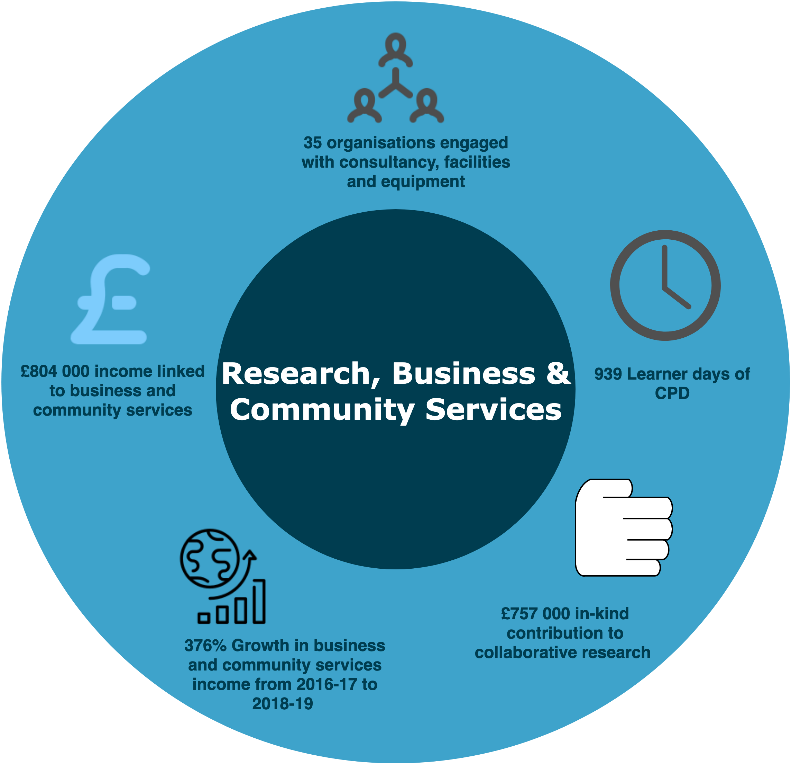
Figure 3: Business and Community Services and Research Related Activities 2016-2019 from HEBCI returns
At Marjon we are committed to student success, social justice and tackling inequality. We have contributed to seven school improvement projects with income of £125 000 during the reporting period which aim to improve educational outcomes, reduce education inequalities and promote teacher recruitment and retention. One regional multi academy trusts, with 19 schools, restructured to a hub model based on our research and knowledge exchange to pool physical resources, share expertise, enable monitoring and implement timely decisions supporting their ability to provide the best education. Our regional work and expertise in educational isolation, teacher recruitment and retention has led to impact on National strategy and policy (e.g. The Future of Initial Teacher Education). We hold an annual teacher’s career fayre which attracts over 250 trainees and 25 schools or agencies and during 2016-2019 trained 661 mentors to support retention of the teaching workforce. Our expertise and partnership in informal education has resulted in an evaluation methodology being applied to improve youth services regionally, and Internationally (e.g. The Impact of Youth Work in Europe: A Study of Five European Countries).
At Marjon we are committed to supporting lifelong health and wellbeing. Marjon hosts health and wellbeing clinics built on partnerships with regional organisations to co-create programmes that meet the health needs of our community and provide accessible and localised delivery (Figure 4). The workplace wellbeing knowledge exchange has directly shaped the provision of employees in the region including Plymouth Police Force, City Bus, the Environment Agency, Plymouth City Council and the Exeter Diocese and has led to successful outcomes for the workforce, including reduced sickness absence and increased morale. Our investment in facilities for sport, health and wellbeing support these clinics.

Figure 4: Marjon Health and Wellbeing Clinics Activities and Impact
At Marjon we are committed to enabling access to creativity, culture and development opportunities. Our investment in the Edge Enterprise and Employability Hub in 2018 and expertise in entrepreneurial education is building momentum, for instance 83% of student businesses operating out of The Edge are social enterprises and working in their local communities. An example is a recent graduate who set up a social enterprise and used Marjon theatre for performances with 250 children from local families across the city in 2019. More recently our involvement in a Devon County Council led trial engaging rural micro enterprises for increased productivity will feed forward and in response to covid-19 we adapted evaluation tools to support local solutions to thriving beyond covid-19. We strategically invested launching our Workshop facility at the BBC studio, Plymouth which has been used to support our ambitions and supports regional skill gaps in digital industries. As part of Plymouth Mayflower 400 commemoration programme Marjon cinema and theatre were a base for activities with 160 young musicians and an audience of 250.
At Marjon we are committed to supporting sustainability, innovation and clean growth. Our growing expertise and regional links supported our involvement in the 4.3 million euro grant funded Flavour project (September 2018 to 2022). Marjon is a project partner (lifetime project grant funding of 572 841 euros) with lead responsibility for delivery of two work packages; i) training and coaching trajectory to promote food surplus handling and production and ii) a new activity sector, potential and policy recommendations. This project focuses on sustainability through the valorisation of food surplus while also supporting our commitment to social mobility by supporting those far from the labour market and people living in food insecurity. Our commitment to sustainability in our region is demonstrated by our support of the Park and Ride scheme, our agenda in relation to the climate emergency and for example our recent collaboration with Plymouth City Council to fund electric vehicle charging points on campus through the Transforming Cities Fund.
Aspect 3: Results
The impact of activity should be considered in terms of whole community benefits, including to our students, aligned to our civic commitments and support knowledge creation (Figure 5).

Figure 5: Approach to Knowledge Exchange
At Marjon we are committed to student success, social justice and tackling inequality. Our data highlights success in recruiting regional students and promoting social mobility. For instance, 41% of applicants were from Plymouth, Devon and Cornwall and we rank consistently in the top 10 universities for social mobility in England in league tables (e.g. Times and Sunday Times Good University Guide). Longitudinal education outcomes data demonstrates that 5 years after graduation 75% of Marjon graduates remained in the south west. Our focus on teacher recruitment and retention results in education graduate earnings being third highest in the UK with both men (+£3,895) and women (+£1,608) earning more than other graduates five years after leaving Marjon (IFS, 2018). Additionally Marjon graduates are more socially mobile with more trainees gaining NQT employment in more diverse areas including the National Opportunity areas. Our expertise in educational isolation “resulted in deepening the understanding of Ofsted’s South West HMI and enhanced their inspection works in such schools”.
At Marjon we are committed to supporting lifelong health and wellbeing. The impact of our health and wellbeing clinics are illustrated in Figure 4 including direct benefits to services users; they are an example of how our overall approach of co-creation and partnership support incremental growth through refining services to meet local and regional needs. Example comments from stakeholders that corroborate this include:
Mustard Tree Macmillan Cancer Centre: The applied knowledge and research experience of Marjon’s Health and Wellbeing team has enabled the creation of a service which is unique within Devon and Cornwall NHS provision, for patients diagnosed with cancer.
Sentinel Healthcare: We value our collaborative partnership with Marjon. Their expertise and innovative practice informs and assists our continual requirement to improve our services for patients. As such we are making the best use of assets available to us through collaboration, enabling us to support patients in a community setting.
Livewell Southwest: Marjon’s Health and Wellbeing approach has supported this organisation in continuing to be at the forefront of integrating health and social care for local people. The research has supported Livewell Southwest to achieve of our aim, to care for people in new ways that are more efficient, and to enable our mission of supporting people to stay well in the place and the community in which they live, where they can enjoy the best quality of life.
At Marjon we are committed to enabling access to creativity, culture and development opportunities. As an emergent area the direct impact of activity is not fully evident in the reporting period. An example partnership that reinforces the reciprocity of benefits to our whole community is the one with Citizens Advice Plymouth where Journalism students volunteer and raise awareness of clients problems. Our contribution to arts and culture includes growth in public performances, opening access to culture to those traditionally excluded, and support through the Actors Wheel to connect to public and agents (e.g. Actors Wheel social media has 1161 followers).
At Marjon we are committed to supporting sustainability, innovation and clean growth. Directly linking to the activity of the Flavour project, in the first year of delivery (2018-19) 622 tonnes of food surplus was delivered to 128 organisations working with people in food insecurity. Mid-year reporting for 2019-20, despite the impact of covid-19, shows an additional 405 tonnes to 186 organisations. Project wide local pilots engaged with 471 individuals/organisations including direct support for over 400 families during the covid-19 crisis. The impact on those far from the labour is also emerging with evidence of five jobs created and six volunteering roles directly because of the Flavour project.
For further information, please send queries to research@marjon.ac.uk
Public & Community Engagement
Summary of approach
Plymouth Marjon is a small university with a 180-year heritage of social justice and transformative education. We focus on the holistic development of our students; academically, socially and spiritually. We place our values - humanity, curiosity, independence and ambition – at the centre of what we do. Our approach to public and community engagement spans from strategic level partnerships, through to individual contacts where our people and research make a difference. Public and community engagement is integral to how we do things at Marjon and at the heart of this are four themes; i) student success, social justice and tackling inequality, ii) lifelong health and wellbeing, iii) creativity, culture and development and iv) sustainability, innovation and clean growth.
117/120
Aspect 1: Strategy
During the reporting period of 2016 to 2019 the Marjon strategic plan ‘Centred on Student Success’ reinforced a central role for public and community engagement highlighting our ambitions for Marjon graduates and as a civic university with associated KPIs. Our ambition that “we want our students to graduate as active and responsible citizens, with a commitment to social justice and an awareness of global responsibility for people and the environment” exemplifies why students are a critical part of our approach to public and community engagement. More recently we launched our research and knowledge exchange strategy 2020-2025 ‘Building Knowledge Together’ which places public and community engagement at its core (figure 1).
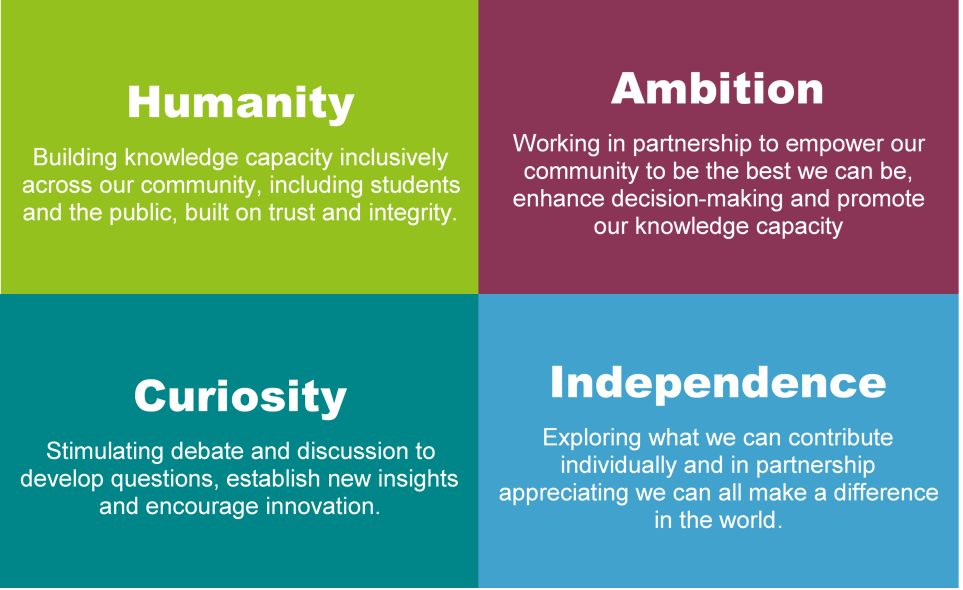
Figure 1: Knowledge Strategy Ambitions Aligned to Marjon Values
Our approach to public and community engagement is multi-layered ranging from strategic partnerships through to individual contacts and student engagement. Our civic commitments exemplify the ambitions of our public and community engagement across four thematic areas of research excellence (figure 2). While these commitments focus on our immediate region they also apply national and globally through communities of interest related to our research excellence.

Figure 2: Marjon Civic Commitments
Our values drive the approach to co-construction involving active partnership and mutual respect leading to applied research and knowledge exchange. This approach means we are embedded as a civic university within our region, for instance are known as the sporting hub for the north of Plymouth and are working actively to develop as a cultural quarter. Marjon has held the Social Enterprise Mark throughout the reporting period. This is an international accreditation demonstrating we operate primarily to create benefits for people and planet. More recently, in response to covid-19, we reacted to local need and housed NHS staff on campus in our residential accommodation and were identified as a potential Nightingale unit.
Aspect 2: Support
Practical support for public and community engagement range from initiatives implemented across the whole university, despite the absence of HEIF funding, through to those at a more localised level. At a university level some of the practical support includes:
Responsibility for research and knowledge exchange is held by the deputy vice-chancellor supported by a research and knowledge exchange office. The university wide researcher development series of events is aligned to the vitae researcher development framework and supports development in the domain ‘engagement, influence and impact’.
In 2018 an updated Academic Promotion and Career Development Procedure was launched which recognises knowledge exchange indicators such as “ability to influence, stimulate and inspire others and evidence of knowledge exchange which has social and/or economic impact and benefit”. To support this a revised 2020 Academic Contribution Framework allocates academic time aligned to their academic career pathway.
The annual Marjon staff and student awards relate to our values for instance volunteer of the year and award for humanity. Volunteering is centrally encouraged, supported by Marjon Futures and recognised e.g. volunteer 50 award. Our award winning Futures Online platform supports ‘soft’ skill development aligned to effective public and community engagement and volunteering. This approach encourages our community to engage in a range of activities for instance all academics in the School of Teacher Education are either governors, trust members or part of national advisory groups.
Activities driven at school/subject level are supported by overarching institutional level frameworks and include, for example:
Subject areas have professional advisory groups that include professionals, patients/service users, ‘lay’ members, and/or public representative bodies. This engagement has supported developments such as our appointment as an FA Women’s High Performance Football Centre.
Our HEBCI returns demonstrate growth in CPD income during the reporting period (16-17 £91k to 18-19 £314k, +345%). For example, during 18-19, 304 learner days of engagement across the four thematic areas included workshops aligned to our knowledge exchange in education including regionally the Plymouth Oracy Project and Internationally the Maths for Million project.
Our award winning marketing team support social media training and public facing digital presence. Marjon Health and Wellbeing Clinics have a dedicated website encouraging public and community engagement and form the applied knowledge exchange for our recently awarded student-led knowledge exchange funded project.
Aspect 3: Activity
Our activity is related to our strategic intent and supported by our approach and is best illustrated through our thematic civic commitments:
At Marjon we are committed to student success, social justice and tackling inequality. Marjon delivers widening participation interventions, evidence-based in design, to under-represented young people and adults. Figure 3 illustrates the reach of these knowledge exchange activities in 2018-19. The impact of these activities includes raising aspirations and attainment and is best summarised by the young people e.g. “It was amazing and really helped” and “Built more confidence”. Our open access research related to Education Isolation was based on regional issues and has led to public lectures, intervention implementation within schools and had national impact on policy. Research related to transformative evaluation has enabled organisations to better identify the outcomes of their work by supporting the voice of youths and service users while also improving practice and in 2018 an EU funded project culminated in a Transformative Youth Conference with 172 practitioner delegates from across Europe.

Figure 3: Summary of 2018-19 Marjon Outreach Activities
At Marjon we are committed to supporting lifelong health and wellbeing. Our excellent sporting facilities position us as a community sporting hub, for instance, our learn to swim programme reached over 570 learners, our pool attracts over 25 000 visits annually and our gym memberships consist of approximately 50% public users. Our sports science research and BASES accredited laboratories underpin relationships with sporting organisations and we are a partner in Thrive Plymouth. Our staff and students link in with Plymouth’s Ocean City Half Marathon and 10km offering public workshops which receive positive feedback e.g. “I was so impressed by the workshops and was actually shocked that such a worthwhile, excellent programme like this was provided to the community free of charge” alongside our ‘positive psyching team’ who were identified in a survey as helping 332 (90%) respondents with comments like “They were brilliant motivation, really positive and supportive. They said all the right things to keep you going”. Marjon hosts over 15 health and wellbeing clinics which brings students, patients and professionals together to challenge and advance 21st century healthcare. Through focusing on the person this model supports patient activation and empowerment underpinned by our research. The range of clinics and partnerships are summarised in Figure 4 and were featured in a report as a case study of the benefits to society of sport and exercise science.
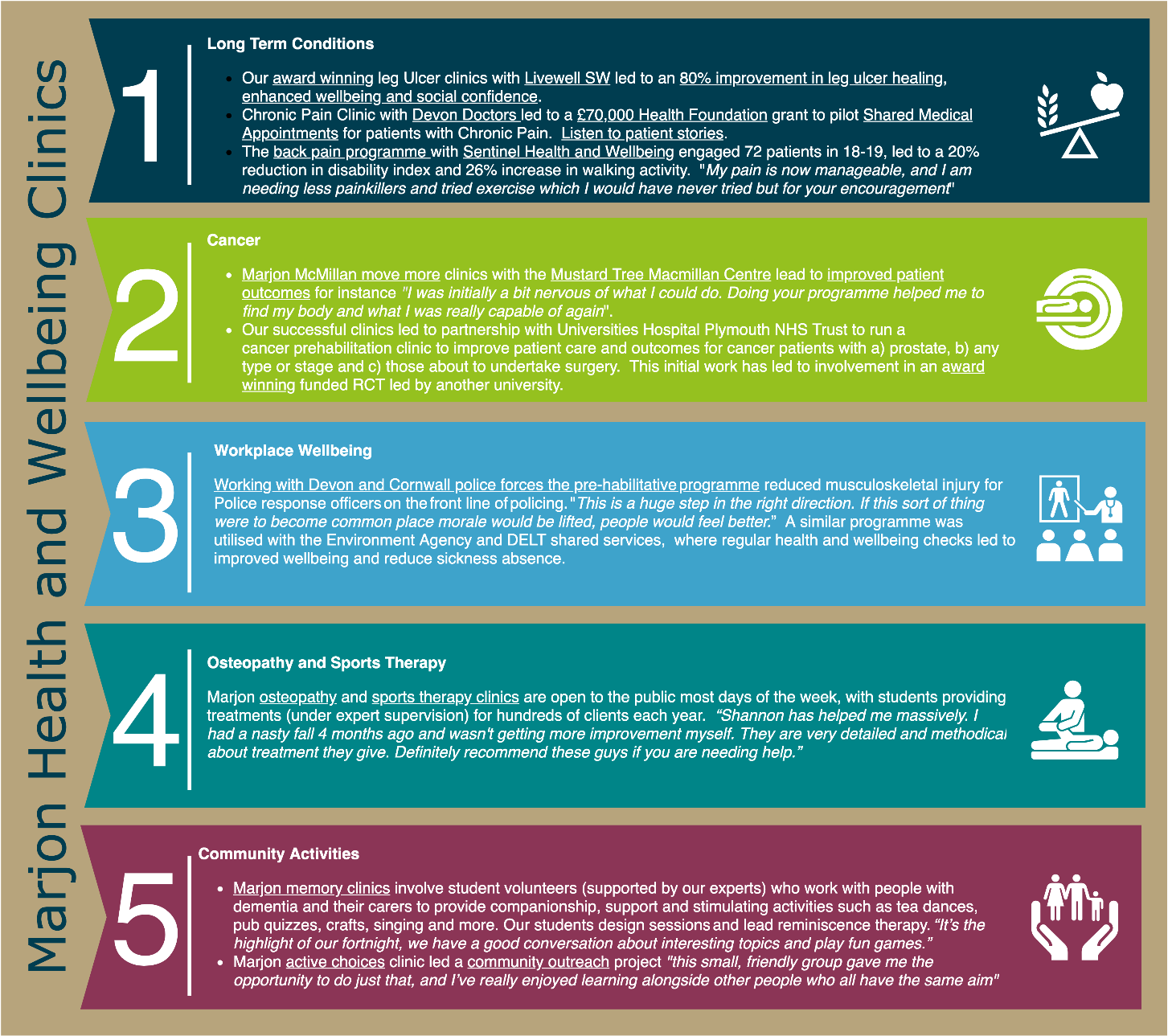
Figure 4: Marjon Health and Wellbeing Clinics Activities and Impact
At Marjon we are committed to enabling access to creativity, culture and development opportunities. Social, community and cultural engagement features as a core part of our teaching, learning and research at Marjon and we are actively working towards promoting a cultural quarter for Plymouth. Our HEBCI returns over the three-year reporting period highlight the community engagement with the university (Figure 5). Our focus on creativity and culture aims to support the social capital of our community, for instance Plymouth Symphony orchestra regularly practice on campus and we welcomed Bournemouth Symphony Orchestra in 2019 who ran a performance and workshop for regional schools linked to GCSE Music which attracted an audience of over 280 people. Planned theatrical productions were quickly transformed and delivered online during lockdown, increasing audience reach. (e.g. Love and Information which was watched by over 600 viewers). We strategically cemented our ability to engage and support public and community engagement by launching our Workshop facility at the BBC studio, Plymouth, which has been utilised to support our ambitions e.g. political engagement. This facility has enhanced public and community engagement through the link with Hospital Radio, a show produced by our knowledge in journalism and a ground breaking ‘Memories from my Bedside’ project with Derriford Hospital.
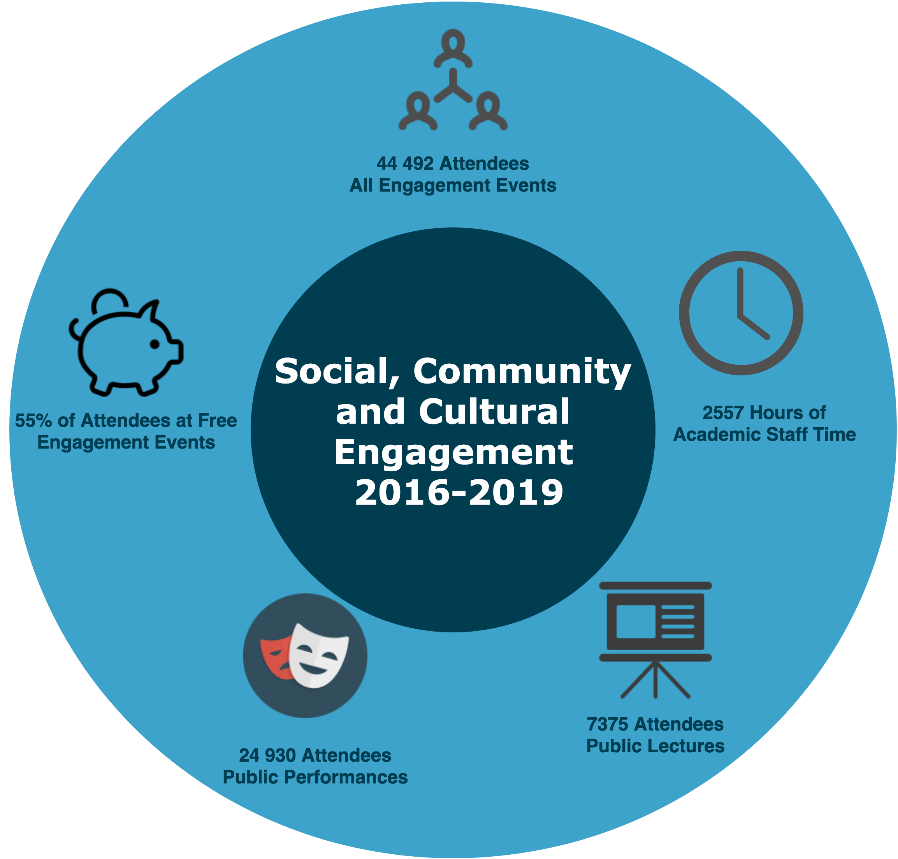
Figure 5: Social, community and cultural engagement 2016-2019 from HEBCI returns
At Marjon we are committed to supporting sustainability, innovation and clean growth. With an extensive green campus and deer herd Marjon is ideally placed to support our regions aspiration for clean growth. Our research excellence in outdoor learning and forest schools underpins a range of our CPD workshops for teachers. Our enterprise education research has contributed to delivery of enterprise workshops ‘build creativity and networking knowledge and skills’ delivered across school settings. In 2018 our enterprise education and focus on sustainability were brought together through our role as project partners for an ERDF funded project aiming to tackle food waste whilst creating job opportunities for people far from the labour market.
Aspect 4: Results and learning
At a university level our overall approach includes consideration of our key performance indicators, for instance volunteering hours are recorded by the Futures platform, our most recent data highlights 20 400 hours recorded. Annually staff performance development reviews allow staff to highlight their public and community engagement activity aligned to the behavioural framework. Perhaps the best indicator is the growth we see annually in public and community engagement with many members of the public viewing themselves as part of our Marjon family and returning on a regular basis. Examples of outcomes and impact aligned to thematic areas include;
At Marjon we are committed to student success, social justice and tackling inequality. Figure 6 outlines some of the impact of education projects aimed typically at reducing inequalities. As an example the Plymouth Oracy project has led to development of the oracy hub and the all-party parliamentary group for oracy are due to visit as a consequence of the positive impact.
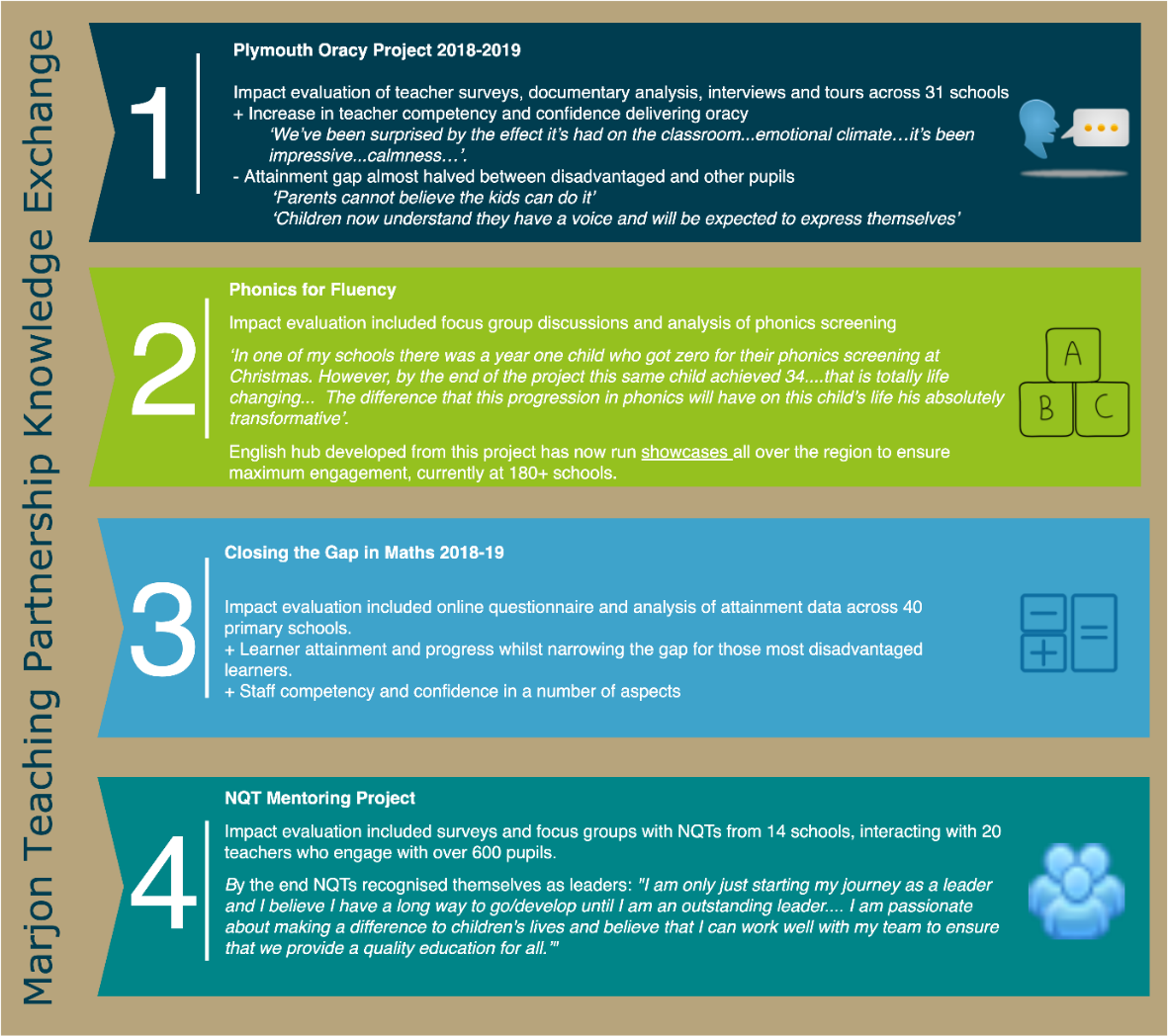
Figure 6: Teaching Partnership Outcomes
At Marjon we are committed to supporting lifelong health and wellbeing. Impact evaluations involving outcome measures, service user surveys and interviews has demonstrated Marjon Health and Wellbeing Clinics improved health outcomes, functional capacity, perceived disability and quality of life. The reach of the approach is displayed in figure 4 and there are improved participant outcomes irrespective of disease, severity, age or gender.
At Marjon we are committed to enabling access to creativity, culture and development opportunities. While the impact of our cultural activities is less evident, the high engagement illustrated in figure 5 is encouraging. Alongside public performances a range of community journalism is evident, e.g. students as journalists for Plymouth Argyle Football Club and Plymouth Raiders basketball and annually produce the Sound Magazine.
At Marjon we are committed to supporting sustainability, innovation and clean growth. Our knowledge exchange activity related to forest schools and active learning has resulted in several schools developing facilities or adapting practice. Annually in the region of 50 to 100 children come to Marjon during national science week to support the regional STEM agenda and raise aspirations, with active challenges ranging from wind powered cars to a rocket challenge. Our research and knowledge exchange related to surfing and sustainability has resulted in contribution to the Ocean Conservation All-Party Parliamentary group. Looking to the future our exciting campus development plan, which aims for net zero carbon emissions, aims to increase community interaction with our campus.
Aspect 5: Acting on results
There is good evidence of acting on results and communicating results across a number of our more established thematic areas, for example the Marjon Health and Wellbeing Clinics (figure 4) and Teaching Partnership Projects (figure 6). These established areas engage in a cycle of continuous collaboration and co-creation with public and community users and as demonstrated many of the impact reports are publicly disseminated. Alongside this our open access repository enables the sharing of our research and knowledge exchange with the public and with over 40000 downloads it is being readily utilised. Social and media interactions of over 100 Marjon affiliated accounts including community orientated groups have 61,812 followers highlighting the engagement of a wide community base.
A full evaluation of our cycle of public and community engagement is identified in our Research and Knowledge Exchange strategy including the KPI to utilise the National Coordinating Centre for Public Engagement (NCCPE) edge tool to self-assess our current public engagement and deliver annual improvements working towards the NCCPE engage watermark.
For further information, please send queries to research@marjon.ac.uk