Note You are currently viewing a previous version of this narrative statement as published in previous iterations of the KEF (KEF1 and KEF2). View the latest version
Institutional Context
Summary
The London School of Hygiene and Tropical Medicine’s mission is to improve health and health equity in the UK and worldwide. Founded in 1899, with sites at Keppel Street and Tavistock Place in London, the School became a global institution in 2018 with the joining of the MRC Units in The Gambia and in Uganda. Our knowledge exchange activities enable us to address global health challenges aligned with our research priorities in infectious diseases, chronic conditions, health systems and economics, environment, and climate change and health. We work in partnership with communities across all sectors to achieve excellence in public and global health research, education and translation of knowledge into policy and practice.
Institutional context
For over 120 years, the London School of Hygiene and Tropical Medicine (LSHTM) has been fulfilling its core mission to improve health and health equity in the UK and worldwide. Our School was transformed in 2018 with the joining of the MRC Units in The Gambia and in Uganda, developing into a truly global institution. Our 3,000 staff work in over 100 countries, with research spanning the molecular to the population level. Knowledge exchange (KE) is fundamental in delivering our mission by translating our research and educational outputs into ‘real world’ impacts. We facilitate this through training, contract research, consultancy, policy engagement, and clinical service.
Our flexible education and leadership programmes nurture scientific talent across career stages, developing a highly skilled workforce that contributes to the global advancement of medical and health sciences. We have over 1,200 face-to-face Master's and Doctoral students, 3,000 studying by distance learning, and over 900 each year on short courses and continuous professional development programmes. Our talented students and staff share their expertise through research and consultancy, and move across sectors to take on roles in government, industry, international agencies and health services.
Our KE activities enable us to address global health challenges aligned with our research priorities in infectious diseases, chronic conditions, health systems and economics, environment, climate change and population health. As a specialist institution, our local and global partnerships are key to effective KE. In 2019, 78% of our peer reviewed outputs were produced with an international collaborator (CWTS Leiden Ranking). During the past three years we have worked with partners in industry, academia and the charitable sector to deploy our expertise to address antimicrobial resistance, and the detection, diagnosis and treatment of malaria, HIV and tuberculosis. We have responded to epidemics including Ebola, by building trust with affected communities and partnering with industry and academia to deliver innovative vaccine trials in East and West Africa. Harnessing the increasing volume and power of health and genomics data with cross sector partners, including the UK NHS, we are accelerating our understanding of factors contributing to disease and the impact of environment on health.
Underpinning these activities is stakeholder engagement across all stages of the research cycle to foster trust, ensure relevance, and empower communities. Capacity strengthening is a strong element in many of our collaborations, with opportunities for all partners to learn from each other and together create sustainable change. We are committed to making our outputs openly available and were ranked 1st in Europe for publishing open access research (2019 CWTS Leiden Ranking). Our ongoing engagement with global decision makers ensures translation of knowledge into policy and practice. Aligned with our mission, our KE activities also include supporting entrepreneurship, protection of intellectual property and the development of spinouts to achieve impact.
As we face new public health challenges, our ability to develop innovative thinkers and partnerships to improve global health remains as relevant today as when we were founded in the 19th Century.
For further information, please send queries to innovation@lshtm.ac.uk
Local Growth and Regeneration
Summary of approach
LSHTM is unique in being located in the UK, The Gambia and Uganda. We support regional growth by three streams: developing people to meet local and regional skills gaps, enhancing our infrastructure to meet national technical need, and growing opportunities for R&D through expanding partnerships. Aligned with our regional and institutional priorities during the last three years, we have focused on building quantitative skills, infrastructure and partnerships to meet the growing need to utilise digital health data effectively. We have also developed infrastructure to tackle infectious diseases, including using advanced genomics techniques, and developed partnerships to support an effective vaccine pipeline.
Aspect 1: Strategy
LSHTM has a long track record of supporting regional growth as a local employer, by providing specialist workforce skills, specialist infrastructure and through growing opportunities for R&D collaboration. The transfer of the MRC Units in The Gambia (MRCG) and Uganda (MRCU) means that since February 2018, LSHTM’s local environment has become truly global. We have become unique in having physical sites in the UK, East and West Africa and are guided in our activities by the needs of local communities in London, Fajara, Basse and Keneba in The Gambia, and Entebbe, Kalungu, Masaka, Wakiso and Kampala Districts in Uganda, with the ultimate aim to deliver our mission to improve public and global health.
Priorities are defined through engagement with key stakeholder groups. In London, this includes employers, the Mayor’s office and local authorities, other HEIs, clinical networks (including UCL Partners), and professional organisations (London Higher, BioIndustry Association, National Centre for Universities and Business). The MRCG and MRCU are significant employers within their local regions, acting as regional research and innovation hubs, and have established relationships with their respective Ministries of Health. Across our local regions and aligned with the education, innovation, and partnership pillars of our institutional strategy, we address local growth and regeneration through three streams of activities;
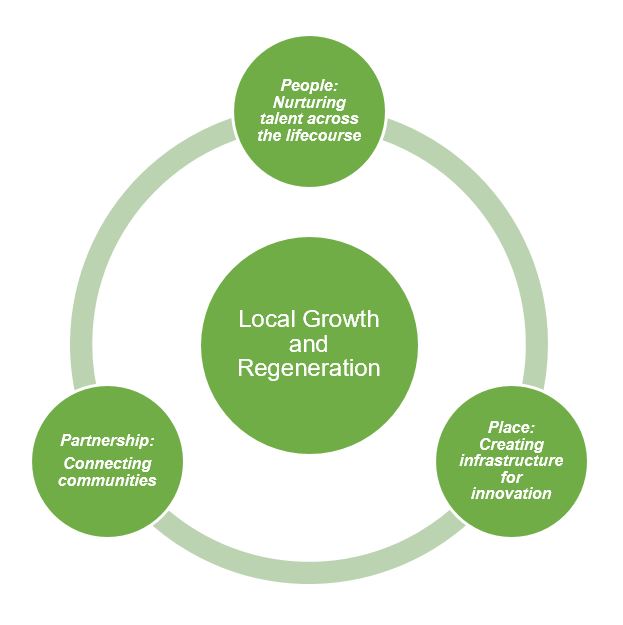
People: Nurturing talent across the lifecourse to address local and regional skills gaps
We support personalised, advanced training and development at all career stages to produce an agile, skilled workforce able to move between sectors. Development of quantitative skills is a particular priority to meet skills gaps in this area.
Place: Creating infrastructure for innovation
High quality infrastructure is required to translate research into tangible benefits and impact in our local communities. This includes the support systems to build the local enterprise ecosystem through spinouts, deliver innovative clinical trials in the UK and internationally, and capitalise on emerging techniques in genomics and data science.
Partnership: Connecting communities to build local, national and international capacity and capability
As a specialised STEM institution we work with partners to grow local and regional capabilities aligned with our institutional strategy. Priorities in the past three years have been to meet the growing need to utilise digital health data effectively, and to find new ways to tackle antimicrobial resistance and emerging infectious diseases, including through an effective vaccine pipeline.
Aspect 2: Activity
Nurturing talent across the lifecourse to address local and regional skills gaps: Our research-led educational programmes train future health leaders, managers and researchers, addressing skills gaps across the globe. We begin this by nurturing an interest in STEM in our local regions, particularly in more disadvantaged communities as described in our P&CE narrative.
At the postgraduate level, we fill local and national quantitative skills gaps through our provision of quantitative skills training including longstanding Masters courses in Medical Statistics, and Epidemiology, accessible by distance learning provision to further widen participation. Supporting the talent pipeline for building a digital workforce continues at the doctoral level, filling skills gaps through joint initiatives with industry partners (e.g. GlaxoSmithKline supported PhD Studentships in Pharmacoepidemiology), and 3 month placements in our UKRI supported programmes to maximise employment opportunities at the end of training. During 2017 to 2019, LSHTM delivered the MRC Skills Development Fellowships scheme (GPB1,160,000) to build advanced quantitative skills at the postdoctoral level.
Our short courses and professional development programmes in tropical medicine, nursing and global health leadership support over 900 participants each year to address the crucial need for technically strong, dynamic and resilient leadership in global health. The MRCG acts as a regional training hub for West Africa, including through internships, postgraduate opportunities, clinical attachments and bedside teaching, inter-laboratory proficiency schemes, and the MRCG-West African Health Organisation internship program. During 2018 to 2019, MRCG trained over 600 people (students and researchers). At MRCU, skills are developed through short courses conducted within the Unit, professional attachments and electives, increasing the capacity of unit staff and those of partner institutions in Uganda. This includes the UVRI internship programme which provides 3 months training to an average of 100 people (undergraduate and postgraduate students) annually.
Place: Creating infrastructure for innovation: During the past three years we have invested heavily in enhancing local infrastructure and spatial capital at our London sites. In Keppel Street, a GPB35,000,000 investment in infrastructure and laboratory development is ongoing, but has already provided state of the art laboratories with specialist containment level 3 space for working with pathogens such as malaria and Schedule 5 pathogens including shigella, filling a national resource gap. Our Keppel Street site hosts the Malaria Reference Laboratory providing diagnostic testing and surveillance data on all imported malaria reported in the UK, as well as prophylaxis advice to health professionals, linking our research and practice activities. This enhances the impact of our existing Wolfson Cell Biology Facility which provides access to, and specialised training for, a range of equipment for the scientific community. Our high quality facilities and global networks have been vital to support the development of enterprises emerging from our research activities: Vecotech (novel technologies to monitor and control insect pests) and Peek (eye health screening for low resource settings). Both local enterprises have global reach and impact. Peek is enabling eye health systems change in Kenya, Botswana, Pakistan and Zimbabwe and was previously voted best social impact start-up in Europe by Google and McKinsey. We minimise the environmental impact of our laboratories through the Sustainable Labs initiative, which has delivered energy and carbon savings of 650t and reduced equipment, energy and waste costs by GBP300,000. Capacity is being further increased at our second London site in Tavistock Place where a new Bloomsbury Research Institute is under construction, regenerating the site of a derelict dairy. This is supported by a GBP7,500,000 grant from the HEFCE catalyst fund, and philanthropic donations, and will act as a local hub for cross cutting R&D on antimicrobial resistance (AMR), HIV, tuberculosis and malaria through approaches spanning epidemiology, mathematical modelling and health economics.
The MRCG’s Himsworth Laboratory is the home of the World Health Organization Regional Reference Laboratory, providing diagnostic services to the entire WHO African Region. The Gambian Unit is now also playing a key role in growing genomics capabilities in the global south through the development of a state-of-the-art, international standard molecular biology laboratory in Fajara. This will play a critical role in facilitating West African capacity-building in genomics technology. A new Entomology laboratory also at Fajara is growing capabilities to conduct clinical trials of novel interventions against vector-borne diseases including those that compromise the local economy, such as malaria. The Unit is playing a role in greening the economy through its increasing use of solar power, aiming to cut 1,250t of annual carbon emissions. In Uganda, the MRC/UVRI Medical Informatics Centre is building capacity to enable the integration and analyses of large scale population health resources, including those encompassing genomics, and clinical data sets.
Partnerships: Collaborating with local and regional partners to overcome the public health challenges facing our local communities
Aligned with our strategic priorities during the past three years, we have built new cross sector partnerships to enhance local capacity and capabilities in data science, infectious disease control and preparedness. We successfully collaborated on a bid for a Health Data Research (HDR) UK London Partnership, to be able to capitalise on the increasing volume and complexity of digital data. Connecting the capabilities of Bloomsbury Colleges within the Bloomsbury SET Consortium (GBP4,900,000 award led by the Royal Veterinary College from Research England from 2018 to 2021) has enhanced our knowledge exchange capabilities related to infectious diseases and AMR through seed and project funding, cross sector symposia and industry mentorship. We have also grown vaccine capabilities through partnership with the University of Oxford and Imperial College London in the UK’s first-ever dedicated Vaccines Manufacturing Innovation Centre (VMIC), launched in 2018. This GBP66,000,000 investment by the UK Government, with support from industrial partners, Merck Sharpe and Dohme, Johnson & Johnson, and GE Healthcare will enable the rapid manufacture of novel vaccines.
Strengthening regional development in West Africa is being achieved through the MRCG’s partnership with two institutions in neighbouring Senegal; The Institut de Recherche en Santé, de Surveillance Epidémiologique et de Formations (IRESSEF) and Université Cheikh Anta Diop (UCAD). This West Africa Global Health Alliance creates a regional hub for training and research, infrastructure development and community engagement.
Aspect 3: Results
Creating a talent pipeline to meet local and regional needs: Our graduate destinations data show the global reach of our training programmes with 30,171 alumni in 194 countries/territories, 81% of whom are employed, with 9% carrying out further study. Contributions to the UK workforce are shown by our top employers which include Public Health England and the NHS, and evidenced by the recruitment of recent Skills Development fellows to senior positions within Government Departments, and the pharmaceutical industry. Our training provision is responsive to the evolving needs of our communities. Acting on the increasing need for advanced skills in health analytics, we further built this talent pipeline through a prestigious HDR UK Innovation Fellowship scheme (GBP870,000 from 2018 to 2021), where fellows are working with Public Health England and the Clinical Practice Research Datalink, as well as the development of a new Master’s level programme in Health Data Science (launched in 2020). This programme brings in expertise from industry and government agencies to develop cross-sector transferable skills. Our training programmes also contribute to closing the gender gap in STEM, particularly in Africa. Only 30% of science professionals in sub-Saharan Africa are women, while almost 37% of those trained through MRCG during 2018 to 2019 were female. LSHTM was ranked 1st in the UK for the proportion of academic research with women listed as authors (2019 CWTS Leiden Ranking).
Enabling innovation through investments in place and partnership: Our enhanced laboratory infrastructure and facilities are augmenting our spinout activity. ARCTEC is a leading testing centre for vector control products and consultancy with academic and industry stakeholders. ARCTEC recently co-led a study which demonstrated the effective use of dogs as a non-invasive malaria detection method, building a partnership with local charity Medical Detection Dogs. Another emerging spinout, ArcVax, pioneers an innovative bacterial glycoengineering platform to produce low cost new vaccine combinations for human and animal use. Through the Bloomsbury SET consortium, we have further progressed work on vaccine development, malaria drug discovery, and diagnosis, towards impact through over GBP600,000 of additional funding. This has also provided a platform to strengthen links with local partners including the not for profit drug discovery company Salvensis. Further details are available at: https://bloomsburyset.org.uk/.
Moving from the bench to the bedside, LSHTM partnerships across sectors have been crucial to both growing global trial capabilities and meeting local health needs. Frontline and healthcare workers are particularly vulnerable to contracting the Ebola virus. In Uganda, the ZEBOVAC Ebola vaccine trial sponsored by LSHTM is addressing the needs of this population through an investigational two-dose regimen, manufactured and provided in-kind by Janssen Vaccines and Prevention. This complements our EBOVAC1, EBOVAC2, and EBOVAC3 Ebola vaccines clinical trials in Europe and Africa.
Our people, place and partnerships have played a key role in our local response to the COVID-19 pandemic. To meet the manufacturing demand for successful COVID-19 vaccine, VMIC has been awarded a further GBP131,000,000 from the UK Government to fast-track construction and create a virtual manufacturing centre until construction is complete. Our vaccine development tracker keeps the global community up to date with this ever-evolving landscape and has been referenced in Downing Street briefings. At both Units, genomics teams successfully determined the origin and transmission pattern of the virus by drawing on their specialised genomic expertise to support their government responses. In the Gambia, the MRCG has also donated materials worth over D1,500,000 to the Ministry of Health, including 5 motorcycles to support effective contact-tracing and community engagement, and 10 locally produced hospital beds for use in treatment facilities. To address local shortages of PPE, MRCG partnered with several local enterprises (Make3D, Fandema Mbolo Association, and Facil Clothing) to produce face masks appropriate for different settings.
For further information, please send queries to innovation@lshtm.ac.uk
Public & Community Engagement
Summary of approach
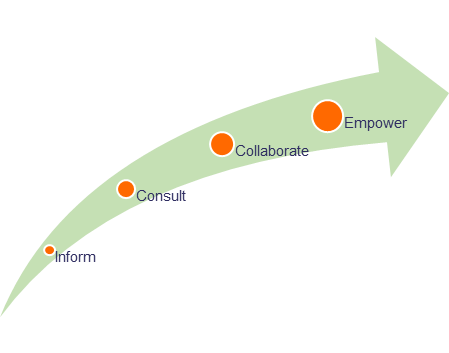
Our spectrum of public and community engagement activities, prioritised in our institutional strategy, informs, consults and collaborates to empower global communities to improve health and health equity in the UK and worldwide. Aligned with our research priorities, we work in partnership with communities across the research cycle from priority setting, through design and delivery of research, to dissemination. We inform over 20,000 attendees though public lectures and free online courses each year. Recent collaborations with communities have demystified infectious disease transmission through citizen science, visualised the people behind cancer statistics through art, and explored links between housing and health through photography. Consultation with communities of policy and practice translates research into tangible impact.
Aspect 1: Strategy
Achieving LSHTM’s mission of improving health and health equity globally is only possible by working in partnership with communities and publics to understand their needs, creating people centred health research that is empowering and impactful. Public and community engagement (P&CE) is prioritised as one of our five strategic pillars ‘Innovation & Engagement’ in our institutional strategy (2017-2022). These activities are also underpinned by our 2016-2021 Knowledge Exchange Strategy and our 2018-2022 Public Engagement Strategic Action Plan.
LSHTM’s academic expectations recognise the value of, and encourage engagement with, public/policy/practice/industry/NGO communities, with increasing emphasis on external citizenship as seniority increases. Delivery of our institutional strategy is overseen by our Senior Leadership Team who regularly review progress against operational action plans. Activities are supported through core funds for dedicated P&CE staff and seed grants, and external funding led by the Senior Leadership team including;
UKRI SEE-PER Grant, GBP60,000 between 2017 and 19.
UKRI GCRF Impact Accelerator Award, GBP300,000 between 2018 and 19.
Wellcome Institutional Strategic Support Fund (dedicated PE funding stream), ongoing since 2011.
The public engagement team’s dedicated webpage signposts the public on how they can engage with our research and researchers in the community, classroom and online. This is complemented by community activities delivered by our interdisciplinary centres including public health walks; film screenings; seminars, and exhibitions. Our London laboratories, and insectaries, are regularly showcased in guided tours, along with public access to our Tavistock site community cafe. Public and community events at the MRC Units in The Gambia (MRCG) and Uganda (MRCU) such as research open days and annual MRC festivals showcase their facilities, alongside clinical service.
Aspect 2: Support
Our P&CE strategy is delivered through bespoke facilitation, seed funding, training, peer networks and online resources.
Facilitation is provided across research groups and by a dedicated PE Manager and Officer in London, a Community Engagement Officer in The Gambia and community liaison officers in Uganda. External insight and input is provided through the PE Advisory Group, made up of academic and support staff, doctoral students, and external members.
Training is provided by the PE team, has reached over 100 staff and students since 2016, and is complemented by a new Peer Network for experience sharing.
Seed funding through LSHTM’s annual Public Engagement Small Grants Scheme has provided GBP1,000 to each of 36 projects since 2016 spanning our priority areas. Additional funding has been secured from UKRI (GBP300,000) and Wellcome (PE awards totalling GBP179,000 between 2016 and 2019).
Resources include an external facing webpage showcasing examples of engagement and an internal facing intranet site which provides guides on planning and evaluating public engagement. LSHTM’s active social media presence (120,000 followers across all channels) provides external audiences with targeted information about our engagement activities, news, events and campaigns.
Recognition: P&CE has been formerly embedded within yearly staff reviews and in Academic Promotions as an example ‘external contribution’ since 2015 and a new PE Award was launched in 2018.
Aspect 3: Activity
LSHTM’s P&CE activities span the bench to bedside pipeline, informing, consulting and collaborating to meet community needs. This was exemplified during the Ebola crisis, where staff informed (providing real time data to governments to enable resource planning and free online courses for healthcare professionals), consulted and collaborated (codeveloping culturally sensitive interventions to influence behaviour in local communities, volunteering in Ebola treatment centres, and working with publics, NGOs and industry to conduct clinical trials of vaccines and treatments). These key principles continue to guide our activities.
Informing communities through accessible, interactive education and events: We believe in enhancing access to high quality reliable information. We achieve this through;
Public lectures at the School (e.g. Global Health Lecture Series), and externally (The Royal Institution, TED and TEDx events).
Engagement in Science festivals such as the annual MRC Festival (MRC Units in The Gambia and Uganda), Cheltenham Science Festival, and New Scientist Live.
Public health campaigns (e.g. Bug off! travel health awareness campaign reached over 25,000 people).
Our free Massive Open Online Courses (MOOCs) which informed over 70,000 global learners on infectious and chronic conditions by 2018/19.
Collaborating to respond to community clinical care needs: In the UK we engage with clinical communities through UCL Partners and the Academic Health Sciences Network to translate our work into patient benefit. In Uganda, the Unit’s Entebbe field station is integrated into the district hospital and offers HIV and general healthcare for 4,000 study participants. Clinical care is also delivered at other field sites. At the MRCG, clinical care is delivered via a gate clinic (up to 150 outpatients per day), a 42-bed in-patient ward at Fajara, and diagnostic clinical laboratories. The LSHTM- Public Health England led UK Public Health Rapid Support Team responds to disease outbreaks in low- and middle-income countries and collaborates with communities to build their own capacity for an improved and rapid response to outbreaks.
Bridging the gap between communities and research through consultation and collaboration: Aligned with our research priorities, the non-exhaustive examples below show a snapshot of how we have engaged with local and global communities since 2016/17.
Understanding how infectious diseases spread is key to effective control. The citizen science “Contagion!” Project collected social contact information and movement data from over 30,000 people to demystify how a pandemic flu might spread through a UK population. Engaging with communities about disease transmission is also a key element of work by the MRCG on tuberculosis (TB). “Think TB” engagement workshops for teachers and students used infographics, and drama activities to increase awareness and encourage participants to become community TB ambassadors.
Diagnosis of an infectious disease can be associated with stigma and reduced take up of treatment. In Uganda, community engagement events, including an interactive circus, gave clinical research participants a voice to share their experiences of advanced HIV disease, dispelling myths and stigma as shown in this YouTube video.
Vaccines are a critical tool to manage infectious disease. LSHTM’s NIHR Health Protection Unit in Immunisation’s dedicated engagement strategy enables dialogue between researchers, publics and practitioners in the UK through collaborative research-shaping workshops. Low vaccine uptake was also explored through an interactive School workshop on ‘What do vaccines mean to me?’. Community trust in vaccines is addressed through the award winning Vaccine Confidence Project which offers guidance for responding to concerns and building public engagement to sustain confidence in vaccines and immunisation.
Chronic conditions have been explored through art, photography, and theatre. Colouring adult eczema workshops across the UK developed dynamic web art to challenge stereotypes about this condition, which affects 15,000,000 people in the UK, while testimonials from adult eczema sufferers were incorporated into a new adaptation of the play ECZEMA! and delivered at the South London Gallery. “Our Cancer Journey – artistic expressions of living with cancer” highlighted the people behind cancer statistics as individual lived experiences were represented through mono-prints exhibited across the UK. The “photovoice” approach was used to explore barriers to menstrual hygiene faced by young people with disabilities and the factors that contribute to a safe and happy birth.
Engagement on environment and climate change is embedded within our NIHR Health Protection Research Unit in Environmental Change programme, which has used forum theatre and photography exhibitions to collaborate with publics in exploring climate change solutions across age groups. Photovoice has also been used to explore food system challenges for low income families, and the link between “Housing and Health” in Tower Hamlets.
Cutting across our research priorities, our award-winning young scientists initiative provides the opportunity to up to 24 students from schools in deprived areas of London to nurture their interest in STEM through practical experience and mentorship each year.
Engaging with communities of policy and practice:
As a world-leading centre for debate on health, we engage with policy and practice communities in the UK and globally to shape health systems and services through;
Strategic research programmes directly working with the UK Department of Health and Social Care (Policy Innovation Research Unit and the Policy Research Unit on Commissioning and the Healthcare System).
Chairing the Strategic Coherence of ODA-funded Research Board, which provides high-level strategic coordination for the UK’s ODA-funded research.
Chairing the national HIV drug resistance Technical Working Group under the Ministry of Health in Uganda and membership of Uganda’s National Antiretroviral Treatment committee.
Membership of the WHO Malaria Policy Advisory Committee.
Membership of UK advisory bodies (e.g. Scientific Advisory Group for Emergencies and Joint Committee on Vaccination and Immunisation).
Hosting the Women Leaders in Global Health conference in 2018, with more than 900 participants of over 80 nationalities.
Partnership in the European Observatory on Health Systems and Policies.
Working with the WHO via WHO Collaborating Centres for Sexually Transmitted Infections, Gender-based Violence and New Vaccines Surveillance, and the Mental Health Innovation Network.
Aspect 4: Results and learning
Since 2018 we have switched the focus of our PE evaluation from quantitative metrics linked to attendee numbers (average approximately 20,000 people per year) to more qualitative learning and evaluation framed around impact, recognition and partnership. Outcomes and impacts are specific to each project and, as outlined in our action plan, include enhanced understanding, involvement and empowerment, and changes in attitudes, behaviour and policy. Outcomes are evaluated through participant feedback, surveys, and exit interviews and these are captured and shared to facilitate ongoing improvement through case studies (e.g. Gombe Girls PE case study, SHEFs Food Story case study). We also target specific audiences to create sustainable impact, such as through an open letter to African Academy of Sciences Open, describing how a circus event with approximately 250 people addressed preconceptions about advanced HIV in Uganda including testimony such as “the event corrected wrong thoughts about meningitis, that it’s a cultural disease or witchcraft”. We share our learning externally, such as our accessible training resource on Community Engagement, Communications, and Technology for Clinical Trials in Outbreak Settings.
We regularly evaluate the outcomes and impact of our accessible MOOCs, which reached approximately 70,000 learners by 2018/19. The evaluation of our first MOOC is published and a recent exploration of the longer term impact from our eye health provision is found here. Building on such evaluations, we responded to the community need to understand the COVID-19 pandemic with a new MOOC in March 2020. This course reached over 200,000 people in 184 countries.
The impact of our P&CE activities has been highlighted and commended during the COVID-19 pandemic and is captured in our dedicated COVID-19 site.
Aspect 5: Acting on results
The outcomes and impact of our engagement activities are reported through our dedicated engagement webpages, project specific webpages, social media channels and annual reports, all accessible to the public.
Our engagement strategy is guided by our institutional mission and evolves to meet the needs of our communities. This has included agilely delivering dedicated training via MOOCs in response to the Ebola, Zika and COVID-19 epidemics, when it was needed most. Our PE support and evaluation provision is also evolving in response to a School wide survey, answered by 32% of staff and doctoral students, focus groups, and interviews as part of the UKRI SEE-PER project. Acting on feedback, we have enhanced 1:1 support for researchers, and evolved our internal PE grants scheme to include an award for Continued Development (GBP3,000-5,000). In the past 3 years we have seen a 30% increase in the number of requests for support in embedding engagement into research grants and a 30% increase in attendance at training sessions. Through our enhanced support provision, we expect this to continue to grow in the future.
For further information, please send queries to innovation@lshtm.ac.uk