Note You are currently viewing a previous version of this narrative statement as published in previous iterations of the KEF (KEF1 and KEF2). View the latest version
Institutional Context
Summary
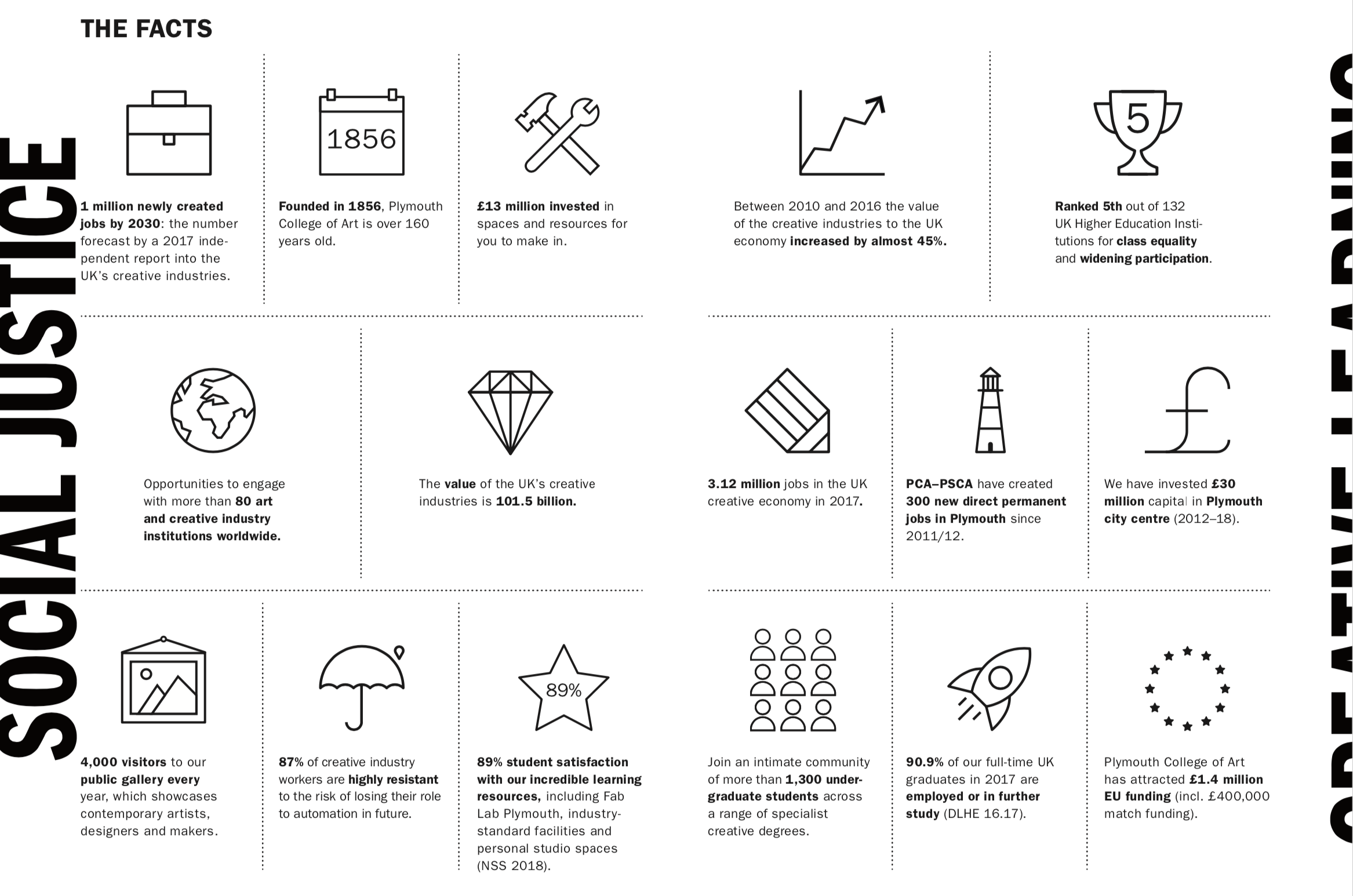
Arts University Plymouth is a specialist independent university-sector art school run by artists and designers for artists and designers and widely regarded as a dynamic catalyst for creative learning and social justice.
Our proposition is that making is as important as reading and writing, as science and maths, and that the purpose of learning is inseparable from that of living your life. This is a place for making things, for making things happen, and for making a difference.
Our work is as global as it is local, inviting purposeful partnership and opportunities for our students and our community within our inner-city neighbourhood, with our global partner universities and our local and transnational stakeholders.
Institutional context
Our Vision
High quality education for life in contemporary arts practice, as the creative catalyst for personal,
professional and cultural transformation.
Ethos
Places the aspirations and support needs of every student at the very heart of our creative enterprise.
Purpose
As an independent specialist art college since 1856, is to provide a distinctive, innovative and supportive learning community in contemporary arts practice; to add value to the cultural, social and economic life of Plymouth and the South West region; and to develop our distinctive profile of our work nationally and internationally.
Mission
Be internationally regarded as an influential and progressive new model Arts University for the 21st century, whose creative learning distinctiveness is realised across the full continuum, from early years to the third age.
Transform the lives, opportunities and professional horizons of our students across the full learning continuum.
Foster civic leadership and innovation through the purposeful mutual partnership, the outward engagement of the institution, and the creative agency of our staff and students.
Influence the city’s agenda for placemaking through the social, cultural and economic impact of our work.
Purposeful Learning Creates Agency
At PCA, we maintain that the purpose of learning should be inseparable from that of living your life and as such that purposeful learning, with social enterprise within its very DNA, creates agency.
It is through this agency that we seek to achieve social engagement and knowledge exchange and transfer opportunities and in turn impact at both an organisational, individual and at a public and community level. As such we have developed a number of innovative partnership approaches to knowledge exchange and social enterprise engagement which facilitate student transformation and effect social impact within our wider community.
These projects are catagorised as follows:
Creating Agency
We seek to instil our students with a level of confidence and social justice that means they feel they have agency to make positive change and impact within their chosen field and communities. A focus on social practice in particular means that our students have the opportunity to experience the impact their work as artists can have on people, communities and society more widely. Through these experiences, our students view themselves as change makers, with the skills and desire to effect positive change.
Place Making
We believe firmly in the power of place based regeneration and that our responsibilities for social engagement and impact stretch far beyond the walls of our building. As such we take our role as a small, specialist anchor institution seriously and seek partnerships and projects that support our wider community through placemaking initiatives.
Broadening Horizons
A core strand of our creative arts ethos is about broadening horizons for our community. This is both for our full-time students and the wider community for which we create national and international opportunities. This exposes individuals to inspirational people, places and ideas that would not otherwise be accessible to them and helps to build ambition, confidence and societal engagement.
For further information, please send queries to ihutchinson@pca.ac.uk
Local Growth and Regeneration
Summary of approach
Arts University Plymouth plays an important role within the development of the city of Plymouth and is represented on many city focussed strategic committees and boards linked to the city and regions local growth and regeneration agenda.
PCA has developed its civic mission through reaching, connecting and engaging with local communities. By developing strong collaboratively beneficial partnerships we have been contributing to the inclusive growth and economic impact of our city and region.
Aspect 1: Strategy
Plymouth is a port city in England on the south coast of Devon, approximately 37 miles (60 km) south-west of Exeter and 190 miles (310 km) west-south-west of London. Enclosing the city are the mouths of the river Plym and river Tamar, which are naturally incorporated into Plymouth Sound to form a boundary with Cornwall.
With a population of 263,000, an economic output of £5.2 billion and 104,000 FTE (Full-Time Equivalent) jobs, Plymouth is the most significant urban agglomeration on the south west peninsula. Compared to other city economies, Plymouth’s industrial base has traditionally been described as being comparatively ‘light’ on higher value knowledge-based sectors and ‘heavy’ on public sector. In addition, rates of productivity have generally been lower than average across all of our industries, and Plymouth’s productivity currently stands at 86% of the Great Britain average.
PCA plays an important role as an anchor institution within the city of Plymouth, a role that, as a specialist institution, extends to a regional, national and international level. As such we recognise that our community reaches beyond our student body and that we have a responsibility to support a wide range of stakeholders.
Our work is as global as it is local, inviting purposeful partnership and opportunities for our students and our community within our inner-city neighbourhood, with our global partner universities and our local and transnational stakeholders.
As an institution we actively seek to have a positive social impact on our extended community. This is evidenced through our core objectives which drive the Vision, Ethos, Purpose, Mission and Values and of our institution, as well as through a range of tangible activities.
PCA is linked to the local economy through representation on a variety of strategic and economic development sectoral partnerships informing our institutional objectives, they include:
PCA’s Principal holds Board Membership on Plymouth Growth Board. A private sector led partnership, bringing together representatives from important city organisations to collaborate and drive forward the economic priorities of Plymouth.
PCA’s Principal holds Board Membership on Plymouth Waterfront Partnership (PWP). The organisation responsible for the delivery of the Waterfront Business Improvement District. PWP is an independent, not for profit company that operates within a strict mandate to deliver the projects laid out in the Waterfront Business Plan that includes a five year, £6.2 million investment proposal for Plymouth’s Waterfront.
Active membership of The Box Stakeholder Group, The Box, Plymouth’s newly opened £46 million arts & heritage space. A neighbour to PCA main-campus and strategic partner.
PCA also holds membership with the Devon & Plymouth Chamber of Commerce and South West Business Council and has strong links to Ernesettle Community school, Millfields Academy and Plymouth Culture, Plymouth’s cultural development agency.
PCA participates and responds to the Heart of the South West Local Enterprise Partnership sectoral engagement forums and sessions. The Local Industrial Strategy has been drafted and is awaiting Government sign-off.
As part of Plymouth’s Growth Board, the emphasis is on delivering the current ‘Economic Growth for the City of Plymouth 2019-2024’ plan, focussing on: Ocean City, Infrastructure, Business Growth & Investment, Defence, Learning & Talent Development, Inclusive Growth and Visitor Economy & Culture. However, with the onset of the impact of Covid-19, Plymouth City Council have recently launched their Economic Recovery Plan, Resurgam (https://www.resurgam.uk/)
Resurgam focuses on building a better future through six key pillars:
Sector action plans
Build 4 Plymouth
City centre renaissance
Spend 4 Plymouth
Recovery beacons
Skills 4 Plymouth
The Sector Action Plan is led by external sector stakeholders for each of the 11 key economic sectors to support recovery and growth. This includes the Creative Industries and Digital sectors.
PCA works across multiple neighbourhoods in the city with a higher concentration in the St Peter & Waterfront and Drake wards, as well as a strong connection throughout the SW peninsula. We engage and influence nationally and have strong links to China, South Asia, the South Caucasus, Myanmar, Pakistan, Afghanistan and the US.
Aspect 2: Activity
PCA has developed its civic mission through reaching, connecting and engaging with our local communities. We foster strong mutually beneficial partnerships and have been contributing to the inclusive growth and economic impact of our city and region.
As a smaller, unique specialist arts HEI, we hold an important place as a place-based institution. PCA links its local growth and regeneration needs though our knowledge exchange delivery as identified in our Strategic Plan Aim 4 - Research, Engagement & Impact.
The Research, Engagement and Impact Strategy 2018-2023 identifies points of reference for PCA’s emerging research environment and culture, and long-term objectives for our distinctive identity and positioning within the Higher Education landscape.
WE WILL build social capital, cultural leadership and economic impact in Plymouth and our wider region by:
Promoting social enterprise activity as part of the institutional research objective and third-pillar income strategy.
Encouraging engagement of our students, staff and alumni within Plymouth and the wider region as part of our out-reach activities.
WE WILL foster strategic partnerships to grow the influence and visibility of our work by:
Fostering meaningful research partnerships, knowledge transfer partnerships, industry-based projects and collaborations to increase the impact and reach of the institution’s research profile.
Building a multi-modal community of practice to further our scholarship and research to continuously enrich our curricula and effect positive change in the region.
PCA’s projects, partnerships and knowledge exchange underpin and support the growth and economy of the creative ecology of artists, makers, SMEs and our wider local regional, national and global communities. Creating Agency, Place Making and Broadening Horizons enables the sharing and flow of knowledge and expertise between the college and our stakeholders, partners and/or user communities and focuses on the following deliverable:
Entrepreneurship
Social Enterprise
Incubation
Placemaking
Talent retention
Employability
Economic Growth
Audience Development/Community Engagement
Skills and Learning
Business Development
Over the past three years we have had a growing national and international profile and as such have been involved in a wide range of projects, programmes and collaborations with local authorities, partners, stakeholders and experts locally, nationally and internationally. From our work on our research and knowledge exchange Crafting Futures programme in Myanmar and the South Caucasus to our biennial Making Futures conferences.
We have put Plymouth on the map for innovation and the creative arts through our partnerships and research projects with Tate, the V&A and the British Council. Knowledge exchange projects such as Atlantic Youth Creative Hubs, Makers HQ, Strategic Employer Engagement in Devon, Triple E-dge, iMayflower, Hidden Talent in Devon, Liskeard Cattle Market Project and the Environmental Futures and Big Data Impact Lab and Ignite.
Our projects and partnerships have been developed through real societal need and are linked to PCA’s strategic ambitions. Exemplar projects that reflect this are:
Designed to build Plymouth’s creative industries and nurture creative people power across the city. Delivered by a city wide consortium. The iMayflower, Smart Citizens Programme is upskilling over 1,500 people, communities and SMEs through training in digital design, fabrication, manufacturing and sustainable entrepreneurship.
Millfields Academy (formerly The Red House - Plymouth School of Creative Arts)
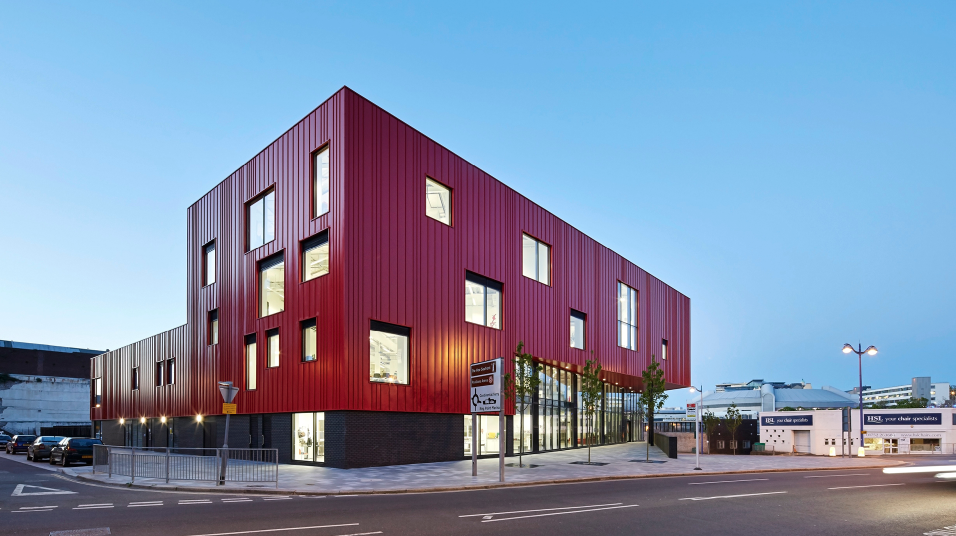
PCA established a trans-generational progressive continuum of creative learning from age three to postgraduate level study with the founding of the Plymouth School of Creative Arts in an award- winning building. The idea of creativity as a lifelong pursuit inspired PCA to make a school.
This education project was designed as a catalyst for community transformation, job creation, social and economic development in a red light area of inner-city Plymouth that includes amongst the 10% most disadvantaged neighbourhoods in the country.

In June 2019 Plymouth became the UK’s first city to join the Fab City network. Each city has pledged to produce everything they consume by 2054. PCA is a founding partner.
Strategic Employer Engagement in Devon
Skills development for SMEs supporting CPD for employees and the development of new products, services and processes for employers to improve productivity.
Hidden Talent in Devon Aimed at improved progression opportunities for individuals in work and education through higher level skills development.
Environmental Futures and Big Data Impact Lab
Development of new products, services and processes with SMEs in the Environmental Futures and Big Data sector specialisations. A sophisticated approach to knowledge exchange and impact led research.
Creating Social Enterprises
In 2017, PCA was awarded the Social Enterprise Gold Mark, demonstrating the positive social impact of our work. PCA has developed innovative social enterprises with partner organisations, eg. Makers HQ, launched in 2018 in partnership with the Millfields Trust. Providing production facilities to the fashion industry and emerging designers.


British Council Crafting Futures, South Caucasus & Myanmar
A research, knowledge transfer and vocational education project with partner organisations in Armenia, Azerbaijan, Georgia and Myanmar.
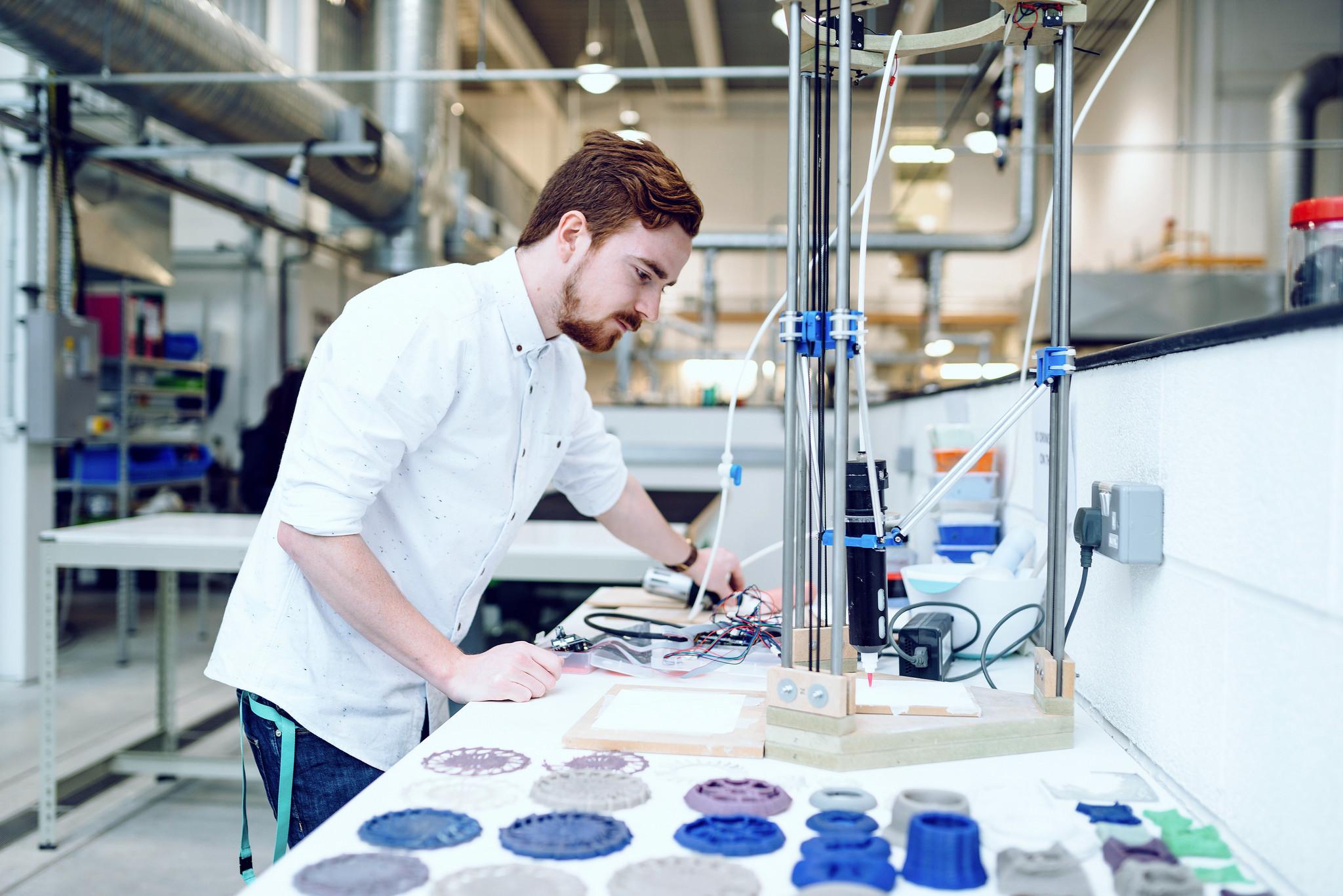
Our Fab Lab is part of a network of over 1,000 official Labs worldwide. It is a space for innovation and research encouraging investigation and material exploration for academics, students, the public and SMEs through digital manufacturing and fabrication processes.
An EU funded project via the Interreg Atlantic Area programme, aimed at building a model of social innovation for young people (14-30). Supporting social entrepreneurship, employability, education and connecting across borders in the creative/cultural industries. Delivered across 11 partner hubs (UK, France, Spain, Portugal).
Funding for Local Growth and Regeneration
Over the past 3 years, PCA has secured significant funding in relationship to its size, from a range of sources, for example:
| Funding Secured 2017-2020 - External Project and KE Programmes | ||||
| Project/Programme | Funding Source | Funding/ Grant Income |
PCA Contribution/ In-kind | Total |
| iMayflower | ACE/DCMS | £394,000 | £128,000 | £522,000 |
| Environmental Futures and Big Data Impact Lab | EU/ERDF | £222,950 | £148,633 | £371,583 |
| HTID | EU/ESIF | £96,244 | £63,616 | £159,860 |
| SEED | EU/ESIF | £42,800 | £31,400 | £74,200 |
| Atlantic Youth Creative Hubs | EU/Interreg Atlantic Areas, ERDF | £293,053 | £97,684 | £390,738 |
| Triple E-dge | EU/Erasmus+ | £60,326 | 0 | £60,326 |
| Makers HQ | Power of Change | £180,420 | £7,894 | £188,314 |
| Total | £1,289,793 | £477,227 | £1,767,021 |
Aspect 3: Results
Enterprise and Knowledge Exchange has recently been included in the internal governance structure with PCA. The Academic Committee process has extended its Research Sub-Committee to include Enterprise, this has now become the Research and Enterprise Committee with an engagement and impact agenda attached. Knowledge Exchange currently falls with Enterprise within this context.
The Research and Enterprise Committee provides the checks and measures of PCA’s Enterprise and Knowledge Exchange programme including the development of an Annual Impact Report evidencing the quality, quantity and wider impact of our work. The report will include the following headings; Social Justice, Creative Learning, Widening Participation, Careers and Enterprises, Fundraising/Income Generation, Social Enterprise and Impact, Key/principal partners and Research/Knowledge Exchange
All PCA’s funded programmes have defined and detailed targets, KPIs, and outcomes and are identified in funding agreements or project contracts with lead partners. Performance against targets are reviewed monthly, written reports and detailed evidence on activity, progress and expenditure are provided quarterly or 6 monthly to the funder depending on each programme. If required, adjustments or modifications can be requested to targets and budgets if there is over or under performance at key stages of activity delivery. On our larger programmes an evaluation is carried both internal as well as by an external elevator. Progress is mapped throughout the project journey allowing for changes to be made throughout the project's delivery.
For example, outputs would include figures for; new jobs, participants trained, new business, SMEs assisted, products to market or firm, participants incubated, progression onto education, training or employment, visitor attendees,
Through PCA’s strategic plan we will measure activity through;
Evidence of cultural leadership and influence, research and development, social enterprise activity and externally funded projects
Measurable impact on audience engagement and enrichment of research culture and environment
Delivery of research and knowledge exchange through meaningful partnership and collaborative practice
Visibility and access of PCA research, as a multi-modal community of creative practice
For further information, please send queries to ihutchinson@pca.ac.uk
Public & Community Engagement
Summary of approach
As a city centre anchor institution with a strong sense of place and civic mission, we continue to explore and develop a diverse range of public and community engagement activities explored through many avenues. From access to Colleges facilities, supporting charities in a variety of sectors, delivering a contemporary arts programme, to the Fab City Initiative - a global community of connected cities and citizens.
We develop a variety of public and community engagement activities and actively seek funding and opportunities to do so.
We encourage purposeful partnerships and opportunities for our staff, students and our community within our inner-city neighbourhood, with our national partners and our local and transnational stakeholders.
Aspect 1: Strategy
Our strong sense of place and civic mission is defined and delivered in our clear Vision, Ethos, Purpose and Mission. This vision is intrinsically connected to our two pillars of activity; Creative Learning and Social Justice.
A specific Public and Community Engagement Plan will be explored through the KE Concordat development and action plan process. PCA currently delivers its Public and Community Engagement through our Strategic Plan Aim 4 - Research, Engagement & Impact.
WE WILL build social capital, cultural leadership and economic impact in Plymouth and our wider region.
Promoting social enterprise activity as part of the institutional research objective and third-pillar income strategy.
Encouraging engagement of our students, staff and alumni within Plymouth and the wider region as part of our out-reach activities
Measurable Impact on audience engagement and enrichment of research culture and environment
Evidence of cultural leadership and influence, research and development, social enterprise activity and externally funded projects
Governance
Robust governance resides at all levels of the institution to ensure collaborative and transparent decision making. The Academic Board is central to this process and reports directly to the Board of Governors. Academic Board considers and approvals all regulatory functions, policies and core delivery across the institution. The Board of Governors have the opportunity to attend Academic Board as well as external observers in the capacity of advisers.
A series of sub committees sit and report to the Academic Board, including:
Learning teaching and Curriculum
Research and Enterprise
Academic Standards and Quality
Student Engagement and Experience
Each committee has terms of reference which are reviewed and agreed by the committee members on an annual basis. Similarly, each committee has an agreed membership which is reviewed annually. In all cases the committees have staff representation from the academic and business support teams as appropriate and there is student representation on all committees including Academic Board and the Board of Governors.
Resources to Deliver the Strategy
| Funding Secured 2017-2020 - External Project and with Public and Community Focus | ||||
| Project | Funder | Funding/Grant Income | PCA Contribution or In-kind | Total |
| iMayflower - Smart Citizen Programme, Ignite and Illuminate | ACE/DCMS | £394,000 | £128,000 | £522,000 |
| Green Minds | EU - ERDF | €125,750 | €31,437 | €157,187 |
| Hidden Talent in Devon | EU - ESIF | £96,244 | £63,616 | £159,860 |
| National Art and Design Saturday Arts Club | Grant/PCA | £6,000 | £30,000 | £36,000 |
| Tate Exchange 2017-20 | Arts University Plymouth | £34,500 | £34,500 | |
| The Gallery 2017-20 | Arts University Plymouth | £220,000 | £220,000 | |
| Crafting Futures - South Caucasus | British Council | £45,000 | £45,000 | |
| Total | £666,994 | £507,553 | £1,174,547 |
PCA Facilities Open to the Public
Fab Lab Plymouth is available for members and the general public as well as the skills development offer provided through the Smart Citizens programme and the Citizens Lab
The Gallery, at Arts University Plymouth features a high-quality contemporary programme of exhibitions and events.
Imprint Lab And Digital Print Bureau. Our Digital Print Bureau offers affordable and quick print services for students and the general public.
Plymouth Arts Cinema, PCA provides the home for the independent charity since December 2019, Plymouth Arts Cinema.
Aspect 2: Support
In 2016 PCA established a Social Enterprise and Community Engagement budget under the responsibility of the Senior Leadership Team. Over the past three years we could monitor investment and give equal consideration to all requests received for support from external organisations. This was a small annual budget and this approach enabled the SLT to monitor direct investment in social enterprise/social activities and to measure impact.
Every BA programme within the college has developed and maintains a wide network of contacts with external stakeholders. Whilst some of these relationships provide progression opportunities to employment, many centre around deep issues related to community cohesion, public engagement, well-being and place-based regeneration. In these instances, art as a tool for transformation is very powerful and many of our students wish to support socially driven and community focussed initiatives.
Support for Jeremiahs Journey
Charity partnership with Jeremiahs Journey, a charity that works with young people who have terminally ill parents during the period of illness and after the family bereavement. Providing access to PCA’s studios and engagement in arts and creativity. This is a powerful way to help young people open up, explore their grief and socialise with others in a similar situation to themselves.
Cities of Learning Partnership
PCA is a partner in the RSA and City and Guilds Cities of Learning pilot project run by RIO. Delivering digital credentials (badges), to community and public engagement activities. Digital badging is an inclusive approach that promotes and recognises learning wherever it happens and leads to new pathways into education and work. Cities of Learning is helping people and places tell the story of their learning and provides mass engagement around learning and skills both formal and informal.
Development Team
The Development Team at PCA is focussed on all externally funded projects and programmes consisting of 6 members of staff. The resources for this are generated from the income from funded programmes that the department secures to deliver its outward facing and knowledge exchange activities.
CPD
We have an annual staff development budget set aside for core and developmental training for academic and business support staff members. Where line managers identify training needs with their teams, which are then supported through an application to the staff development budget. Requests are assessed on need, strategic alignment with college objectives and affordability, this includes relevant learning and opportunities to improve their effectiveness.
Aspect 3: Activity
PCA’s public and community activities can be linked to 3 key areas of activity. Creating Agency, Broadening Horizons and Place Making.
Exemplar projects include:
Creating Agency
Young Arts (YA), featuring Saturday Arts Clubs, works to bridge the gap in arts provision for young people created by increasingly limited access to creative activity in schools for ages between 9 - 16. PCA is a member of the Sorrell Foundation’s National Art and Design Saturday Club network, providing annually a cohort of young people aged 14-16 the opportunity to study art and design weekly with a fully-funded bursary.
Young Arts at Arts University Plymouth offers a range of courses and outreach activities, with three core objectives.

Progression: To engage and recruit young people in arts education, preparing them for their entry to further study.
Participation: Bridging the gap in mainstream arts education for all young people.
Partnership: Pioneering more collaborative and sustainable arts activities for young people across the city.
Tate Exchange is an ambitious ‘open experiment’ which enables associate organisations to devise and develop creative learning through public participation at Tate Modern. As a founding associate of Tate Exchange, an annual programme that brings together international artists, over 60 different organisations working both within and beyond the arts, and the general public to discover new perspectives on life, through art. Over the past three years our programme was attended by approximately 5,000 participants.
Broadening Horizons
Smart Citizens is opening Fab Lab Plymouth to communities. The programme offers free workshops to design and make almost anything, tech & sustainability talks, community meet-ups, and training in digital design and fabrication. Empowering citizens with digital technologies skills and connecting ideas, people and enterprises in order to unlock the potential of citizen makers.
In June 2019 Plymouth became the UK’s first city to join the Fab City network. Each city has pledged to produce everything they consume by 2054. PCA is a founding partner.
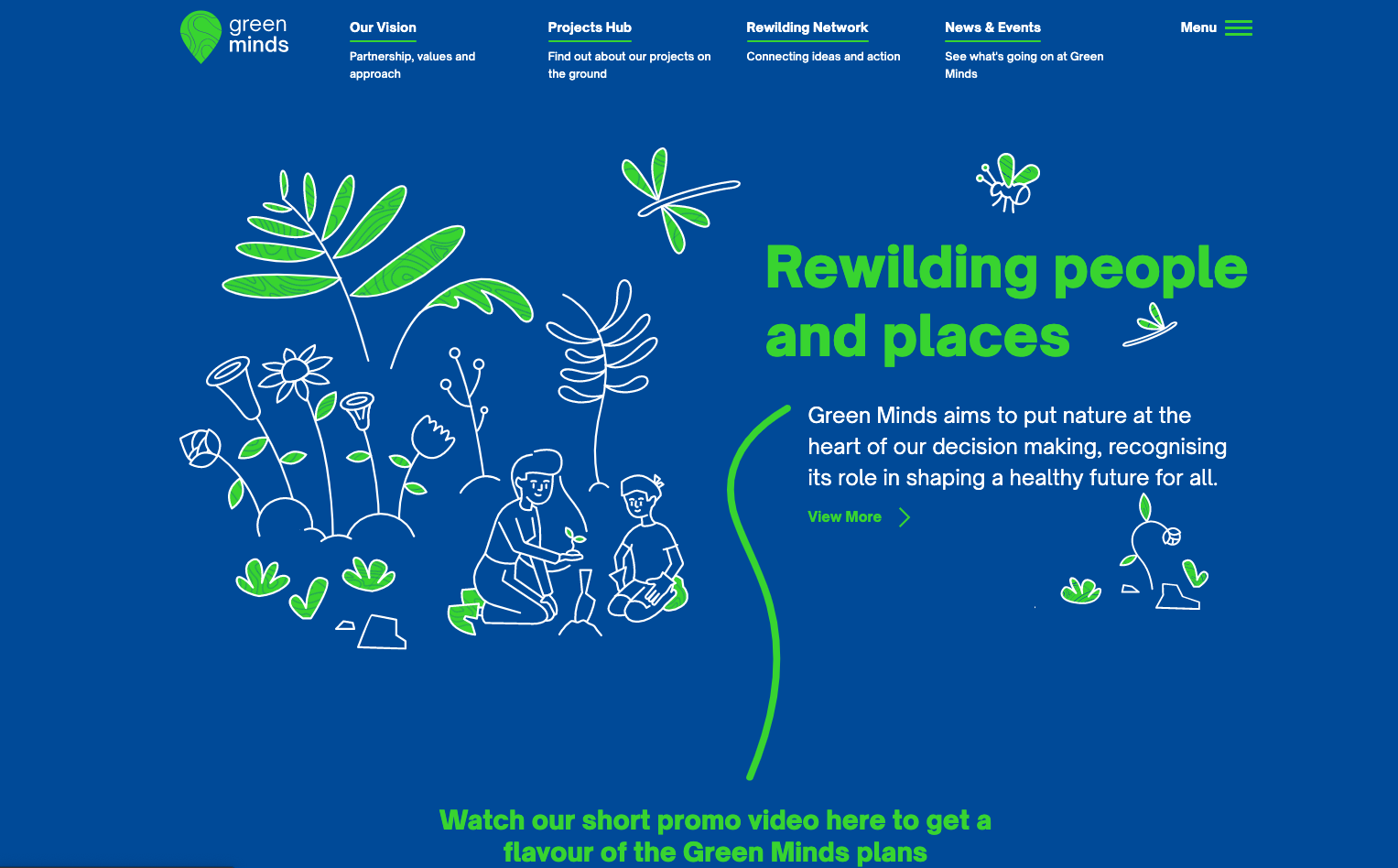
Three-year project funded by ERDF via Urban Innovative Actions. Combining approaches to urban development and governance that are entirely new or in their infancy: creating green mindsets, urban rewilding, complexity management linked to a public engagement programme.
Place Making
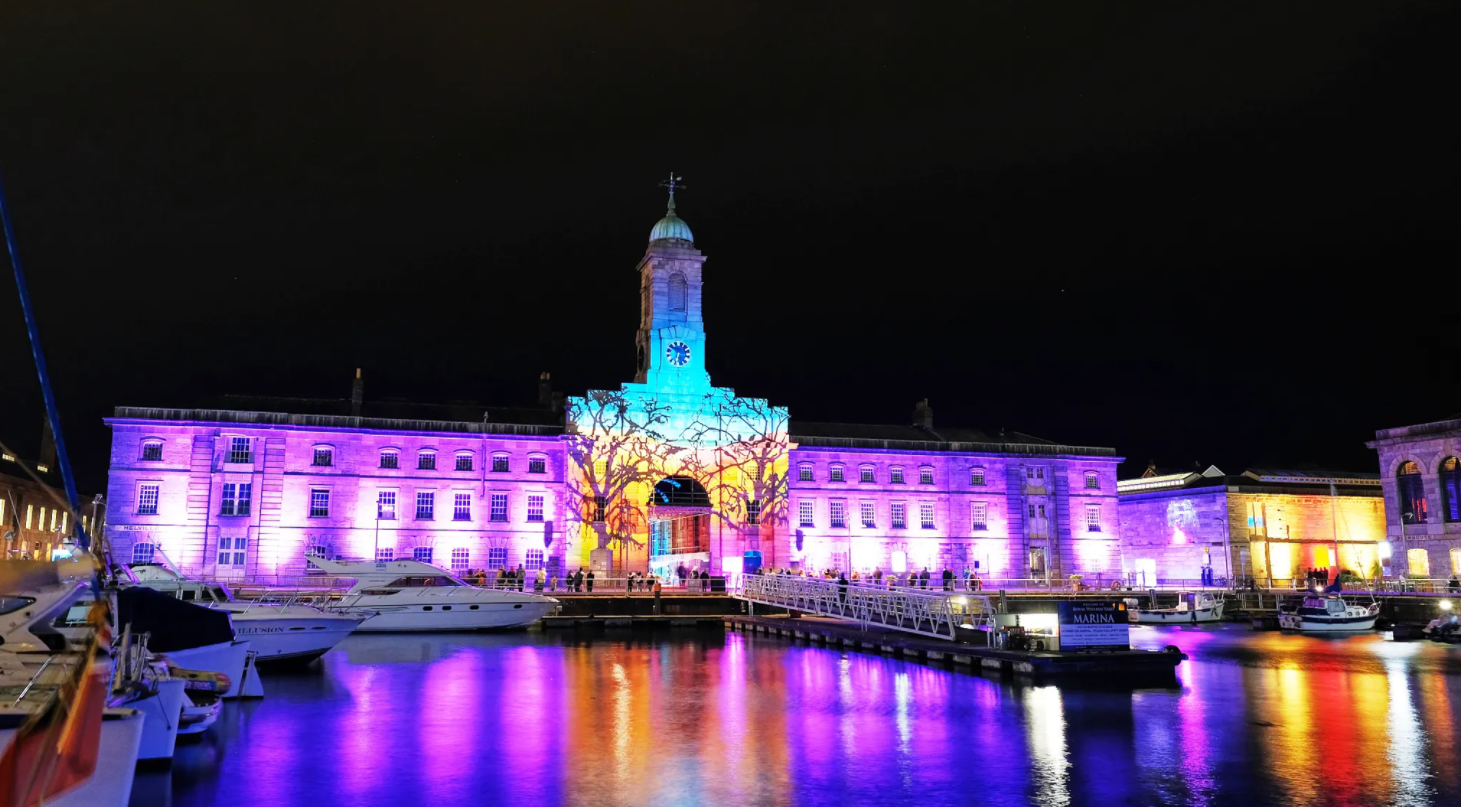
The annual Illuminate light festival, attracting over 28,000 audience members, is a powerful immersive experience, offering audiences projection mapping; playful light art installations; performances and myriad opportunities to engage, participate and make. With light art created by artists, technologists, designers, architects and children alike, where annually nearly fifty PCA students put their video-mapping skills into action.

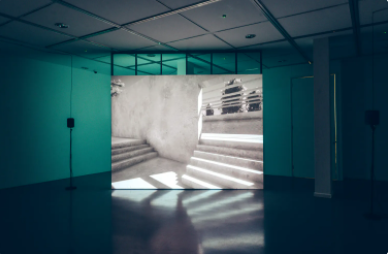
The Gallery at Arts University Plymouth features a high-quality contemporary programme of exhibitions and events, which seeks to enrich teaching and learning at the college, whilst also encouraging and welcoming a wider public audience to enjoy and debate contemporary arts. The Gallery programme and public lecture series are key components in this work and support both internal and external audiences.

PCA became the new home for the city’s only independent arthouse cinema, helping to create a sustainable future for the organisation. The College shares many fundamental values with Plymouth Arts Cinema (charity) and has enjoyed a mutually beneficial relationship.
We are continuing to develop a variety of public and community engagement activities that are linked to our Strategic Plan that promotes social enterprise activity, encouraging engagement, has measurable impact on audience engagement and can provide evidence of cultural leadership and influence, research and development, social enterprise activity and externally funded projects. Sustainability is a key issue and PCA’s Development Plan focusses on the next stages of funding post EU.
Aspect 4: Results and learning
Our Research, Engagement & Impact Strategy 2018-23 in reference to knowledge exchange and public and community engagement activity is measured by the following key performance indicators:
Evidence of cultural leadership and influence, research and development, social enterprise activity and externally funded projects.
Activity centered around The Gallery, iMayflower DCMS/ACE Cultural Development Fund, Atlantic Youth Creative Hubs and the Green Minds programme.
Measurable impact on audience engagement and enrichment of research culture and environment.
Development and increased audience and participation in cultural offerings such as PCA’s Gallery, Tate Exchange, Illuminate and Plymouth Arts Cinema.
Delivery of research and knowledge exchange through meaningful partnership and collaborative practice.
Through the Development Directorate’s projects and partnerships. Capacity building and identifying KPIs for engagement with staff research.
All PCA’s funded programmes have defined and detailed targets, KPIs, and outcomes and are identified in funding agreements or project contracts with lead partners. Performance against targets are reviewed monthly, written reports and detailed evidence on activity, progress and expenditure are provided quarterly or 6 monthly to the funder depending on each programme. If required, adjustments or modifications can be requested to targets and budgets if there is over or under performance at key stages of activity delivery. On our larger programmes an evaluation is carried both internally as well as by an external elevator. Progress is mapped throughout the project journey allowing for changes to be made throughout the project's delivery. The Gallery at PCA do not have an external reporting process and report progress and impact directly to the Academic Board through the Research and Enterprise Committee.
This process and the recently published KE Concordat has focused attention on Knowledge Exchange in our institution with recent changes to our Research Committee (now Research and Enterprise).
Total number of project funded
During the past 3 years PCA has had over 15 Knowledge Exchange and community focussed funded projects.
Aspect 5: Acting on results
Reporting
With funded projects with external partners and stakeholder, regular monitoring and impacts reports are provided. An evaluation process, methodology and or theory of change is developed agreed by the partnership and the final report is presented and then disseminated at the end of the programme. Internally updated and the evaluation report will be reported on at the Research and Enterprise Committee and subsequently onto Academic Board.
Internally developed projects, reporting and evaluation is less defined. With outline updates and impact reports going to the Research and Enterprise Committee and subsequently onto Academic Board.
Evaluation Framework
An overarching evaluation framework that demonstrates the value of Public and Community Engagement activity is to be considered and implemented as part of the KE Concordat, with a view to seek feedback from community and local stakeholders and partners.
For further information, please send queries to ihutchinson@pca.ac.uk