Institutional Context
Summary
Plymouth Marjon is a small university with a rich history of 183 years of social justice and transformative education. We place emphasis on the holistic development of our students, this includes educational, social, and spiritual growth. We are a committed anchor institution dedicated to supporting Plymouth, Devon, and Cornwall through our students. Our civic commitments include student success, social justice and tackling inequality; lifelong health and wellbeing; creativity, culture and development and sustainability, innovation, and clean growth. Through knowledge exchange and real-world impact, we aim to create and nurture opportunities for our students and the community. We achieve this by working collaboratively in partnerships, transforming individual life chances for the benefit of students and the community.
Institutional context
Plymouth Marjon University has a proud 183-year history, and we remain committed to our mission and placing our core values of humanity, curiosity, independence, and ambition at the heart of everything we do. As a small university, we are a member of the Cathedrals Group and Guild HE Research. Our knowledge exchange focuses on creating authentic, inclusive and transformative student opportunities aligned to a social learning paradigm that also contribute to our place. We are proud to have been ranked first for social inclusion in England and first in England for student satisfaction in the Complete University Guide 2023. We also achieved a 6% improvement in graduate outcomes in the Complete University Guide 2024, thanks to our tailored approach and investment in partnerships and resources.
Our research and knowledge exchange strategy 2020-2025 ‘Building Knowledge Together’ outlines our strategic intent (Figure 1). The strategy is underpinned by the principles that knowledge is partial, living, co-produced, should have impact and be openly available. We strive to ensure that knowledge is applied to current placed based problems and reflects local and global societal challenges. We engage all our community, including students, staff, alumni, public, collaborators and peers to help us co-create this knowledge, to question our knowledge and to ensure it is shared in meaningful ways. We strive to maintain the highest standard of integrity in our knowledge practices.

Figure 1: Knowledge Strategy Ambitions Aligned to Marjon Values
Our research and knowledge exchange outcomes and impact signal a significant positive trajectory. This is evident in our REF2021 submission, where 55% was rated as Internationally excellent (3*) or higher. On average across the 3 years of this KEF cycle business and community services income has grown by 38% and the number of organisations we engage with has increased by 35%, compared to 2018-19 pre-Covid benchmark (HESA data). Our ‘Student-Led Knowledge Exchange’ (SLKE) model (Figure 2) explored the conditions which allow a student led knowledge exchange culture to flourish and was supported by Research England/OFS funding. Student engagement in knowledge exchange is one factor that has contributed to 100% satisfaction in PRES2022 and doubling the number of post-graduate research students. We have increased the opportunities more systematically across disciplines for all students to engage in knowledge exchange. These achievements have been realised despite the challenges posed by the Covid-19 pandemic.

Figure 2: Marjon Student Led Knowledge Exchange Model (Cotton et al., 2023)
Plymouth Marjon is an anchor institution, our priorities are influenced and shaped by our place and informed by local knowledge and partnership engagement. We make a significant contribution to improving the educational, social and economic outcomes in a region that has high levels of social, educational and health inequalities. Our civic commitments provide the focus of our knowledge exchange activity which build on our strengths and align to local and regional priorities (Figure 3). Our locality is Plymouth City Council and broader region includes Devon and Cornwall.
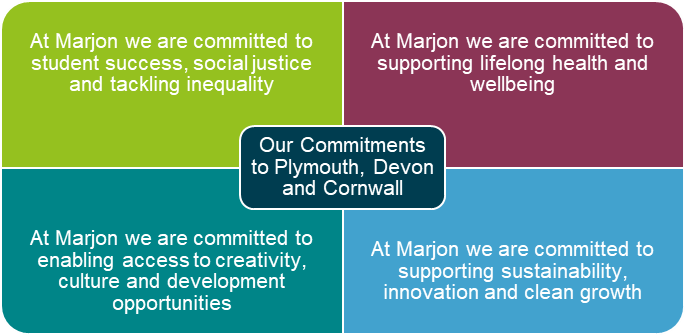
Figure 3: Marjon Civic Commitments
For further information, please send queries to research@marjon.ac.uk
Local Growth and Regeneration
Summary of approach
Plymouth Marjon is an anchor institution, our priorities are influenced and shaped by our place and informed by local knowledge and partnership engagement. We make a lasting difference through creating and nurturing opportunities to improving the educational, social and economic outcomes for our students in a region that has high inequalities. Our civic commitments provide the focus of our knowledge exchange and we have pledged commitment to; i) student success, social justice and tackling inequality, ii) lifelong health and wellbeing, iii) creativity, culture and development and iv) sustainability, innovation and clean growth. Our “place” is defined by the physical and economic geography of the Southwest peninsula, which includes the unitary authority of Plymouth.
Aspect 1: Strategy
Plymouth is a vibrant and growing city located in the southwest of England. With a rich history, a stunning waterfront, and a thriving cultural scene, Plymouth is a popular destination for tourists, students, and businesses alike. However, like many cities in the UK, Plymouth faces a number of challenges that must be addressed if it is to continue to thrive. Plymouth has historically had a strong presence of public sector industries and relatively fewer higher-value knowledge-based sectors, resulting in lower-than-average productivity. Therefore, the city has lower economic resilience than other areas, and increasing productivity is a strategic goal. The wider economy is dominated by small and medium-sized enterprises (SMEs) across diverse sectors. Resurgam, which means "I shall rise again" was Plymouth's Covid-19 Economic Recovery Programme, co-created by the Plymouth City Council and economic stakeholders. The program comprises six key pillars, namely, sector action plans, Build4Plymouth, city centre renaissance, Spend4Plymouth, Recovery Beacons, and Skills 4 Plymouth. Marjon has actively participated in these strands by engaging with the Education and Skills Board and assisting in the evaluation of the Spend4Plymouth program.
Marjon also plays an important role in the wider Devon and Cornwall regions. The joint local plan key priorities are focused on a prosperous and sustainable southwest with clean and inclusive growth. The southwest region has a wide geography of rural, coastal, and urban areas and a rising population according to the 2021 census (+7% vs 2011 census). The natural assets of the coastal areas support a thriving tourism industry, which was badly impacted by Covid-19 and tends to lead to seasonal employment. Other key industry groups are health, retail, and education although skills shortages are evident across these sectors. Another key feature of the southwest is its ageing population with higher than the national average 65 years+. This brings challenges around workforce and the provision of services across a large rural geography. Marjon is linked to the local economy through representation on a variety of strategic and economic development partnership, for example we are members of Southwest Business Council, Plymouth Social Enterprise Network, and Devon and Plymouth Chamber of Commerce.
The ‘Building Knowledge Together’ research and knowledge exchange strategy identifies our ambition to ensure that knowledge is applied to current problems and reflects societal challenges. Through knowledge exchange and real-world impact, we aim to create and nurture opportunities for our students and the community. We achieve this by working collaboratively in partnerships, transforming individual life chances for the benefit of students and the community. We aim to annually improve our Higher Education and Business Community Interaction return, ensuring it reflects our delivery ensuring our consultancy, exploitation of facilities, public and community engagement and regeneration and development metrics reflect as priorities. Additionally, we aim to seek to increase grant funding income including collaborative bids as a funded partner with organisations aligned to Marjon values.
Aspect 2: Activity
Our activity aligns to our civic commitments and Research and Knowledge exchange groups. Through active engagement in local growth and regeneration knowledge exchange with collaborative partners we seek opportunities for our students during and following their studies. Some key highlights from 2019-2022 include:
At Marjon we are committed to student success, social justice and tackling inequality. Supporting local business and generating social, economic and environmental benefits for Plymouth through spending has long been a focus of Plymouth City Council Procurement and this is a sentiment that is shared among organisations across the City. In direct response to Covid-19, Plymouth City Council instigated plans to lead the city's economic recovery programme. The plan aimed to unite the City behind a common purpose of ensuring a strong recovery, which addressed the immediate need to protect jobs and threats to lives and livelihood and building for a better future which is more equal, sustainable and prosperous city post pandemic. This plan had a wide-ranging scope including Spend4Plymouth. Spend4Plymouth was created to explore how procurement and commissioning could play its part in the economic recovery and regeneration of the city. Spend4Plymouth aimed to increase the amount the city spends directly with its local suppliers and maximising the wider benefits for the local economy, society and environment. To support the ongoing delivery of Spend4Plymouth colleagues from Marjon worked with Plymouth City Council to explore the level of local procurement spend and investment across multiple sectors in the city, highlighting differences within and between sectors, share good practice and make recommendations for improvement and explore the wider social value investment.
At Marjon we are committed to supporting lifelong health and wellbeing. Our substantive wellbeing clinics are described in our public and community engagement narrative statement and lead to improved outcomes for individuals and their employers. More recently significant development is the design of customised online non-credit bearing continuing professional development courses for health and social care professions to address regional workforce/skills shortages as outlined by Plymouth Education and Skills Board. Our delivery approach places an emphasis on the skills in high demand across the economy including communication skills, digital and data skills and people skills. Multi-layered programme orientation meetings have enabled collaboration with employer partners, experts by experience and ‘People Who Use Services’, in a value-driven manner, to co-produce each of the programmes which acts to build and sustain, local, placed based collaborations. Accounting for the regional lower levels of educational attainment and often intergenerational lack of aspiration regionally the first opportunity to engage existing lower skilled workforce (e.g., healthcare assistants) is our digitally enabled high quality 8-week short course ‘Getting Ahead’. The non-credit rated ‘Getting Ahead’ programme for Health Professionals is a codesigned programme with employer partners, to accelerate those individuals who have been talent spotted within the organisation, the opportunity to progress on an accelerating skills programme. This programme offers students an appropriate level of academic literacy and research conventions in healthcare. It is intended to support students who may not have undertaken any formal education for some time and/or have no higher education experience, with the essential skills and tools to undertake a foundation degree qualification within health and care professions or nursing. We have already commenced the first delivery of this programme with a pilot cohort and anticipate at least 100 students will complete this programme annually. Other CPD courses have included supporting cultural transition for new health and care employees. Finally, we are growing our higher and degree apprenticeship provision directly in line with regional skills gaps and employer needs.
At Marjon we are committed to enabling access to creativity, culture and development opportunities. The Engaging Rural Micros project was a two-part research study which ran from 2018 to 2021 aiming to help Devon County Council find out how to effectively shape business support programmes to better engage with and support rural businesses with less than 10 employees (Micro Businesses). These businesses make up 90% of Devon’s rural economy (excluding Exeter). The project work included Phase 1: Proof of Concept research in North and Mid Devon; and Phase 2: Research Trial in Devon, and the Exmoor and Blackdown Hills areas of Somerset. Plymouth Marjon University were the evaluator of the phase 2 and worked closely with Devon County Council (DCC), Business Information Point and Cosmic to deliver different business support packages and evaluate their impact. The aim of the trial was to encourage open mindsets, attitudes and actions towards business development. This was done by implementing a pragmatic randomised controlled trial (RCT) design and trial evaluation, focusing on two support packages. The objective of the ‘Technology’ support package was to facilitate the demonstration and trialling of new digital technologies. The ‘Person and Business’ support package follows a person-centred approach to focus on the balance between business and personal aspirations. The evaluation followed a mixed methods design and employed monitoring data, materials provided by the trial delivery team, quantitative data and qualitative data The trial had a range of interesting findings. The unique business engagement methods were cited as particularly successful in an Innovation Growth Lab Blog post and the full evaluation report made a series of recommendations and is publicly available.
At Marjon we are committed to supporting sustainability, innovation and clean growth. The FLAVOUR Project (Food Surplus and Labour, the Valorisation of Underused Resources) ran from 2019 and concluded at the end of 2022. This project was a collaboration between ten main partners in three different countries: the UK, France and Belgium. Partners included social enterprises, charities, municipalities, and universities. The project was part-funded through the European Regional Development Fund (ERDF) and focused on the prevention of food waste by collecting and redistributing (and/or processing) food surplus while simultaneously creating jobs, pathways to employment and supporting people living in food insecurity. Marjon led the development of the inspirational food handling training guide, which was co-created with employers and included a range of resources to support employers. Outcomes of the Flavour project included increased food security leading to improvements to health and wellbeing, enhanced social connections and support structures for residents, greater recognition and awareness of food surplus distribution/processing, reduction to household expenditure by receiving food surplus, employees reporting greater confidence and more social networks, increased employment of vulnerable people and increased skills, technical support and employability through on-the-job-training. Figure 1 highlights the social return linked to sustainable development goals, and shows highest contribution to SDGs zero hunger, no poverty, sustainable cities and communities and climate action. An easy-to-use, practical and inspirational UK food surplus sector distribution and processing business model guide was made publicly available. This aimed to help organisations, such as social enterprises, to consider each element of operation to create a viable business model which will work in a particular context while also demonstrating how they add value to the community and protecting the planet. Policy recommendations were made for the UK, France and Belgium.
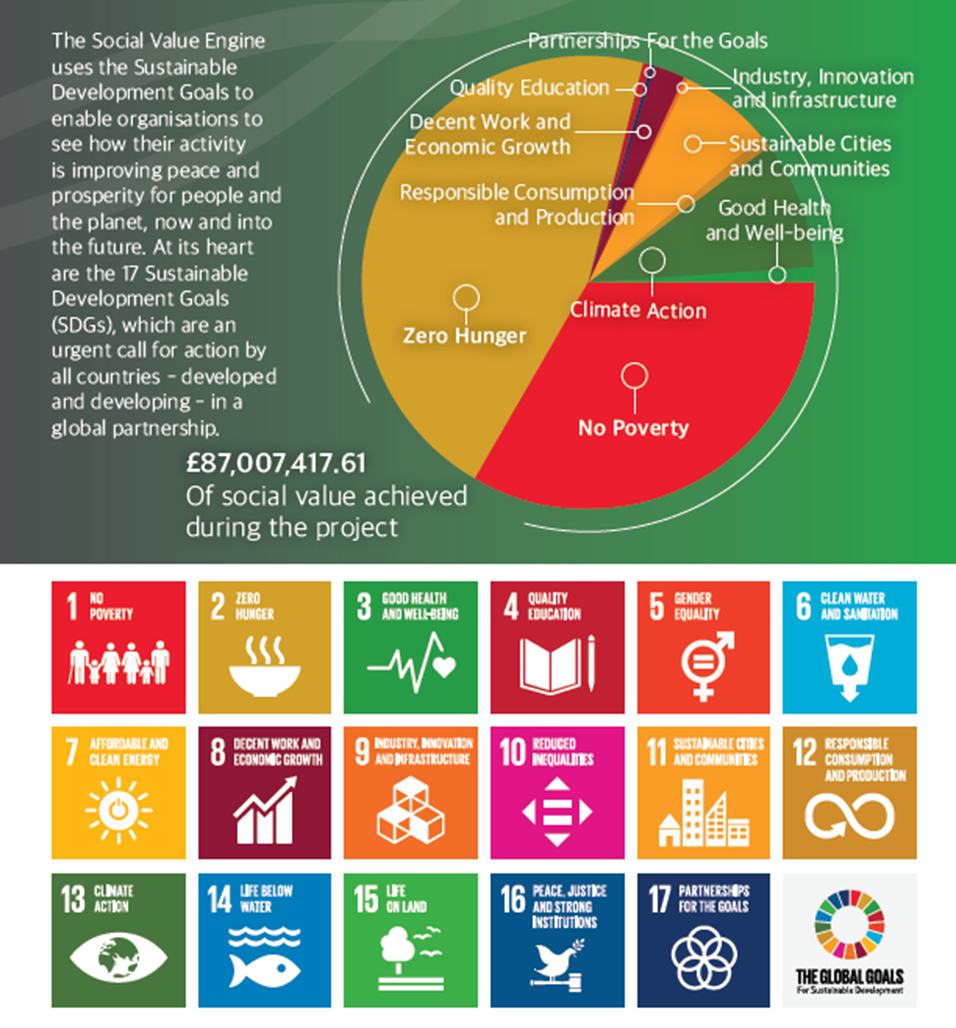
Figure 1: Social Value of the Flavour Project linked to the Sustainable Development Goals
Aspect 3: Results
The Building Knowledge Together strategy outlines key performance indicators aligned to knowledge exchange activities including those that contribute to local growth and regeneration including:
Annually improve our Higher Education and Business Community Interaction return, ensuring it reflects our delivery. The HEBCI regeneration and development data show £275k of income and indicates a marked increase compared to our 2018-19 baseline (just £6k income, +1528%). Nonetheless this doesn’t reflect broader engagement activities that align with our place-based activity, for example business and community services, that support our region (Figure 2). Figure 2 shows we have increased income through these activities, which on average across the three years is +38% and is mirrored by increased engagement with organisations +35%. It is important to set the context of Covid-19 in this data and the boost provided by knowledge exchange funding for small providers. If we compare just 2021-22 to our baseline of 2018-19 then the growth is more significant at +164% income and +48% for number of organisations.
Figure 2: Business and Community Services and Research Related Activities 2019-2022 from HEBCI returns
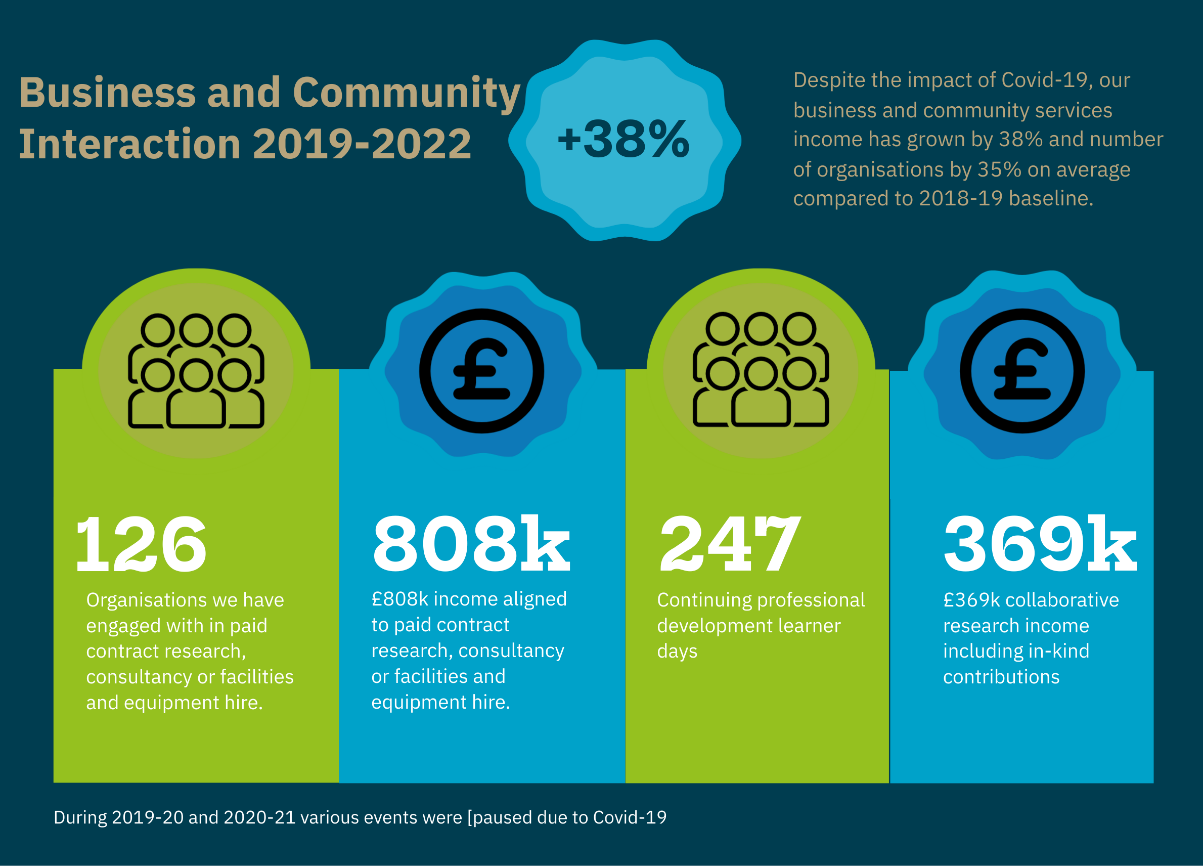
Increase grant funding income including collaborative bids as a funded partner with organisations aligned to Marjon values. The student led knowledge exchange funded project was the key collaborative project that was grant funded (and the model is described in our Institutional context statement). Many of the collaborative projects take the form of consultancy and is effectively summarised in Figure 2.
Figure 3: Overall Social Value of the Flavour Project
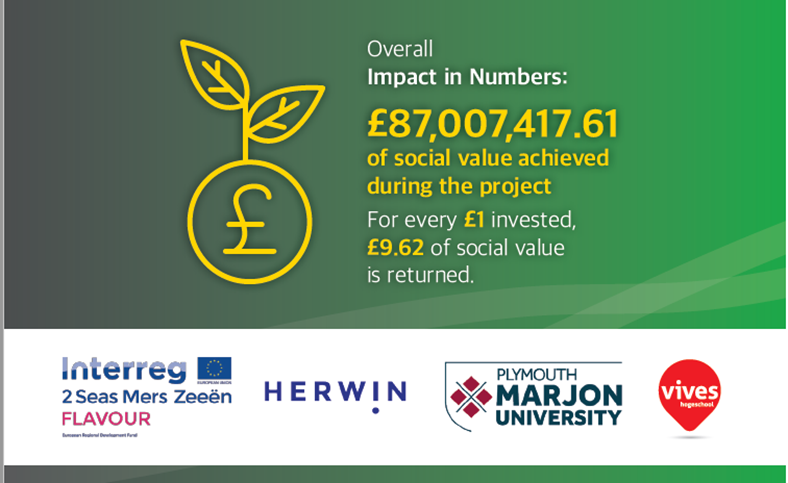
Additionally, as part of our overall university strategy we want to ensure positive influence on regional partnerships/initiatives through strategic engagement. The example activities highlighted in this narrative statement are all indicative of understanding what works, providing resources and impacting positively providing a social return on investment. We routinely undertake impact evaluation of project activity to demonstrate and celebrate success, while learning lessons for future provision. For example, the Flavour project overall outcome is summarised in Figure 3 and was analysed using the social return on investment tool which highlights £9.62 of social value returned for every £1 invested. As our strategies are updated a strategic intent to focus on skills (e.g., apprenticeship starts) and learner CPD days and income is likely to be more visible. Figure 2 illustrates 247 CPD learner days across the 3-year KEF cycle, although the majority was in 2021-2022 reflective of post-covid recovery and Plymouth and wider focus on workforce skills gaps.
Our Research and Knowledge Exchange committee receive an annual report of all research and knowledge exchange activity and annual reports from each of our four interdisciplinary research and knowledge exchange groups. These are also considered at the executive group and by the Board of Governors. Additionally, Marjon holds the Social Enterprise Mark CIC, which is externally assessed and internationally recognised, and provides an independent guarantee that an organisation has met sector-agreed criteria and is operating as a genuine social enterprise, committed to creating positive social change. It provides clear standards for the social enterprise sector, defining what it means to be a genuine social enterprise.
Public & Community Engagement
Summary of approach
Plymouth Marjon is a small university with 183 years history of social justice and transformative education. We are a committed anchor institution dedicated to supporting Plymouth, Devon, and Cornwall through our students and civic commitments. Public and community engagement is integral to how we do things at Marjon and at the heart of this are four civic themes which include student success, social justice and tackling inequality; lifelong health and wellbeing; creativity, culture and development and sustainability, innovation, and clean growth. Through knowledge exchange and real-world impact, we aim to create and nurture opportunities for our students and the community. We achieve this by working collaboratively in partnerships, transforming individual life chances for the benefit of students and the community.
Aspect 1: Strategy
Students are at the centre of our public and community engagement, “we want our students to graduate as active and responsible citizens, with a commitment to social justice and an awareness of global responsibility for people and the environment” (Marjon Growth Strategy). This ambition for students, combined with our civic commitments as an anchor institution underpin our strategic approach and emphasise an embedded, whole-institution approach. Through partnership working and collaboration we aim to transform individual life chances for the benefit of our students and our place. The Marjon Student Led Knowledge Exchange (SLKE) model (Figure 1) aligned to our model of educational gain and social learning paradigm enable systematic embedding and evaluation of public engagement through our engaged teaching.
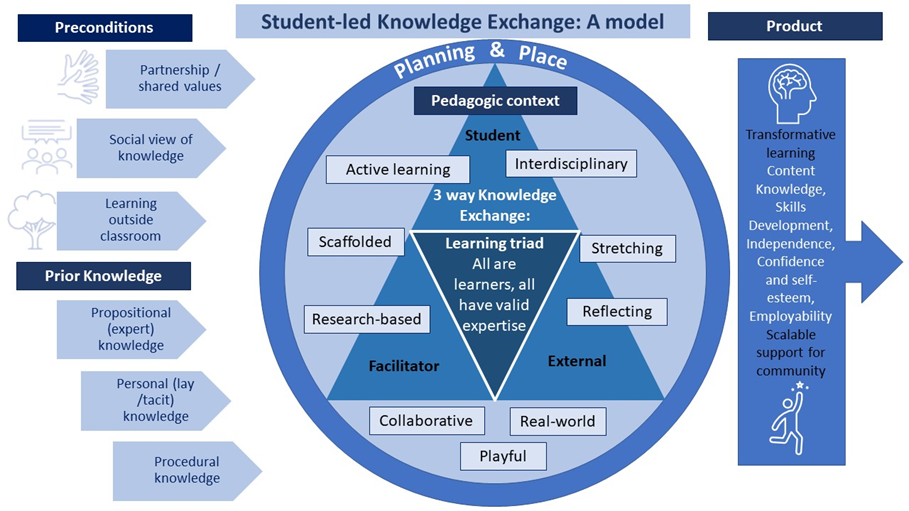
Figure 1: Marjon Student Led Knowledge Exchange Model (Cotton et al., 2023)
Our research and knowledge exchange strategy 2020-2025 ‘Building Knowledge Together’ emphasises a cocreation approach to engagement with the public, but we do also intentionally promote engagement that informs the public, collaborates with the public, and emphasises our social responsibility. Our values drive the approach to active partnership built on mutual respect and engagement practice that is inclusive and has integrity. We believe that engagement involves active listening, so we collaborate to understand changing needs, add value, and make a meaningful difference. Our civic commitments exemplify the social responsibility ambitions of our public and community engagement across four thematic areas of research excellence (Figure 2). While these commitments focus on our immediate region of Plymouth, Devon and Cornwall, they also apply nationally and internationally through communities of interest related to specific themes of research excellence.

Figure 2: Marjon Civic Commitments
We use our civic commitments and university wide Research and Knowledge Exchange Groups to proactively engage with a range of stakeholders including the general public, civic society, public sector and private sector organisations (Figure 3). The nature of our engagement varies across our stakeholder groups. Our engagement is multi-layered, including:
Strategic forums in the city and region.
Building community networks to work directly with leaders/practitioners.
Delivering services and/offering facilities from within the university.
Allocating resource to insight-building and networking activity and organised events and projects inviting prospective partners onto campus to collaborate.
We report progress across public and community engagement to our Research and Knowledge Exchange Committee, Executive and Governors.
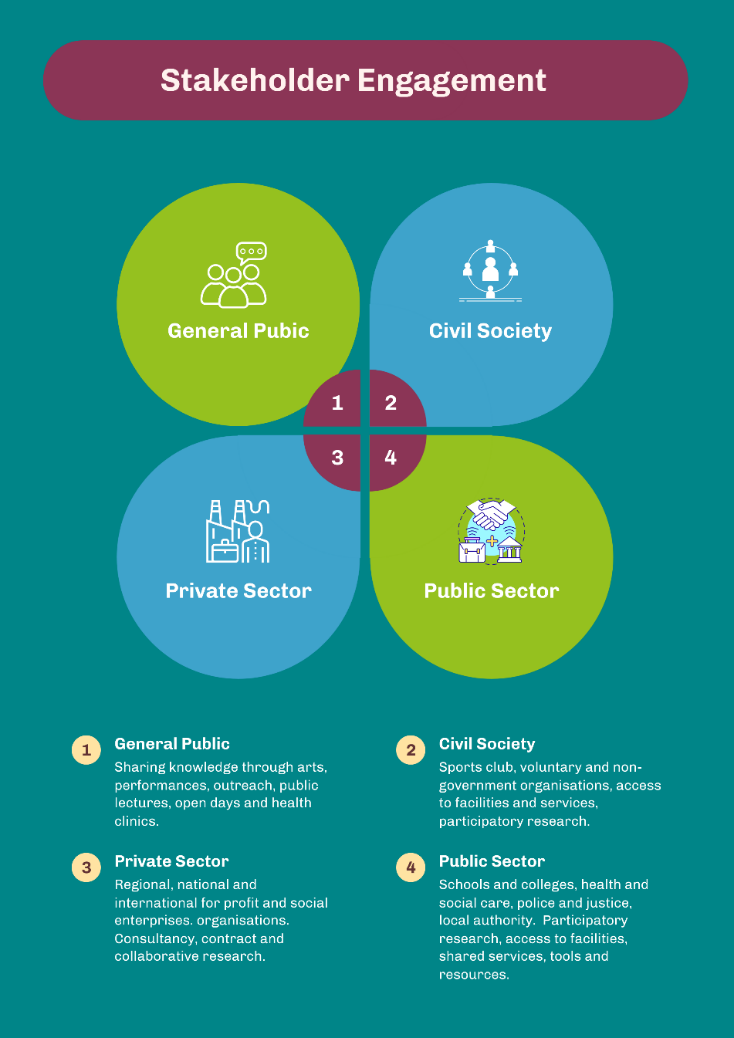
Figure 3: Marjon Stakeholder Engagement
Aspect 2: Support
Organisation structure and resources: Public and community engagement support is offered at university level, reflective of our small size and embedded approach. The Deputy Vice-Chancellor holds responsibility for research and knowledge exchange and is supported by a central Research and Knowledge Exchange Office. This role includes building internal capacity and coordinating externally facing activities and incorporates public and community engagement as a central tenet of the ‘Building Knowledge Together’ strategy.
University wide, interdisciplinary, research and knowledge exchange groups are SCION Sustainability, Innovation and Creativity; CAPE Context, Agency, Place and Education; Lifelong Health and Wellbeing; Resilience and Human Performance. These groups centralise support and intentionally include staff, students, and Marjon stakeholders (Figure 2).
We invested to launch Marjon Evaluation and Research Impact Centre during 2021-22, supported by knowledge exchange funding for small providers to pump prime and accelerate existing expertise and capacity in extending collaborative partnerships. Early evidence suggests this has supported internal capacity, increased the number of external partners, and increased income associated with collaborative research/consultancy services.
Internal capacity building for staff and students: The university wide researcher development series is aligned to the Vitae researcher development framework and supports development in the domain ‘engagement, influence and impact’. This training supports internal capacity to engage for example externally facilitated sessions on ‘Working in Partnership for Researchers’, ‘Getting Social’ and ‘Powerful Posters’ and internally facilitated sessions on ‘Research Impact’, ‘Infographics’ and ‘Evaluation Methodology’. We have centrally developed a support package for our internal community related to bids and funding with partners including guidance and templates spanning across a project’s lifecycle, from proposal templates to PowerPoint template slides for reporting findings.
Reward and recognition: Our Academic Promotion and Career Development Procedure includes a knowledge exchange and impact academic career pathway and criteria such as “ability to influence, stimulate and inspire others and evidence of knowledge exchange which has social and/or economic impact and benefit”. Successful academic promotions during the KEF reporting period have included the knowledge exchange and impact pathway and include one associate professor, one senior lecturer and two lecturers (noting the small size of our Institution). Our Academic Contribution Framework allocates academic time aligned to respective academic career pathway, including knowledge exchange and impact.
Supporting public involvement: The annual Marjon staff and student awards relate to our values, for instance, volunteer of the year and award for humanity. Volunteering is centrally encouraged, supported by Marjon Futures, our student careers service and recognised e.g. volunteer 50 award. Our marketing team support social media training and public facing digital presence for our engagement activity. For example, Marjon Health and Wellbeing Clinics have a dedicated website encouraging public and community engagement. All subject areas have professional advisory groups that include professionals, patients/service users, ‘lay’ members, and/or public representative bodies. A central schools liaison team support engagement with local schools and colleges including projects aligned to our Access and Participation Plan.
Seed funding: The knowledge exchange funding for small providers enabled, through the RKE groups, project-based activity, aligned to knowledge sharing and diffusion. Each of these knowledge exchange projects supported engagement with external partners and connected well with building back better in Plymouth and wider region.
Aspect 3: Activity
Figure 4 summarises our social, community and cultural engagement. Our engagement activity is best illustrated through our thematic civic commitments.
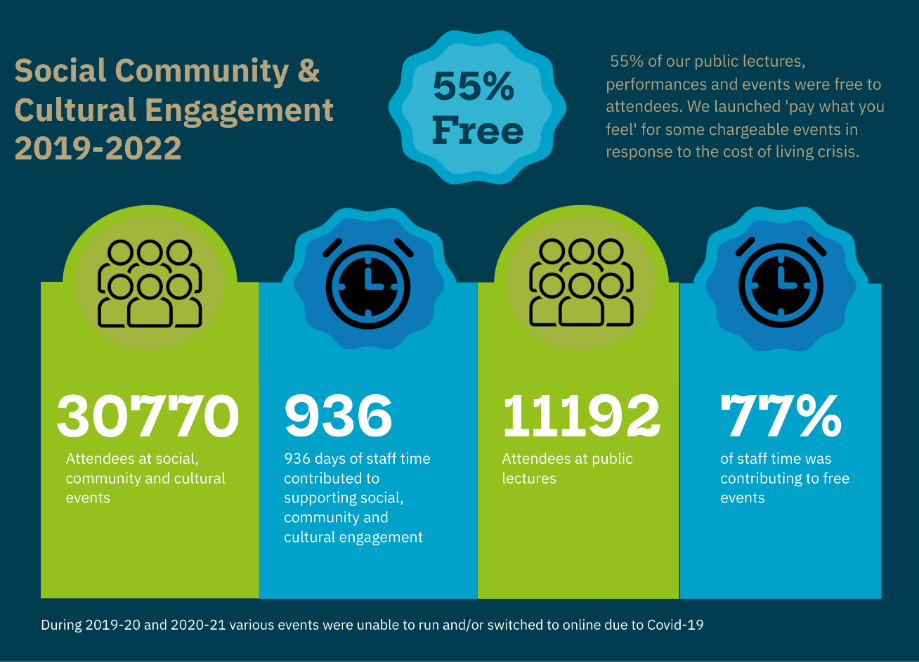
Figure 4: Social, community and cultural engagement 2019-2022 from HEBCI returns
At Marjon we are committed to student success, social justice and tackling inequality.
Are we Included? All educators are concerned by the impact of COVID-19 on students, teachers, leaders, parents, and carers. Building on international research that has improved outcomes for disadvantaged and underperforming students, ‘Are We Included?’ provides a solution to prevailing issues impacting on inclusive practice and the Levelling Up agenda in Plymouth Schools. The principal aim of this project is to improve outcomes (attendance, behaviour, learning) for underperforming students through the implementation of appropriate measurement tools for students, teachers, leaders, parents, and carers that will inform inclusive practice in secondary schools. The knowledge exchange funding for small providers supported initial pilot work with secondary schools and other external partners including secondary student perceptions of an inclusion climate, exploration of inclusive practices among pre-service educators, school middle and senior leaders’ views on how to create an inclusive school and parents and carers of secondary students’ perception of inclusion through survey measurement tools and interviews with participant groups. This provided the launchpad for intervention design including inclusive training which is currently underway.
At Marjon we are committed to supporting lifelong health and wellbeing.
Our excellent sporting facilities position us as a community sporting hub, for instance, our learn to swim programme reached over 570 learners in 2021-22, our pool attracts over 25 000 visits annually and our gym memberships consist of approximately 50% public users. We have 12 fitness classes per week which equates to 200 people participating in physical activity per week. The Sport & Health Centre is home to professional sport teams, community sport and grassroots sports teams. The centre caters for a number of local and regional sports events during the year.
Our BASES-accredited sport science labs serve to educate students, provide sport science services, and facilitate cutting-edge research. A skilled student workforce provides comprehensive support to professional sports partners and athletes, such as the FA Women's High Performance Football Centre, Plymouth Argyle FC, Plymouth City Patriots, British diving, and GB wheelchair rugby athletes. Our community commitment is evident with local partnerships established to promote inclusive participation in sport and physical activity ensuring social justice (Plymouth Argyle Community Trust).
Marjon hosts over 15 health and wellbeing clinics which brings students, patients and professionals together to challenge and advance healthcare. Through focusing on the person this model supports patient activation and empowerment underpinned by our research. The range of clinics and partnerships are summarised in Figure 5 and supported at least 750 clients per annum. Impact evaluations involving outcome measures, service user surveys and interviews has demonstrated Marjon Health and Wellbeing Clinics improved health outcomes, functional capacity, perceived disability and quality of life irrespective of disease, severity, age or gender.
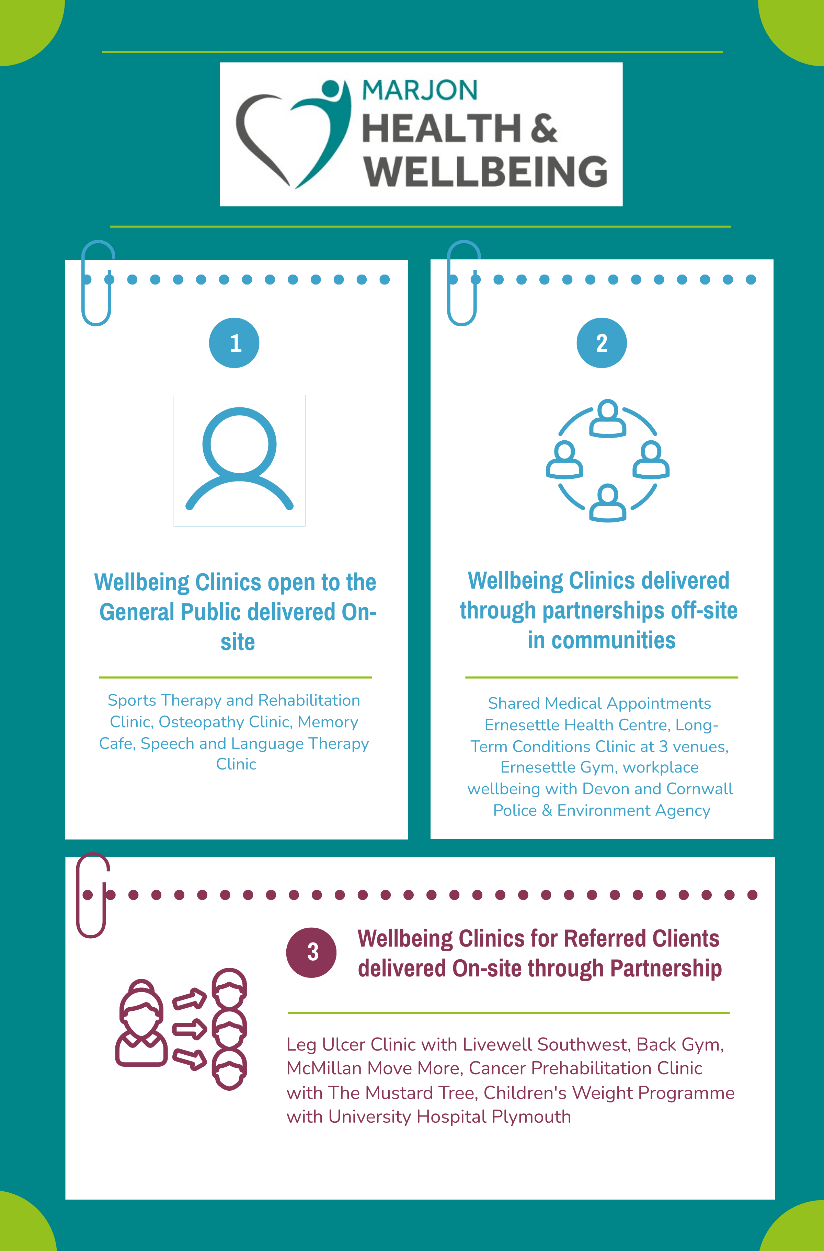
Figure 5: Marjon Health and Wellbeing Clinic Activity
At Marjon we are committed to enabling access to creativity, culture and development opportunities.
The MarjonXRame project explored innovative approaches to actor training in nature, the summer school included a ‘silent walk’, and exploration of stage combat, as well as a live performance for the public. Summing up their experience of the project, one participant commented “It was brilliant. The whole summer school experience left me energised & enthusiastic to come to Plymouth more often to exchange ideas and share skills”.
Community Curation was a project to explore and develop a new model/methodology in community engagement. This project explored the interest in the heritage of the area held by members of the local community. Local communities, which aren’t always the first to connect into initiatives, engaged in a grassroots participatory approach that aimed to break down barriers. Local people were asked to bring in any items, memorabilia etc that they felt was relevant. The community also provided the stories that were attached to these items by offering two oral history “surgeries”. The curation and install of the exhibition became the event/engagement itself. A day was set and the people who donated items were invited back in to help us create an exhibition in the community hub.
At Marjon we are committed to supporting sustainability, innovation and clean growth.
SCION continued to expand its external links and partnerships in line with our aspiration to become a leading participatory research network in sustainability. Collaborative activities included submitting funding bids with the Plymouth Community Climate Centre, and Environment Plymouth, as well as joining the UK Consortium for Sustainability Research. The group are also working with Plymouth City Council across various areas including carbon literacy and post-covid regeneration. The Inter-reg Flavour project focused on food waste and sustainability and tied into CIC Food Plymouth supporting business model development and employee training. A member of SCION recently appeared on BBC Devon, talking about the link between nature and wellbeing and another is a regular contributor to the Guardian on sustainability topics and has recently started a YouTube channel, entitled #SixtySecondStories. We had a SCION representative at COP26 as the Student Climate Commissioner, and representation on the DfE’s Sustainability and Climate Change Youth Panel. The group also offered Carbon Literacy training led by a Phd student, which involves six hours of teaching, a short assessment, and pledge at the end. Certification is awarded by the Carbon Literacy Project. Assessors commented that “there were some truly inspiring pledges made by this cohort!” The pledges involve both institutional and local activities and included working with the Yealm Estuary to Moor project to set up a community tree nursery.
Aspect 4: Enhancing practice
Building Evaluation Internal Capacity: All individual engagement programmes are routinely evaluated to monitor their impact and to seek opportunities to improve delivery. Monitoring of engagement activity has traditionally included, for example, the number of events, attendees, public feedback, and satisfaction levels. We have deliberately invested in enhancing the strength and depth of our evaluation capability, building on existing expertise, to improve our understanding of the impact and outcomes from our existing activity. The type of evaluation varies with the context of the engagement activity, but we have established expertise in transformative evaluation (participatory and appreciative), realist evaluation, and theory of change. Our researcher development series has included training utilising different evaluation methodologies and how to develop logic models and theories of change. We have also started to develop toolkits for evaluation, supported the upskilling of Marjon staff evaluation skills ‘on the job’ and provided more early career evaluators with easily accessible opportunities to work on evaluation projects. As public and community engagement activity matures some areas are looking at developing a more holistic evaluation frame.
Strategic Evaluation: Strategic evaluation to address the impact of our engagement strategy is less well developed. Students are at the centre of our public and community engagement and so the outcomes of our students, is strategically important. Student outcomes are evaluated through our Career Pulse Survey, UK engagement survey, and student satisfaction surveys (e.g. NSS questions on personal development and learning community). Students’ confidence, self-esteem and independence are particularly important to the wide range of students we serve and support the goal of successful graduate outcomes and their contribution to society as responsible and active citizens. We routinely monitor other indicators of our public and community engagement including for example the number and scope of communities engaged aligned to our stakeholder engagement map, social media activity, funding received through public engagement and collaborative research, the number of volunteer hours and staff time associated with public and community engagement. More narrative and testimony, alongside existing quantitative data, would improve our understanding of the impact of our public and community engagement work. This is work in progress, for example, all our health and wellbeing programmes have agreed to collect a common suite of outcome measures to further elucidate their impact on people’s quality of life, health status and wellbeing. In 2020 we also strategically funded a PhD bursary to support a realist evaluation on Marjon Health & Wellbeing to better understand what works for whom in what circumstances. This is now nearing completion.
Evaluation of our support: Feedback regarding capacity building sessions includes consideration of the impact on practice and attendees. We regularly review the support provided and respond to feedback regarding gaps/shortfalls in skills. Annually staff performance development reviews allow staff to highlight their public and community engagement activity aligned to the behavioural framework. 40% of our academic staff has visited the evaluation toolkit resources to date, many have used them providing us with positive feedback on their usefulness. Our support with bids has also resulted in growth in external bids with collaborative partners.
Aspect 5: Building on success
We annually publish a university level impact report that is shared internally and externally. We wish to develop logic models and theories of change for each of our main knowledge exchange activities. We will create these collaboratively with our broad community, agree monitoring and evaluations systems with them and track progress more systematically. Knowledge exchange representatives sit on our Research and Knowledge Exchange Committee to ensure effective governance including annual reports to ensure continued vibrancy, and that activities, outcomes and impact align to our strategy and civic commitments. Engagement of people who use services across health and wellbeing clinics is embedded leading to a cycle of iterative and reflective practice. Many of our public and community engagement activities take a co-creation approach and community members are active contributors.
Note You are currently viewing the latest version of this narrative statement. View the previous version as published in previous iterations of the KEF (KEF1 and KEF2)