Institutional Context
Summary
Guildhall School of Music & Drama is a vibrant community of musicians, actors and production artists. Ranked as one of the top ten performing arts institutions in the world (QS World University Rankings 2022), we deliver world-class professional training in partnership with distinguished artists, companies and ensembles.
We are a global leader in creative and professional practice, and promote innovation, experiment and research. We are one of the UK’s leading providers of lifelong learning in the performing arts, offering inspiring training for children, young people, adult learners, and creative and business professionals. We are a founding member of the City of London’s Culture Mile, a cultural place-making initiative for our local area.
Institutional context
The Guildhall School values innovation and experimentation, and we encourage our staff and students to explore the big questions that affect artists and the industry today. Above all, we believe in the power of performing arts to transform people’s lives, and to radically enrich the world around us. Our institution is one of the few major European conservatoires to combine music, drama and production arts. Working across disciplines allows us to break down boundaries and nurture invention.
Our institutional strategy outlines a vision and values for the organisation to be bold in its civic role within our locale, industry and the wider world. This includes our future-facing degree programmes, our ambitious commitment to lifelong learning and engagement, our responsibility to supporting the resilience of the arts sector, and to addressing challenges in society.
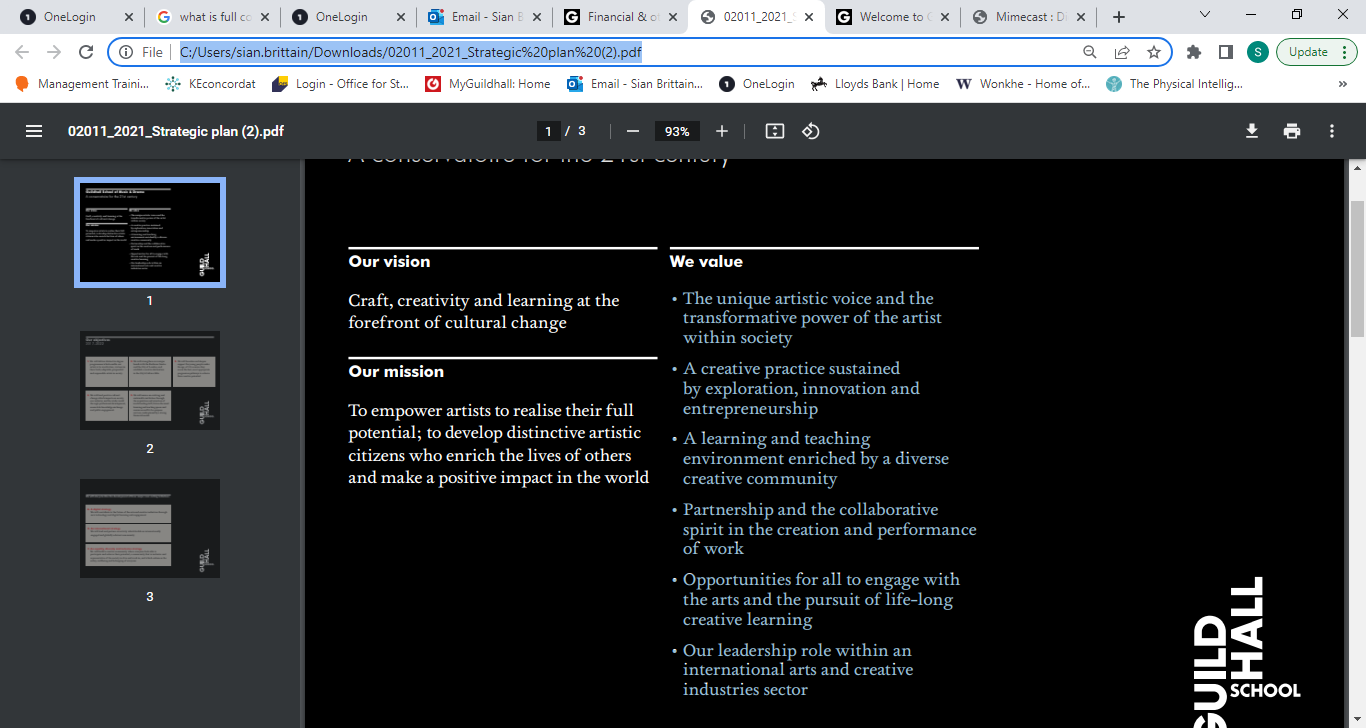
Collaboration is core to our aims and values. Our partnerships create outstanding opportunities for our staff and students, and enable us to have deeper impact. Our partners include the Barbican Centre, London Symphony Orchestra, BBC Symphony Orchestra, Royal Opera House and the Academy of Ancient Music.
The School is a member of Conservatoires UK, the European Association of Conservatoires, London Higher, and the Federation of Drama Schools. Our alliance with the Barbican works to catalyse our collective expertise and resources for performance, public engagement and lifelong learning.
We challenge our students to work to professional standards in a world-class context, drawing on the insight and skills of internationally-renowned artists and associates; including directors, designers, conductors, artistic companies, and orchestras.
We have some of the best facilities for training in performance arts and production anywhere in the world, including a world-class concert hall, and two theatres. The addition of our advanced recording and audio visual infrastructure has extended our audience reach and transformed our capacity for creative innovation and collaboration internationally.
Active engagement with diverse communities keeps us constantly alive to the unique potential of performing arts to provide pathways to self-expression and positive social change. We establish non-hierarchical relationships that enable projects in communities to feel owned and led by partners and recognise the expertise and lived experience of our stakeholders.
Our lifelong learning strands; including Guildhall Young Artists, Creative Learning, and Guildhall Short Courses engage with children, young people and adults across the spectrum of experience. Our reach extends nationally and supports creative learning infrastructure beyond London through Guildhall young artist centres.
We collaborate with partners across sectors, including business, industry, public and third sector to deliver innovative exchange, harnessing the power and value of the performing arts. We are the home of the Institute for Social Impact Research in the Performing Arts. Our professional training and executive coaching services support the resilience of our own industry, and enable other sectors to develop skills through the prism of artistic practice and education.
We are deeply engaged with our local area through partnerships established by Culture Mile, the City of London’s place-making initiative. Through artistic intervention, capital investment, consultation and exchange we are working to build a destination for culture and a place where residents and visitors feel connected to their surrounding environment.
For further information, please send queries to Sian.Brittain@gsmd.ac.uk
Local Growth and Regeneration
Summary of approach
The Guildhall School of Music & Drama plays a prominent civic role both locally and nationally. We are a member of Culture Mile, a strategic local partnership aimed at regeneration, capital investment, local infrastructure and growth, as well as having strong links to the communities in our local area of Barbican. We work in regions outside of London to support education provision and place-making. We work with local government, schools, communities, business and third sector to ensure that work is aligned with the needs of the area and those within it. Our approach is to innovate and develop solutions collaboratively, to solve challenges and create resilient local communities and economies through cultural engagement.
Aspect 1: Strategy
The Guildhall School is based in Barbican, in the Square Mile of the City of London. Our area is made up of approximately 11,000 residents, 587,000 workers, and 22,275 businesses. The majority of our KE work focuses on the needs and development of our immediate locale, however we also have programmes that focus on cultural and artistic place-making activity on a national level, as well as educational development for under-18s in other UK regions.
During this reporting period the Square Mile has had substantial investment in relation to capital projects, regeneration and development. The School has been influential in a number of these changes, ensuring that cultural activity and engagement remains at the forefront of the City’s place-making and civic agenda. We have ensured this through being part of the following groups and processes:
Continuing our role as one of the five founding partners in the City of London’s cultural destination project, Culture Mile
Being a member of the Smithfield Market regeneration and Barbican Renewal, two major capital projects whose intention is to increase access to the cultural offer in our area and improve visitor experience
Being a member of branding in the public realm, which aims to incorporate wayfinding into the public realm, led by the City of London’s Built Environment team
As a founding partner of the City’s cultural district Culture Mile, our strategic approach feeds into the aims and objectives of this place-making project. Culture Mile’s aims include:
Developing and amplifying the spaces within Culture Mile, from public realm through to meanwhile use
Strengthening connections with and between neighbours and the heritage and culture on their doorstep
Developing the City’s creative ecology, facilitating and advocating for deepened collaboration between commerce and culture for mutual benefit.
Drawing on the combined expertise and experiences of 25 unique culture venues to develop the skills needed to support learning and social mobility.
Enabling Culture Mile to achieve its transition to a mixed economy business model as a culture-led Business Improvement District in the City.
Through 2021/22 the School has been a member of a cross-sector steering group informing the development of a new Business Improvement District (BID), which would become the City’s renewed commitment to place-making in this area, alongside Destination City; a new department at the City of London. In early 2023 the BID was officially approved, and the School is now a member of the Culture Mile Business Innovation District.
Our own local growth and regeneration work is underpinned by our institutional Public Engagement & Community (P&CE) strategy (See Community & Public Engagement, Aspect 1).
The 3 strategic aims that support this work are:
Public access to, and engagement with, the arts
Lifelong Learning
Developing equitable partnerships within and beyond our sector
The strategy, and flagship activity, have been developed on the basis of local need in the areas we work. Need is identified through our partnerships with local government, organisations or directly with community groups. We establish our approach through consultation or research with partners, and draw on stakeholder data and research.
Aspect 2: Activity
Guildhall School has a developed relationship with communities and local government both locally and nationally. Our aim is to create thoughtful, contextually appropriate and sustainable partnerships through our work. The School is home to the Institute for Social Impact Research in Performing Arts, which fosters ongoing dialogue and reflection into the impact of place-based cultural activity. We respond to need and context, and adopt an ethical approach that does not destabilise local community ecosystems, but instead supports thriving local growth and development. We do this through;
Increasing public access to, and engagement with, the arts: by delivering place-making activity & programming which works directly by, with and for particular community groups and local government
Developing our lifelong learning: by providing skills training in and through the performing arts, supporting the resilience of the creative economy and the professionals within it
Developing equitable partnerships within and beyond our sector; by building Cultural Creative Industry (CCI) Sector focussed partnerships to support resilience, innovation, and economic growth; and partner with organisations & Community Interest Groups to support thriving local ecosystems
Public access to, and engagement with, the arts:
The School has strong ties to our locale and the communities that are part of it. Our relationship to these communities is a key part of development, and we ensure that the interests of these groups are either represented or supported when we create work, or discuss regeneration of the area in relation to capital investment.
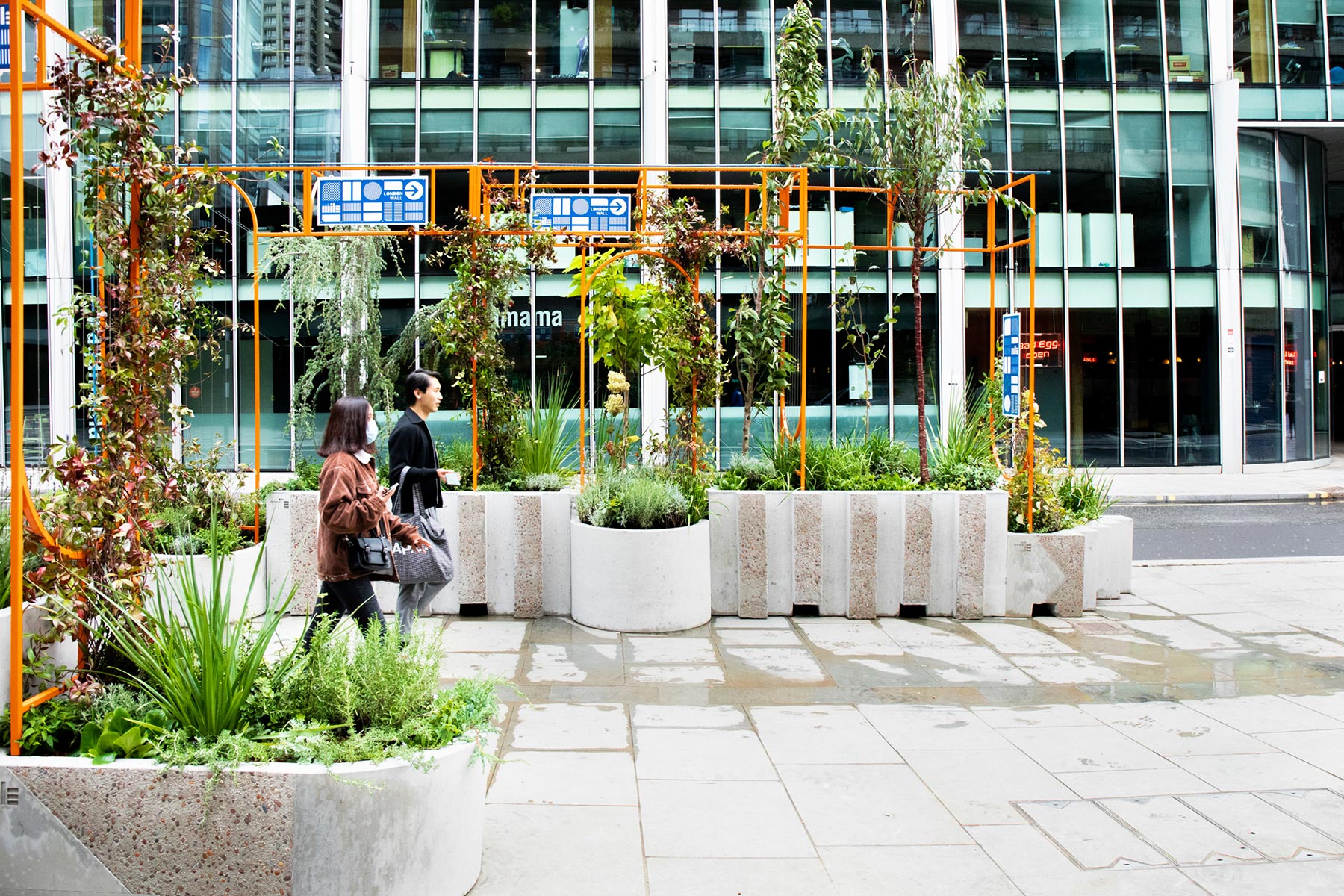
Culture Mile has enabled the School to produce a broad array of place-making activities in our local area. These have included festivals, events and immersive activities which were visited by over 40,000 in 2019/20. In 2021, we worked with local residents to create the Moor Lane Community Garden – a Culture Mile project that was a resident led scheme and funded by the City of London’s Built Environment Department. We worked with architects and City of London departments to realise the garden, which included facilitated workshops with 12 community groups to create a poem which now forms part of the garden.
Nationally, our Guildhall Live Events (GLE) team has strong links to a number of immersive place making festivals. These include Lumiere Festival (Durham), Lightpool Festival (Blackpool), Lumen Festival (Crewe), and Into the Light (Norwich).
In 2019 Artichoke Trust commissioned GLE to produce Lift Off, a spectacular bespoke digital artwork for Lumiere Durham in Nov 2019. Lift Off was made by 50 students from East Durham College (EDC), Peterlee (an area in the top 1% most deprived areas for children in the UK), after receiving a series of skills training from Guildhall School. The project ran for 9 months, offering genuine opportunity for skills development and a depth of project ownership and agency for the participants. The project involved partnerships with many local educational institutions, cultural organisations and community centres. Lift Off was seen by audience of 260,000, as part of the larger place-making festival.
Equitable partnerships within and beyond our sector:
Our membership of the Culture Mile Business Partnership, and the Culture and Commerce Taskforce ensures that the resilience of the CCI sector is core to the City’s understanding of economic growth and innovation. In 2019, the Taskforce published the report Creativity: The Commercial Superpower, which brought together a number of findings around how creativity and culture can boost economic growth and talent retention in the corporate sector. The report developed into a Taskforce, a Business Partnership which shares expertise across the cultural and business sectors, and provided an evidence base for a Culture Mile Business Innovation District. This work is driven by a shared understanding of the needs of both the CCI and corporate sectors, and the importance of developing a responsive local infrastructure that can support an ecosystem for both to flourish.
At the forefront of this work in building local and national government awareness of the economic value of the creative and cultural sectors, and the power of local cultural clusters. This work also aims to ensure the sustainability and equity of our own sector. This was of particular urgency in the immediate aftermath of COVID-19, which saw careers disrupted and many professionals leaving the sector.
Our partnership work also responds to the needs of the communities and organisations around us.
In response to the potential isolation felt by local older residents and vulnerable communities during the COVID-19 lockdown, we partnered with Barbican and Culture Mile, together with wider partners including Age UK. The partnership produced Culture Mile Imagine Packs; creative resources to spark joy, creativity and imagination.1600 physical Imagine Packs were sent direct to people’s homes around the Barbican and Golden Lane Estates.
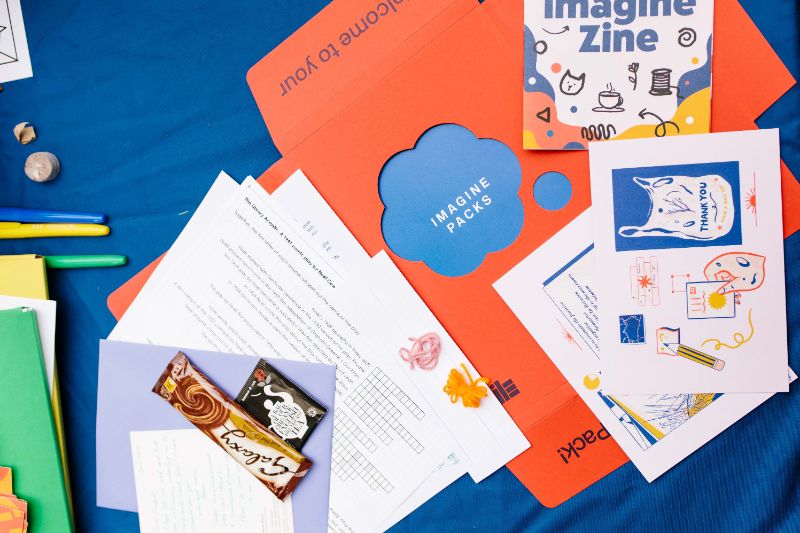
The Imagine Fund began as a Culture Mile project in 2020 at the request of local residents and workers. The project offers micro-grants to community members to bring to life a project that benefits the local area. The selection panel is made up of local residents and the majority of projects are public realm interventions and cultural activities. This work links to the place making agenda of Culture Mile partners, and places equity and community decision-making at its centre to ensure that we are meeting the needs of our communities.
Lifelong Learning
During this reporting period, local growth and development in lifelong learning has been developed regionally through our under-18s provision by our Barbican Guildhall Creative Learning department, and via our Guildhall Young Artist Centres and Music Education Islington hub.
Barbican-Guildhall Creative Learning developed a project called the National Development Programme. The project was informed by an evidenced lack of access to arts and cultural activities for young people in rural and urban places around England. We partnered with Harlow, Manchester and West Norfolk to create projects together that complimented their existing work and systems by strengthening relationships between cultural organisations and surrounding schools; increasing access to arts and cultural learning for young people; and supporting creative classroom practice by offering professional development opportunities for artists and educators.
Guildhall Young Artists (GYA) includes established hubs in London, Taunton and Norwich, providing high quality music teaching for under-18s. The centres work closely with schools to ensure that provision is offered to underserved communities. Our GYA centres support 1600 young people, 33% of which are from ethnically diverse backgrounds and 9% of which have a declared disability. The centres offer bursaries for families from lower economic background, with 66% of students attending from the state sector and 18% of all student attending on a bursaried place. In the last year, 14 Guildhall School ensembles delivered mini-residencies in venue schools and local primary and secondary schools, reaching an audience of at least 3,000 young people.
Through 2021/22 the Director of GYA worked in feasibility and needs analysis with Islington Council and the City of London to identify the location for a new north London centre. This new hub opened in 2022 in Kings Cross, in partnership with local School Elizabeth Garrett Anderson, and is ensuring close collaboration with local education providers to meet the needs of children in the area.
We have strong links with London Borough of Islington and their Cultural Enrichment team. In 2018, we established Music Education Islington (MEI); the first music hub partnership between a conservatoire and a local council. MEI is led by the Guildhall School and Islington Council, in partnership with Music in Secondary Schools Trust and leading arts organisations, with funding from Arts Council England and Dame Alice Owen Foundation. MEI enables access to musical education for the borough’s schools and pupils regardless of background or attainment. The hub also offers CPD to local school teachers, helping them deliver music in the curriculum.
Aspect 3: Results
Evaluation methods
Efficient criteria setting, data monitoring and review are all key to acting on results and enable us to adapt and improve. Our Innovation Fellow; Evaluation has supported the development of evaluation methodologies internally (see Public & Community narrative, Aspect 4). We also build in iterative learning through partner and participant feedback.
Our local growth and regeneration activity has objectives, KPIs and outcomes attached. These are managed locally by departments and reported centrally to the Innovation department. Reports are shared via our own website or partner sites, and via annual reports. The project lead communicates findings back to partners through stakeholder meetings.
Evaluation of Public Engagement activity measures:
Audience, learning or participant impact
Indicators for collaborative partnership development
Indirect income into a locale as a result of Culture Mile activity
Progression into other forms of musical education
Internal processes and ways of working
Evidence of impact
The Guildhall School has supported local growth and regeneration both locally and nationally through a large number of projects, some of which are ongoing. Some of these impacts are outlined below:
In 19/20 Culture Mile brought 44,000 visitors to the local area, with 82.4% of audiences rating programming highly. Many projects worked directly with local business owners, leveraging £686,650 of secondary spend for local businesses (Culture Mile Annual Report 19/20). Community programmes engaged with 3,500 local residents, with many activities being co-created and developed around local need. 82% of local residents agreed or strongly agreed that Culture Mile benefited the local community.
In relation to specific projects, Moor Lane Community Garden leveraged £105,000 of funding from local government. The project involved just over 600 residents, including a public realm consultation and co-design process. 18,200 people have interacted with the garden since its installation in 2020.
Guildhall Live Events, our team specialising in immersive experiences, has worked in partnership with over 30 organisations during this reporting period, including place-based initiatives in Bloomsbury, Tower Bridge and Waddesdon Manor, and Broadgate Estates. This was a significant achievement, given the hiatus of live events caused by COVID-19. In 20/21, they engaged 200,000 audience members with outdoor place-based activity. Three of the above partnerships are second or third year engagements, secured by providing high quality activity but also maintaining and developing excellent relationships.
Our local growth work aims to support economic growth both in our immediate boroughs and in regional areas across the UK.
The Culture & Commerce Taskforce, Chaired by the Lord Mayor, in partnership with the City of London Corporation and Culture Mile, assembled 20 leading figures from across the capital to address the massive challenges faced by the cultural and creative industries in the City, and London more widely. The businesses represented included Linklaters, Arts Council England, Bloomberg, Greater London Authority, Lloyds Banking Group, Barbican, and The Trampery. The partnership enabled the development of a blueprint for sustaining a long-term relationship between the creative and business sectors, This produced a published report which sets out the roadmap for this context and which can offer insight to other cultural regeneration projects; Culture and Commerce: Fuelling Creative Renewal. The taskforce directly informed the development of the Business Improvement District Bid (successful 2023).
In relation to our aims around lifelong learning, in 19/20 Guildhall Young Artists offered training to over 900 young people across its regional and London centres. Since 2018 Music Education Islington has reached 11,775 children. In 20/21, MEI worked with 95% of Islington’s schools, with 2,800 young people receiving free music tuition.
During this reporting period, the Barbican Guildhall National Development Programme has worked with 30 schools, 39 teachers, 27 artists and over 750 young people across Harlow, Manchester and West Norfolk. A toolkit has been published to support growth in this area of work to encourage partnership working directed towards the development and delivery of arts and cultural learning work with schools and young people. A longer evaluation of the project can be found here.
Public & Community Engagement
Summary of approach
Guildhall School’s institutional strategy aims to establish a conservatoire that facilitates positive change in society. Our approach to Public & Community Engagement (P&CE) is to create valuable, high quality experiences, develop skills or uncover new insights through equitable partnerships in our sector (Creative and Cultural CCI), and in the public and third sectors. Particular focus in this period has been to address the challenges and ongoing impact of COVID-19 on our industry and the wider world.
Our activity covers;
Public arts programming and performances; across music, theatre, spoken word, installations and festivals.
Access to lifelong learning, across the spectrum of experience from childhood through to adult learners and professional development
Place-making and community co-created arts projects
Aspect 1: Strategy
We are a performing arts institution with year-round public programming taking place in and beyond our venues. P&CE is at the heart of our work (see Institutional Context: Guildhall values). Our strategic plan includes the following objectives which focus on engagement:
Ensuring our degree programmes enable artists to be purposeful, engaged citizens (objective 1)
Building arts engagement in our locale through a cultural hub partnership (objective 2)
Developing our provision for lifelong learning (objective 3)
Leading positive change in our industry and society (objective 4)
External stakeholders include; CCI sector (performing arts as special focus), education, health and social justice. Lifelong learning and arts-engaged participants range from; children and young artists, adult learners, arts professionals, community groups, local residents.
Much of what we make, produce or curate is for public access. Activity is delivered via multiple departments, so we recognised the need for a P&CE strategy which could bring this work together under overarching aims and objectives (see figure 1, and Aspect 4).
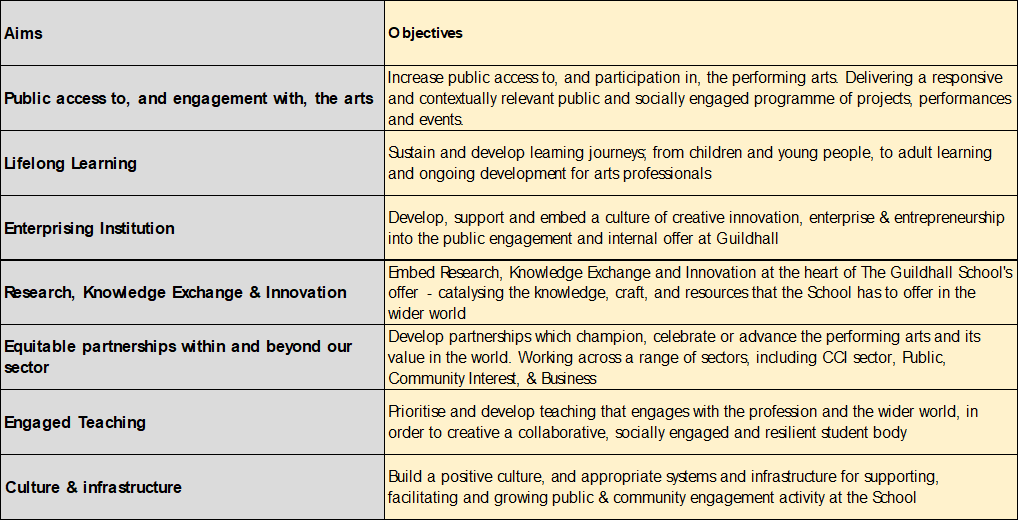
Figure 1: Guildhall School P&CE Strategy: Aims and Objectives
Staffing and Governance
P&CE activity takes place across the institution. However, Guildhall Innovation is the engine room for supporting, connecting, or facilitating activity, as well as leading on several flagship strands.
The Vice Principal and Director of Innovation & Engagement (I&E) is the institutional lead for P&CE. This post sits on the School’s Executive Team, and reports to the Principal and the Board of Governors. The Head of Innovation and the Director of Guildhall Young Artists report to the VP & Director of I&E.
Guildhall Innovation includes 4 senior managers with a remit for P&CE (they manage flagship strands; Guildhall Live Events, Guildhall Coaching Associates, Open Programmes, and Creative Partnerships), and the Innovation Fellow: Evaluation, whose remit is to build institutional capabilities in evaluating P&CE activity. (Refer to Aspect 4 for further information).
Strategic partner programmes (including Culture Mile and Music Education Islington) have additional governance at project level, with reporting lines into each partner organisation.
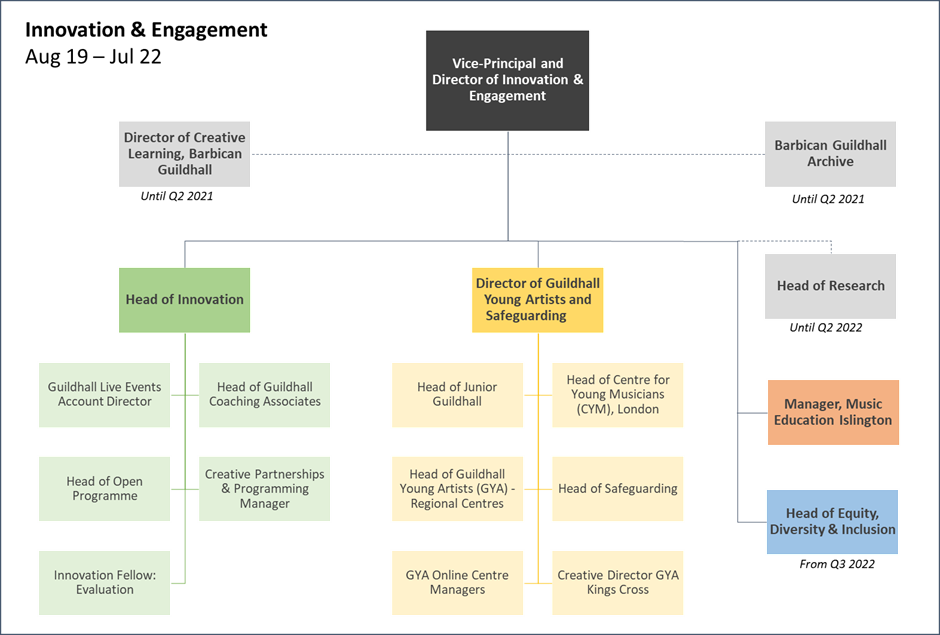
Figure 2 Organogram for Public Engagement accountability and governance
EDI
EDI directly informs our methodology for approaching and delivering work. Our activities aim to remove barriers, build equitable connection and exchange, and provide equal opportunity (see DISRUPT, Untold, Music Therapy, Aspect 4, and Culture Mile Local Growth, Aspect 2).
The Vice Principal & Director of I&E also oversees EDI. Since August 2022 the Creative Partnerships & Programming (CP&P) Manager is seconding to the position of Joint Acting Head of EDI. This directly informs our approach to P&CE, and ensures activity is aligned with the School’s emerging strategy for EDI.
Resourcing and Efficiency
Before project initiation we use evaluation frameworks (Aspect 4) to establish that our involvement in a project is appropriate to our skills and expertise, and can offer efficiency.
Flagship strands including Guildhall Live Events and Coaching & Mentoring secure partner projects through demonstrating value for money; via formal tendering and commissioning processes. We also build project-delivery work into salaried staff contracts, but flex to engage a wider pool of freelance associates (e.g. Coaching Associate pool) when projects require this.
Identifying Communities
There are several ways in which we identify communities and their needs.
Analysis: We review relevant data to assess need and establish appropriate action (e.g. under-18s provision is based on a 2-year insight exercise, where 350+ inputs were collected nationally, students were assessed and benchmarked. We based regional centre locations on the Government Opportunity Area programme.)
Partner insight: We work with partners who understand the needs of their stakeholders and the expertise we can provide (example: Untold, Music Therapy, Aspect 4).
Local area collaboration: We build partnerships where we can have durational impact on/with local communities. As Culture Mile partner and part of the City of London, we can work in synchrony with other interventions to increase impact (Local Growth, Aspect 3).
Aspect 2: Support
The School has further embedded its approach to support staff, students and graduates in P&CE (figure 4).
In 2021 we established a KE working group as a sub-committee to Research and KE Committee. The group is chaired by the Head of Innovation with membership from across School disciplines/departments. It aims to improve systems and practice for P&CE support. The Head of CP&P facilitates the mechanisms of practical support;
For Staff: All staff can access initial support on the intranet. The ‘Staff Ideas Hub’ provides a ‘way-in’, and connects them to the correct advisor via a short survey. Staff can then access advice and guidance for projects, seek grant funding via the Lightbulb fund (KE small grants administered by the CP&P Manager). Staff also access support for planning and evaluation through training and clinics with the Innovation Fellow: Evaluation (see Aspect 4).
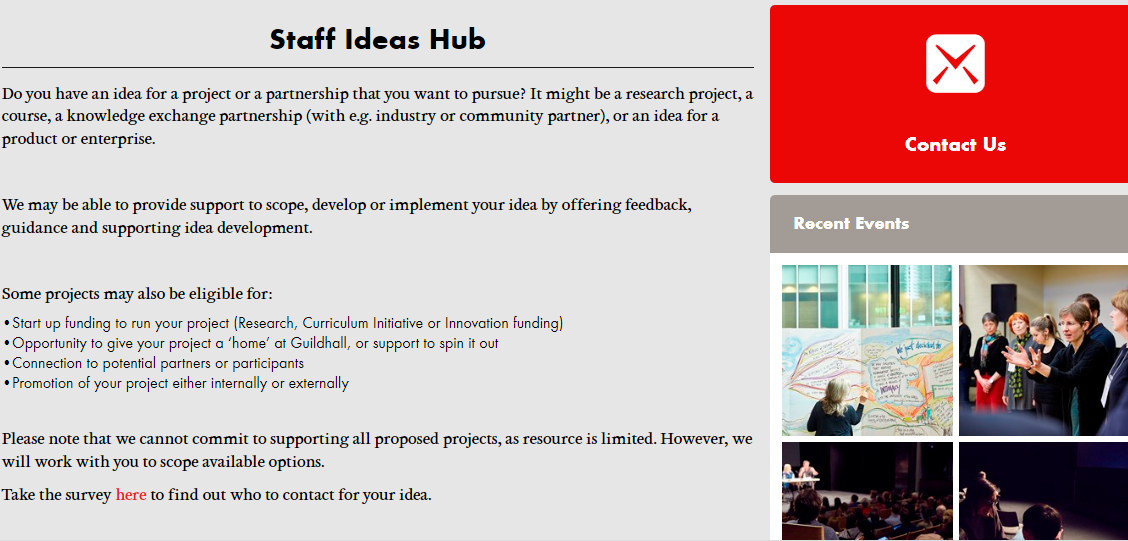
Figure 3; Staff Ideas Hub, Guildhall Intranet (screenshot)
As a small specialist institution, it is not feasible to embed promotion pathways for staff who engage in this work. However, the allocation of Lightbulb funding does ensure that projects are built into appraisals and workflows, and their performance in projects can be recognised through team reporting, and in the staff e-newsletter. Line managers can also seek honorariums for staff who go above and beyond their core duties; which can include engagement activity.
For students; In 2022 we launched Undisciplined, an extra-curricular initiative supporting interdisciplinary practice via industry residencies, training, and funding.
For graduates: In 2021 we launched the Futures Fund, a small grants scheme aiming to support early-stage practitioners during a time of crisis in the industry. We also provide commissions and engagements through partnerships including Barbican, Culture Mile, Age UK, and Bishopsgate Institute.
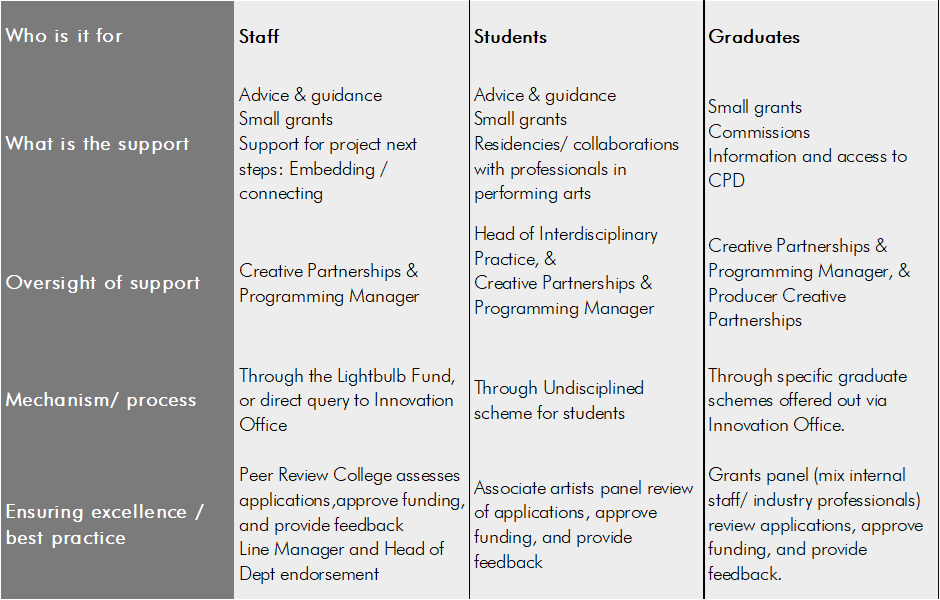
Figure ; Staff, Student and Graduate Support
Aspect 3: Activity
Flagship activity delivers against strategic aims for P&CE:
Public access to, and engagement with, the arts
Guildhall Live Events specialises in delivering immersive digital experiences, working with partners across the UK. Most impactful projects deliver on multiple aims, such as our work with Artichoke (Durham), combining digital innovation, audience engagement, skills building, and community cohesion (see Local Growth Aspect 2 for GLE activity).
Our creative alliance with the Barbican is a unique collaboration between a world-class conservatoire and a leading arts centre, spanning creative and artistic output as well as operational efficiencies. During COVID-19 presenting a public programme was challenging, but we recognised the importance of sustaining connections with local communities to mitigate isolation and loneliness through partnered Culture Mile activity such as the Imagine Packs sent to local residents (see Local Growth Aspect 2).
Lifelong learning; Young People
We are the UK’s leading provider of specialist arts training for under-18s; with year-long Saturday provision regionally through Guildhall Young Artists. (see Local Growth, Aspect 2).
Music Education Islington is the first Music Hub to be led by a conservatoire and local authority partnership (ibid).
Barbican-Guildhall Creative Learning; 2019 marked 10 years of this partnership, with a review reporting the impact of the work. In 2019/20 we delivered more than 40 programmes and events alongside 150 partners to over 29,000 participants. (Refer to Local Growth for information re the National Development Programme). In 2022 we agreed to refocus the partnership on strategically aligned projects instead of a joint function. This enabled targeted use of funding in areas of joint interest, such as NOYO. National Open Youth Orchestra (NOYO) is the world’s first disabled-led national youth orchestra. Guildhall School, together with the Barbican, leads the London centre of this pioneering organisation. NOYO is considered as ‘inspirational’ and innovative, with musicians sharing overwhelmingly positive experiences of their involvement. Evaluation in 2022 evidenced progress against three desired outcomes for NOYO:
The exclusion of young disabled people from orchestras is reduced
Young disabled people have developed their skills
The music sector has increased its support for young disabled people
Lifelong Learning; adult/ professional development
We established Guildhall Creative Entrepreneurs, an incubator for performing arts start-ups, with ACE NPO partner Cause4. Over 7 years the incubator supported almost 50 start-ups, spanning performance, production, education and digital. The programme comprised face-to-face teaching, mentoring and practical support including office space. Annual participant feedback informed programme development. In 20/21 we moved provision online.
During COVID-19 we undertook a consultation exercise (see Aspect 5) to determine the most appropriate support to address the new uncertainty for CCI sector professionals. We transitioned from a paid incubator to agile online free provision including a programme of workshops peer-led by sector professionals and a coach-facilitated regular forum.
We co-founded Untold with HMP Isis in 2021; a new employability initiative for prisoners. Training in prison is known to significantly reduce reoffending. But provision is mixed and engagement among young adults is low. A review by Her Majesty’s Inspectorate of Prisons found that “in too many prisons, training is mundane, repetitive.. and the skills people develop often go unrecorded and fail to help their employment prospects”. Creative arts-based prison projects are shown to have a significant impact on rehabilitation. However, the arts-workshop model operates outside the prison education framework, rarely leading to vocational qualifications or careers. Untold disrupts this model, aiming to open entry-level employment through in-prison training programmes that instil practical skills and connect prison-leavers with employers such as Gallowglass.
Partnerships which advance the performing arts… and provide new insights
DISRUPT was a collaborative online arts festival (July 2021), made in partnership with Barbican; Culture, Health and Wellbeing Alliance; Culture Mile; Lived Experience Network; Maya Productions; Slung Low. Created in response to the COVID-19 pandemic, the event explored how the crisis brought about new kinds of partnerships between arts organisations and communities. It enabled people to share and reimagine the future role of arts in society. The event was attended virtually by 616 participants from 34 countries.
We have gone on to co-produce the DISRUPT Toolkit, a practical resource that collated learnings from the festival into a resource for sharing power and working equitably. In 2023 we will be launching the Toolkit and its digital counterpart with events online and across the country.
Guildhall Coaching Associates: We are unique among international conservatoires in offering a public programme of executive coaching services. We support individuals and organisations to work at their best and improve performance. Clients are mainly in the public and third sectors.
We also seek out partnerships which enable positive impact in under-supported professions. We partnered with City Bridge Trust in 2021 to co-develop a resilience training programme for professionals in the homelessness sector, where staff are under sustained stress, and support stakeholders in vulnerable circumstances. The project brought together Homeless Link and 12 homelessness sector organisations, funded by City Bridge Trust and the Oak Foundation. The training comprised a 22-week programme with 12 Guildhall coaches working with 96 participants. We aimed to address structural inequality and test a new and more equitable model of resilience support. Partner and participant feedback from the programme was extremely positive, and CBT is keen to adapt the training for other sectors.
Clinical outreach: Alongside our Music Therapy MA training, our Clinical Outreach offers specialist provision to children with complex emotional, behavioural and social needs. We work with education and healthcare partners to support those in their care. We monitor outcomes with partners, for example improved attendance at School. Within the past year we have expanded our provision in a Primary Pupil Referral Unit, and are now able to offer sessions on another site, due to the popularity of the service.
Aspect 4: Enhancing practice
Developing a Strategic Approach to Evaluation
The appointment of a Post-Doctoral Innovation Fellow responsible for Evaluation has enabled the school to standardise its approach to evaluation. This includes developing and trialling the use of ‘Guildhall Evaluation Principles and Guide’ and various templates (e.g Logic Models, Strategy Trees, Theory of Change and Methodology Matrix’s, Figures 5-7)
We are developing an institution-wide approach to monitoring and evaluation, beginning with the development of a Public Engagement Strategy Tree. This document outlines our approach to P&CE with coded & outlined key funder KPIs (Figure 6) which enables us to adopt a more strategic approach to evaluation of the broader P&CE strategy, as well as at the level of individual project outcome. This document was developed through a process of internal consultation, garnering increased buy-in and support.
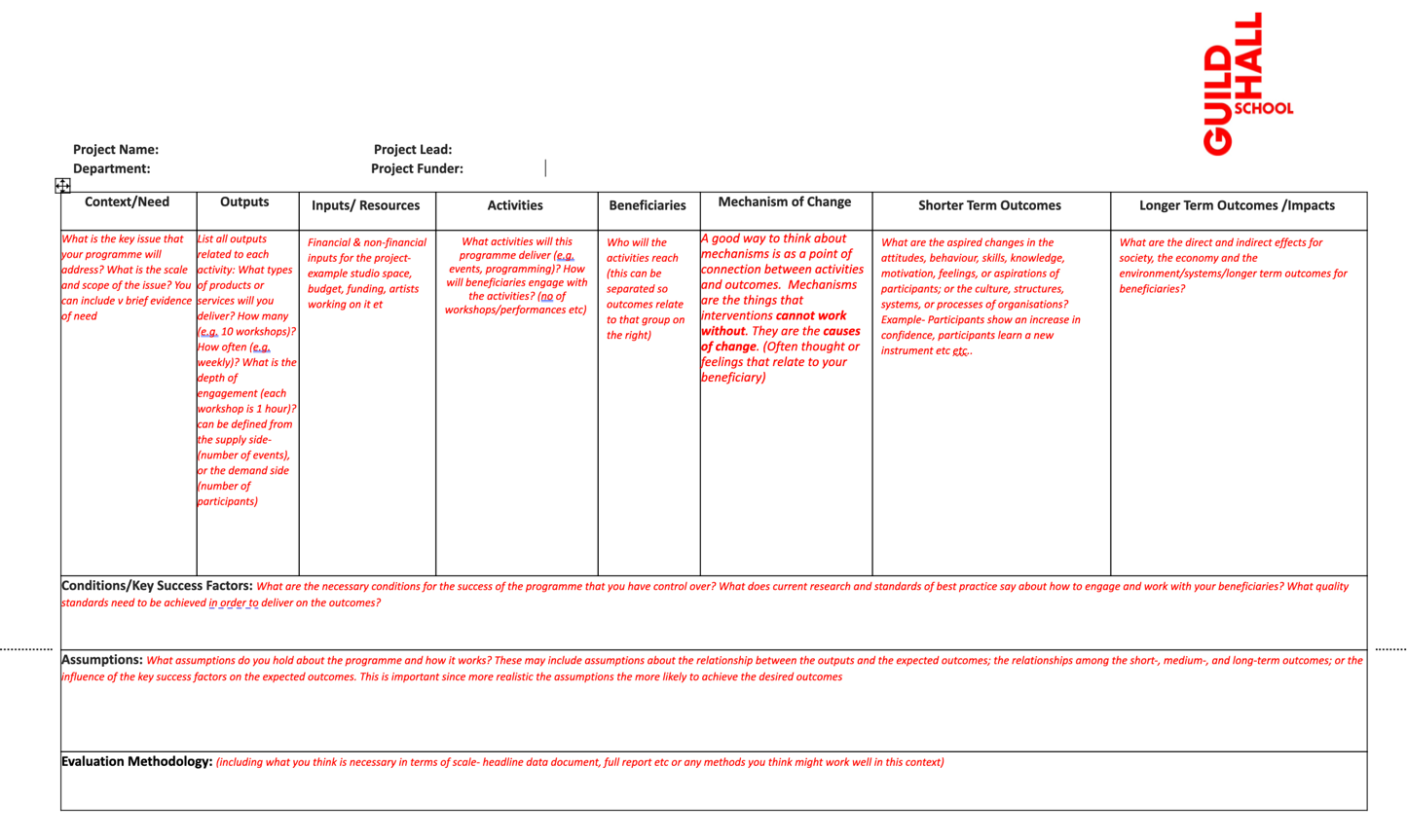
Figure 5 Guildhall Theory of Change Template for Staff
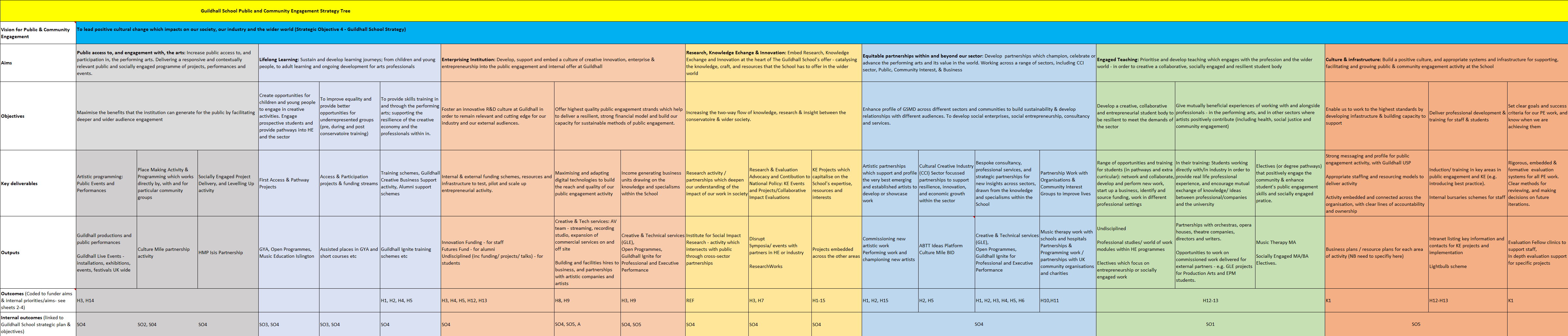
Figure 6 Guildhall Strategy Tree example - Public Engagement (screenshot)
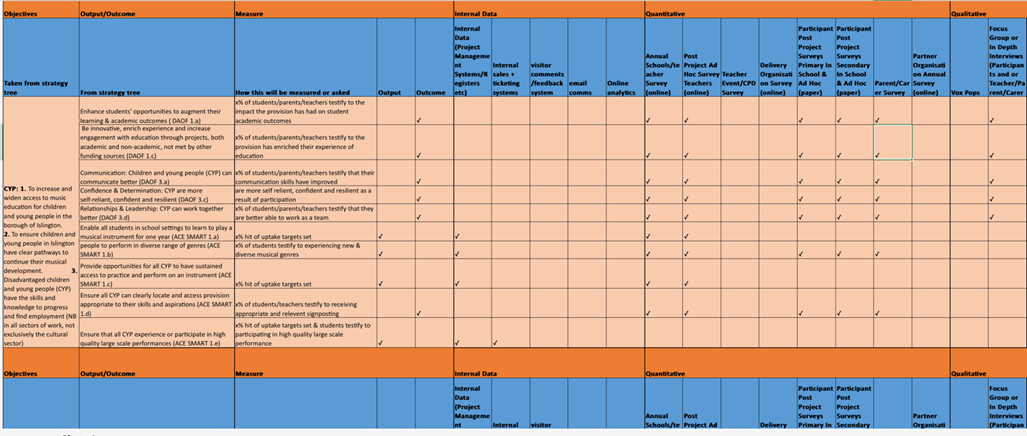
Figure 7 Guildhall Methodology Matrix Example (Music Education Islington)
‘Culture Change’, Staff Training & Investment
Guildhall Staff Development Fund funded its first School wide Evaluation Training, led by Morris Hargreaves McCintyre. 40+ members of staff benefitted from this training. Training focussed on evaluation methodologies, ethics, and GDPR regulation.
The Innovation Fellow: Evaluation has offered weekly ‘evaluation clinics’ to support staff practice. Cultural Policy and Evaluation sessions have also been delivered to the PhD cohort.
Research and Knowledge Exchange on Enhancing Practice:
This post-holder is the chair of the Evaluation Working Group for the Institute for Social Impact Research in Performing Arts. They have also presented at public events and in peer reviewed publications and journals. Links below:
https://www.tandfonline.com/doi/abs/10.1080/09548963.2021.2000330
https://www.culturalvalue.org.uk/people/maia-mackney/
https://www.culturalvalue.org.uk/evaluation-principles-in-practice-recordings/
Aspect 5: Building on success
We have implemented a robust process to continually improve the effectiveness of our P&CE work. The following have been key drivers of change:
Internal:
Innovation Fellow: Evaluation appointment: embedding evaluation and continual improvement into project cycles (Aspect 4).
KE Working Group: addressing and improving processes for supporting P&CE practice (Aspect 2).
Evaluation Working Group: informing the School’s ongoing approach to evaluation
P&CE strategy: mapping and review of activity against aims for P&CE and overarching institutional aims (Aspect 4).
External:
Peer consultation: we share progress within our specialism via Conservatoires UK (CUK Research & KE committee). Membership of networks such as NCACE and ELIA enable us to compare and improve approaches. The Head of Innovation is co-convener for the NCACE KIN sessions; an informal series of workshops for HEIs to share and reflect on progress.
Industry collaboration: we engage in dialogue to inform and advance industry practice, and our own. The CP&P Manager is a member of the Barbican-led Community Impact Collective, a peer-learning space those involved in community-engaged activity.
Governance/ Accountability
Activity is reported internally through annual or project status reports to the Research & KE Committee and Senior Management Team meetings, and via the Vice Principal & Director of I&E to Exec and the School’s Board of Governors (organogram Aspect 2).
Key activity is shared in published evaluations, School’s annual reports, and on the School’s website.
Findings improving future practice
DISRUPT was governed by a partner steering group and was externally evaluated. Partner feedback indicated the need to capture and share findings formally, which has led to the co-development of the toolkit as a publication.
Guildhall Coaching Associates Resilience training with City Bridge Trust has been externally evaluated by Renaisi Consultants, and informed the decision to expand and adapt the programme for other stakeholder groups.
Guildhall Creative Entrepreneurs was informed by 2013 research which established a gap in performing arts start-up incubation. A consultation exercise with target-audience young practitioners in 2020 informed our decision to move away from the year-long Creative Entrepreneurs incubator to more light-touch responsive creative business support (see Lifelong Learning; adult/ professional development, Aspect 3).
Example reports:
Disrupt evaluation, Culture Mile 19/20 report
Creative Learning 10 year review
Note You are currently viewing the latest version of this narrative statement. View the previous version as published in previous iterations of the KEF (KEF1 and KEF2)