Institutional Context
Summary
Oxford Brookes is a medium research-intensive university incorporated in 1992. Total income in 2021-22 was £216.6M of which £19.3M was attributable to knowledge exchange activities. There are 2,200 staff (46% academic) with just under 17,500 students, of whom 28% are postgraduates and 19% international, across three campuses in Oxford with a health campus in Swindon. The University’s research and teaching spans a wide range of disciplines from social sciences, arts, humanities and business studies to education, health and life sciences, engineering, computer sciences, architecture and the built environment. Knowledge exchange activities reflect this breadth of interest while adapting to local and regional needs with a strong focus on enterprise and entrepreneurship.
Institutional context
Oxford Brookes is a medium research-intensive university placed in Cluster E of the Knowledge Exchange Framework. It is a modern university incorporated by Statute in 1992 and a member of the University Alliance, which represents professional and technical universities. It comprises four faculties:
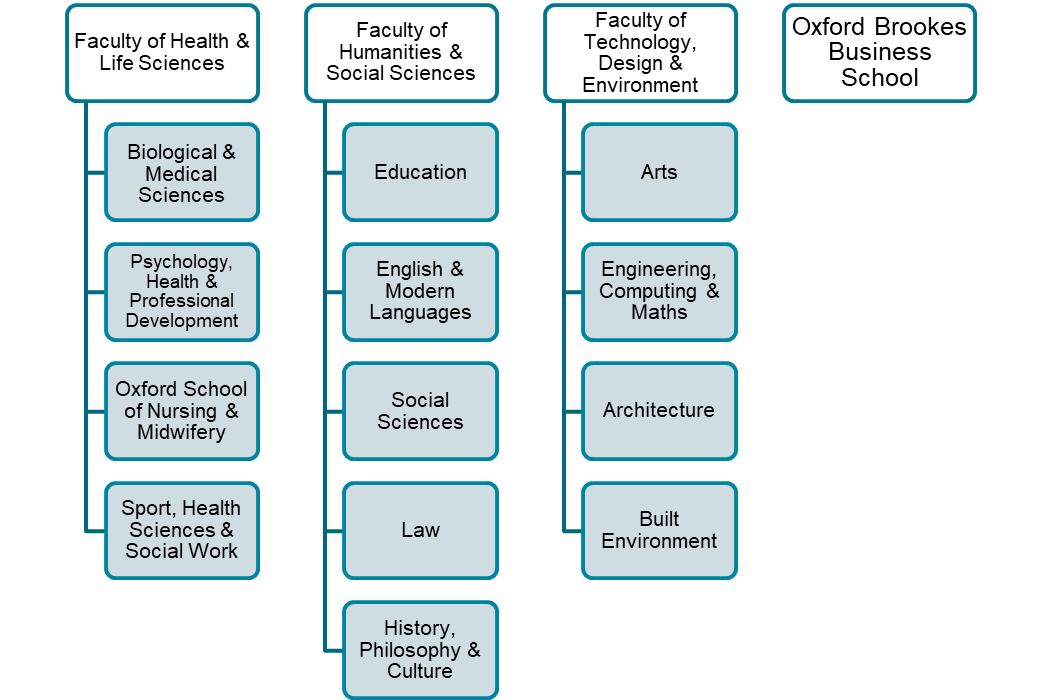
In 2021-22, income was £216.6m, of which £19.3m was attributable to knowledge exchange. The average number of staff (headcount, excluding hourly-paid) is 2,200, with academic and senior staff making up 46% of the workforce. There are around 17,500 students, of which 28% are postgraduate and 19% are international. Three campuses are in Oxford with a health campus in Swindon.
The University’s Vision and Strategy 2035 comprises four Strategic Pillars with ten cross-cutting Strategic Enablers:
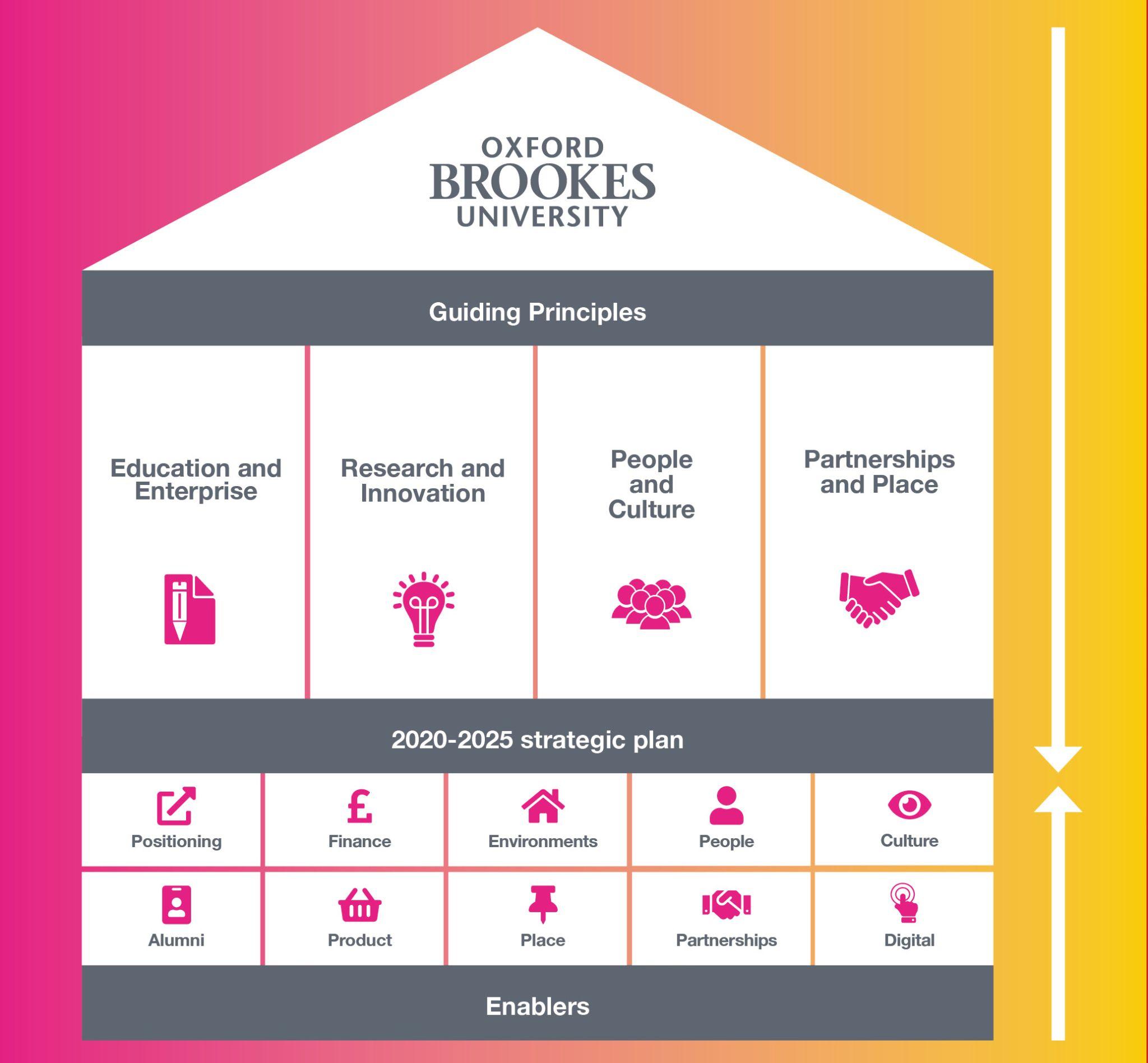
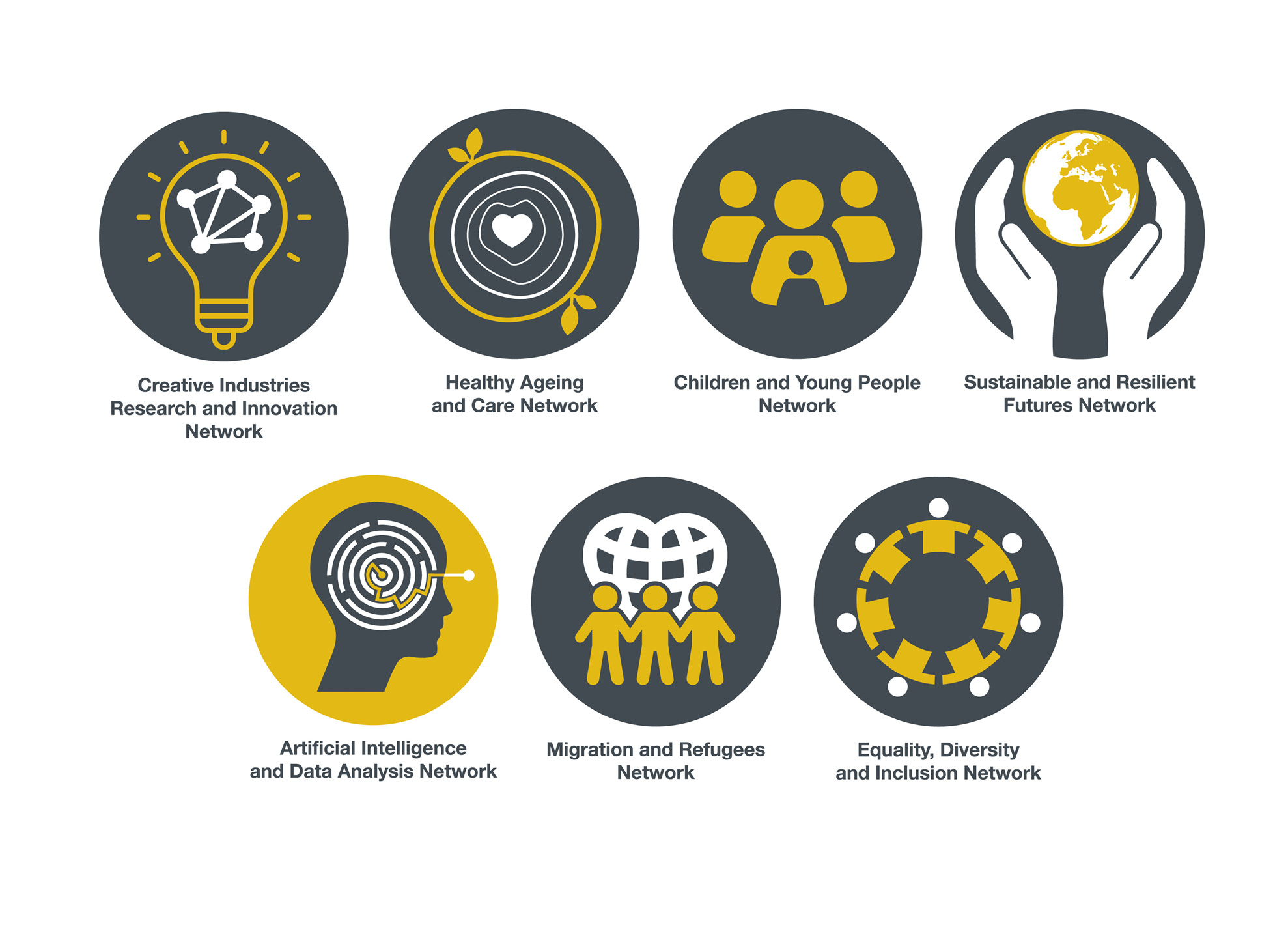
The Research and Innovation Pillar sets out the ambition to double the overall contribution of Research, Innovation and Knowledge Exchange activities by 2035 and to support, promote and invest in innovation, knowledge exchange and impact. The Partnerships and Place Pillar aims to build on the University’s status as an integral part of the local community and as a stakeholder in the success of Oxford and the wider region. To facilitate engagement within the university and with external partners, we have established seven interdisciplinary research and knowledge exchange networks:
The University’s research and teaching spans a wide range of disciplines from social sciences, arts, humanities and business studies to health and life sciences, engineering, computer sciences, architecture and the built environment. Knowledge exchange with key sectors such as life sciences, motorsport and high-performance engineering is well-established and there are recognised opportunities in other sectors experiencing strong growth such as technology businesses, the creative industries and in low carbon solutions.
Oxfordshire has a highly skilled and productive workforce with high levels of employment. There is above average investment in R&D, and strong growth in economic output and jobs created, increasing further the demand for graduate-level staff. However, prosperity is unequally spread - with pockets of severe deprivation. The development of a more inclusive economy is a priority for local government and a stimulus for social enterprise.
Oxfordshire hosts several research institutions of international importance and a strong community of research and knowledge-intensive businesses, although there are few large corporates. Oxford Brookes Business School is working with Oxfordshire’s SMEs and the Local Enterprise Partnership to address the challenges of managing growth. Hospitality and tourism is also a significant sector representing 10% of the local economy and its recovery and growth post-Covid is a particular concern and a priority for business support.
Although Oxfordshire has received public investment in infrastructure through the Local Growth Fund and in large-scale research assets, publicly funded business support is limited. Historically, no European Regional Development Funds (ERDF) were allocated and this means that large-scale business support and job creation initiatives seen in other areas are not present in Oxfordshire.
For further information, please send queries to bblackman@brookes.ac.uk
Local Growth and Regeneration
Summary of approach
Oxford Brookes’ focus for local growth and regeneration is the city of Oxford and the wider economic geography of the Oxford region. Priorities for activities have been determined by engagement with the Local Enterprise Partnership and the Local Industrial Strategy, through partnership working with local government and the business community, and by consultation. Internal networks for research, innovation and knowledge exchange have been created to support specific initiatives in priority areas. Activities have included a virtual incubator for AI businesses, support for Scale Up businesses and the opening of a new Enterprise Centre. Opportunities for students and graduates to contribute to local growth through entrepreneurship and internships and have been developed.
Aspect 1: Strategy
The vision for the University in 2035 states that it will contribute fully to a vibrant and globally-recognised innovation ecosystem in the Oxford region and will be recognised as an integral part of the local community and a stakeholder in its success. The focus for local growth and regeneration as stated in the Partnerships and Place Pillar of the University Strategy 2020-35 is the city of Oxford and the wider economic geography of the Oxford region. There are strong links to stakeholders in the city and more widely to stakeholders and partners across Oxfordshire.
More widely, Oxford Brookes is part of the revitalised Oxford Cambridge Pan Regional Partnership that brings together leaders from local government, Local Enterprise Partnerships and the Arc Universities Group to coordinate and collaborate on agreed regional-scale priority programmes and projects that add value to communities, businesses and the environment. This pan-regional geography offers a significant opportunity to drive economic growth at national level and incorporates the Motorsport Valley cluster for motorsport and high-performance engineering. Sector-specific geographic priorities include the Greater Thames Valley for Health and Life Sciences.
Our ambitions for Knowledge Exchange as set out in the HEIF Accountability Statement 2021/22 to 2024/25 and KE Concordat Action Plan support the development and implementation of initiatives to realise the potential of Oxfordshire for sustainable economic growth through participation in stakeholder forums, partnerships and collaborations. It also promotes opportunities for engagement with businesses, regionally and more widely, in support of the transfer of skills through training and access to talent, taking account of the priorities of the national Industrial Strategy and the Local Industrial Strategy for Oxfordshire.
The ambition of the Research & Innovation and Partnerships and Place pillars of the 2035 Strategy is to increase the involvement of staff and students in research, innovation, knowledge exchange and entrepreneurial activities to enhance the economic prosperity, health and well-being, and social and cultural vitality of our local community.
Priority areas for activities have been identified through engagement with the Oxfordshire Local Enterprise Partnership (OxLEP), the business community and other stakeholders such as Advanced Oxford, comprising four themes aligned with the national Industrial Strategy (Ethical Artificial Intelligence, Healthy Ageing, Sustainability and Resilience, and the Future of Transport), together with Life Sciences, Business, Entrepreneurship and Enterprise, and Social Enterprise.
There has been deep engagement with OxLEP since its creation. The University is represented on the main OxLEP Board by the Vice-Chancellor, elected as Chair from 2023, and on subgroups (Skills, Business Support, Clean Growth, Tourism and Visitor Economy, Programmes) by senior staff. The University and OxLEP jointly host a business development role which facilitates the deployment of University expertise in support of OxLEP priorities. The University has actively participated in the development of the Local Industrial Strategy through its membership of the Steering Group and the Implementation Group that followed. The University leads or is a partner in seven projects listed in the Oxfordshire Investment Plan, ranging from entrepreneurship skills for early career stage researchers to support for scale up businesses.
The University is also represented on the Economic Recovery Task Force, a county-wide partnership between OxLEP, local authorities and other stakeholders which oversees plans for economic recovery post Covid-19. The University is represented on the Steering Group of the Oxford Strategic Partnership (OSP), which helps to provide direction for the City of Oxford's future. A particular concern is the inequality within the city and aspirations for an inclusive economy. The University is also represented on the City’s Economic Growth Steering Board, which oversees plans for the economic development and regeneration of the City.
The University is a founder of OSEP CIC, formerly Oxfordshire Social Entrepreneurship Partnership, which works to promote social enterprise in Oxfordshire and provide opportunities for students to engage with the sector. The University nominates a Director and works in partnership with leading local social enterprises. The University is a partner of the Oxford Academic Health Science Network, which connects with NHS providers and collaborative organisations and with the health and life sciences industry in Oxfordshire and the Thames Valley.
Other means of gathering evidence of local needs include membership of Advanced Oxford, a membership organisation representing major knowledge-intensive businesses in Oxfordshire, and Oxfordshire Voice representing businesses from all sectors. The University participates in the annual Business in Oxford exhibition and the B4 business network, and attends business consultations, for example in connection with the Local Industrial Strategy and the Scale-Up Institute.
Aspect 2: Activity
Activities within the themes identified through the Local Industrial Strategy are coordinated through Research, Innovation and Knowledge Exchange (RIKE) networks of academic colleagues supported by the University’s Directorate for Research, Innovation and Enterprise:
In 2019, Oxford Brookes Business School (OBBS) was commissioned by OxLEP to investigate the local ecosystem that supports Scale Up businesses to inform the development of a county-wide strategy for business support, which was followed by a pilot of the Scale Up network in late 2019. Nine local organisations participated in structured sessions with OBBS experts and in facilitated action learning groups over a period of a year. The nine organisations were from a wide range of sectors including retail, professional services, and non-commercial, employing on average 20 staff. The report’s recommendations for sustainable and affordable support measures are now being implemented across Oxfordshire and form the basis for the Business School’s own enhanced Scale Up offer.
The Institute for Ethical AI helps organisations working in the professional services sector to maximise the benefits of AI and data analysis through the development of ethical and trustworthy software solutions. The initiative was supported by a grant of £1.2M from the Research England University Enterprise Zone (UEZ) fund with co-investment of over £500,000 by the University. The UEZ project has created a virtual incubator for early stage companies operating in the AI field and has helped individual companies and sector consortia on the development of AI solutions. The Institute collaborated in an accelerator programme for AI companies in Summer 2020, which has subsequently supported 8 businesses and made awards of £40,000.
The University is a partner in Project LEO, an ambitious smart grid trial based on Oxfordshire, and in OxFutures, an ERDF-supported initiative to improve uptake of energy-saving measures and accelerate Oxfordfordshire’s transition to net-zero. The University is engaging with the Oxfordshire 2050 planning team to make available its regional planning expertise. The University is a member of the Living Oxford Consortium, which aims to develop and coordinate Living Labs projects in Oxfordshire, including inputs to the West Oxfordshire Garden Village, which aims to create a sustainable innovation community in a garden village setting.
The University has collaborated with OBN, a leading membership organisation for Life Sciences businesses, to produce a consultancy report on the opportunities for the University to contribute to the development of the Life Sciences cluster in Oxfordshire, including the potential for collaborative research and consultancy, provision of services and equipment, student interns and graduate employment. Our Bio-Innovation Hub (BiH) now provides laboratory facilities and office accommodation for six life sciences companies with a focus on collaborative research and student projects. Through part funding from OxLEP, the university launched a new Enterprise Centre in 2022, which expands associated office space for BiH companies as well those in the digital sectors. This is contributing to the creation of jobs within start-ups and spin-outs as well as providing business support to scale-up.
The University’s School of Engineering, Computing and Mathematics provides focussed support for the motorsport and high-performance engineering cluster in Oxfordshire. Typically, 80 BSc and 55 Masters students graduate each year from the Motorsport Engineering programme, many of whom find employment in the sector. Williams Advanced Engineering and Renault F1, based in Oxfordshire, and Mercedes High Performance Powertrains in Northamptonshire are recruitment partners. Oxford Brookes graduates are employed in every F1 team and in several Formula E teams. The University is supporting the industry’s transition to electric propulsion with specialist equipment in the High Voltage and Energy Storage Laboratory. The University is a partner in Mobility Oxford, a consortium of local authorities, universities and businesses which promotes smart mobility solutions across Oxfordshire.
The university also supports local companies to grow and develop through the InnovateUK Knowledge Transfer Partnership scheme. We have grown the number of KTPs from three to six in the past 18 months and are supporting five other companies to access funding. Helped by an award from the InnovateUK capacity building fund in 2022, we are increasing our capacity to support more companies in future.
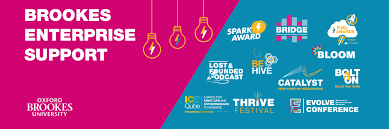
The University’s Enterprise Support programme has been expanded
considerably since 2019/20 with investment of just over £600,000 and
additional external co-funding of £130,000 from sponsors including
Santander Universities. Two incubator / co-working spaces (BeHive
and IceQube) have been provided to service a community of 168
pre-start, start-up and early stage businesses. 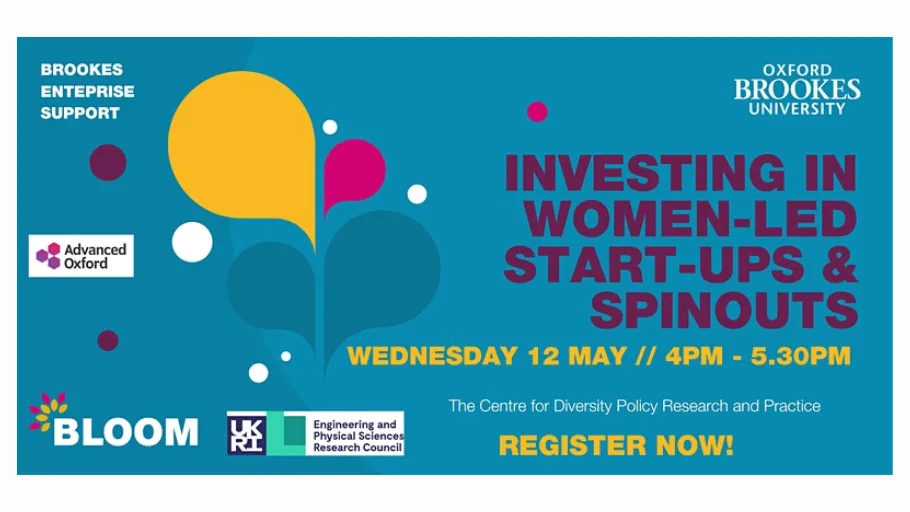
We are supporting the local innovation ecosystem to foster an environment that will increase the number of women entrepreneurs and spinout founders, through promoting the actions of Women and Spinouts - a call to action, an EPSRC-fund project under the Inclusion Matters call.
The University has participated in the formation and development of the Arc Universities Group, chaired by Oxford Brookes Vice Chancellor, which brings together the ten universities in the Oxford-Cambridge Pan Regional Partnership to address the needs of the enlarged region through collaboration, with an initial investment of £20,000.
Aspect 3: Results
The University is a recognised key stakeholder in the Oxford region, not only by virtue of the number of its employees and procurement spend but as a strategic partner to OxLEP, local government and the Oxfordshire research and business community due to its role in nurturing graduate talent, as a source of expertise and new technology, and in venture creation.
Nigel Tipple, Chief Executive of OxLEP said:
“The University is a valued partner and active contributor to our work, helping to shape many of our strategic policies and programmes in support of the sustainable economic growth and development of the county. Their advocacy, leadership and networks have brought significant value to our partnership working locally, across the Oxford-Cambridge Arc, and nationally, and this commitment looks set to help us navigate economic recovery as we move through the response to Covid 19 and implications of the EU transition negotiations. Their engagement, challenge and support across all our programmes and at Board is a vital part of the maturing partnership approach.”
Local growth and regeneration activities and outcomes are formally reported to the University’s Knowledge Exchange Steering Group at its quarterly meetings and annually to Senior Management and the Board of Governors Finance & Resources Committee.
The Institute for Ethical AI UEZ project hosts 16-20 companies working in its virtual incubator, nearly all based in the Oxford region. Four companies so far have reported major business benefits, such as investment, grant awards and client wins, which they attribute in part to support from the Institute. Published case studies include a collaboration with a law firm funded by Innovate UK to improve efficiencies in contract processing which could help law firms gain new business (Case studies). The launch event in February 2020 attracted guest speakers from IBM and the Office for Artificial Intelligence, and support from OxLEP and the then Science Minister.
The OxFutures project received an interim external assessment in May 2020. The University’s contribution was to provide expert energy audits to 136 SMEs in Oxfordshire. If the recommendations are fully implemented there will be an estimated saving of 3.4GWh in energy, equivalent to £340,000 in energy costs and 1,000 tonnes CO2 per annum, of which 38% had already been realised by beneficiaries. Funding has now been extended by a further three years to 2023.
The pilot of the Scale Up network was well-received by participants. On average, the commercial businesses saw their workforce grow by 30% and turnover by 54% during the period of the programme. Extensive testimonials were provided, one of which was reported as an article in B4, an Oxfordshire business magazine (Stronger together: Navigating the challenges of local businesses in transition). The Scale Up network was expanded in 2020-21 with co-funding from OxLEP and has become integral to the business offering of the Business School with many positive testimonials.
The Enterprise Centre and Bioinnovation Hub has provided a base for eight life science start-ups or spinouts, of which two have grown and recently moved off site to larger premises in the Oxfordshire innovation ecosystem: SamsaraTherapeutics and Orbit Discovery. Six companies currently occupy space including three Oxford Brookes spinouts (OET, MGX and OTT).
Our KTP programme has helped a number of companies to develop and grow as exemplified by statements from those we have helped including the award winning Yasa Motors KTP.
Public & Community Engagement
Summary of approach
Oxford Brookes has embedded Public and Community Engagement (PCE) and the development of mutually beneficial community and stakeholder relationships into its 2035 Strategy and other institutional strategies. This ensures that alongside a diverse programme of events and collaborations, community support and engagement are considered across all areas of activity. Responsibility for ensuring institutional activity is coordinated, collaborative and effective rests with the PCE Steering Group. Delivery of initiatives and activities is undertaken by dedicated PCE staff coordinated by the Public Engagement Network. Practical support and funding is provided through the Directorate for Research Innovation & Enterprise, which has a key objective to facilitate public and community engagement locally, nationally and internationally and by the Directorate of Marketing, Recruitment and Engagement.
Aspect 1: Strategy
Oxford Brookes has developed its Public and Community Engagement (PCE) activity over the last three years. Our 2035 Vision statement acknowledges the importance of place and our connectedness to the communities we serve, and our enabling strategies recognise community benefit in their core objectives.
A new approach recognises that while focused events, initiatives and projects are important in meeting PCE objectives and supporting the community, there are a wide range of other ‘day to day’ activities taking place across the University that also have long term, sustained impact.
Therefore, alongside existing PCE objectives to:
enrich the life of society through the promotion and sponsorship of accessible and engaging cultural events and exhibitions;
work in collaboration with our communities through sustained and reciprocal engagement to foster a love of learning, to inspire the students and researchers of tomorrow, and to enable change and improve practice so that the University can better serve its publics;
participate in civic and community forums as a fully engaged stakeholder to address the challenges and concerns affecting our communities;
work with professional and business communities to understand their needs and to develop better professional and business practice;
we have added:
ensure that the core business of the University, and university developments benefits not only staff and students but also the wider community of which we are a part.
Those broader long-term objectives form part of the PCE logic
map: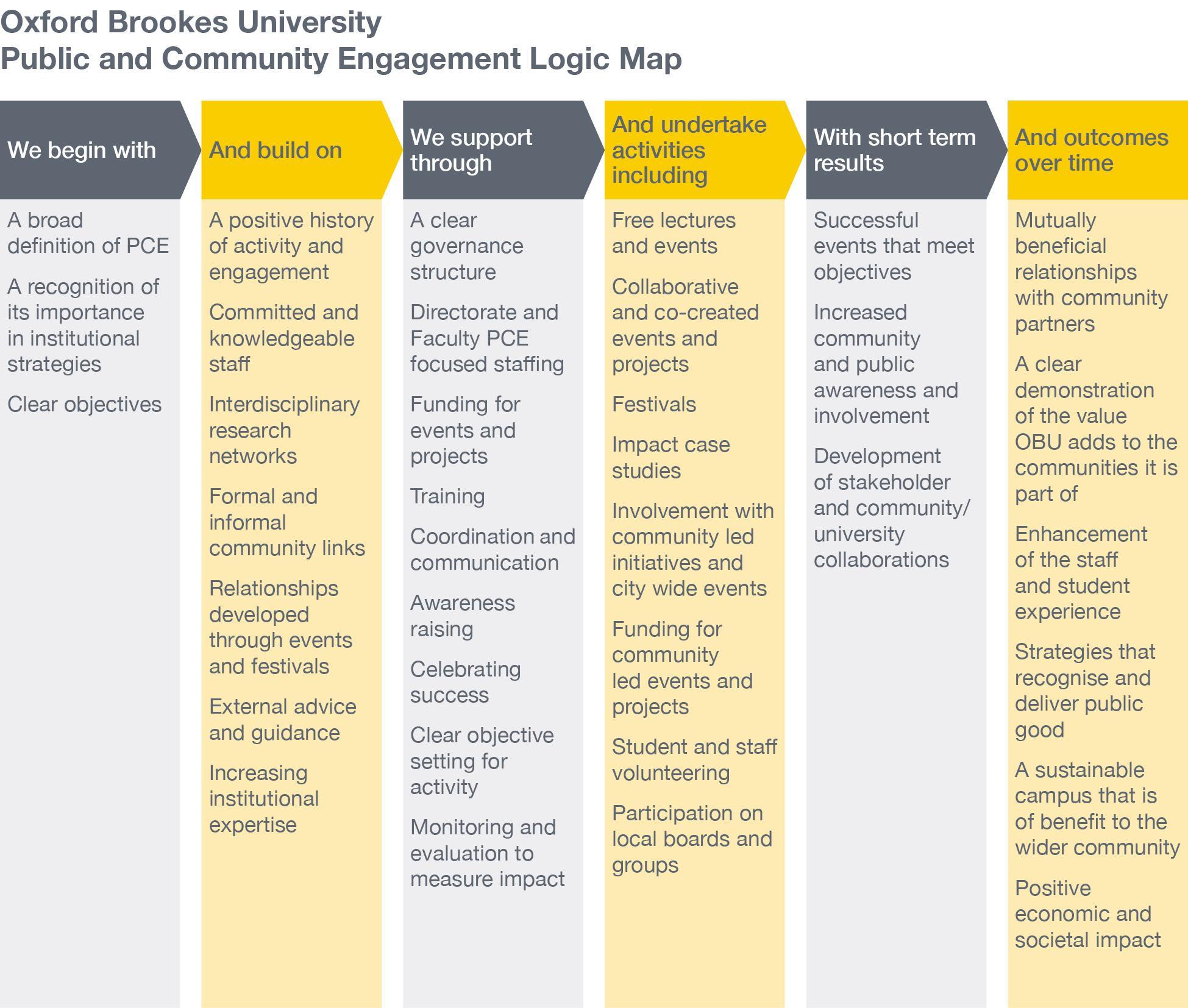
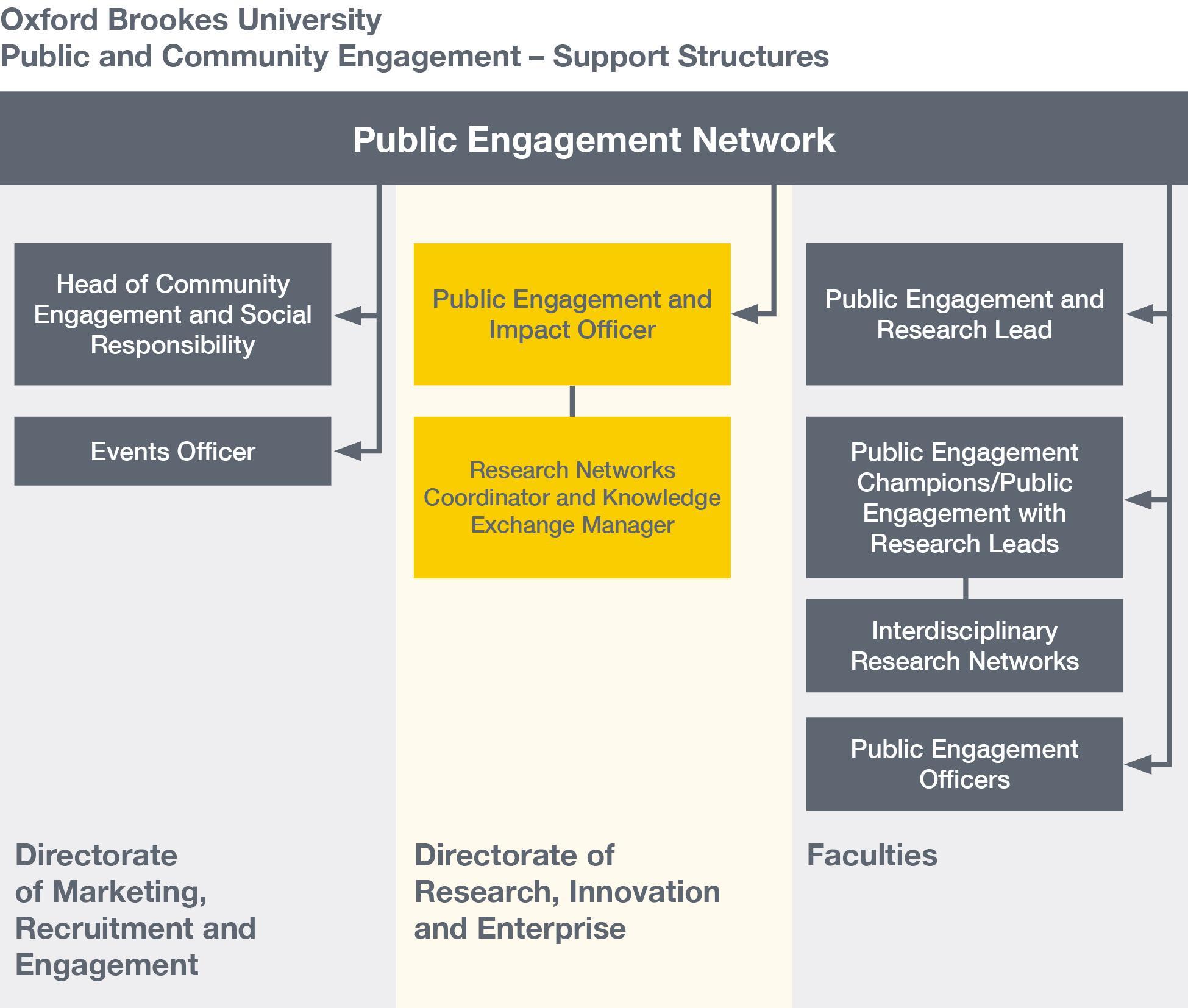
Central support rests with the Directorate of Research, Innovation and Enterprise (RIE). Governance and leadership structures facilitate communication and integration, and ensure input from all areas of the University at all levels of seniority:
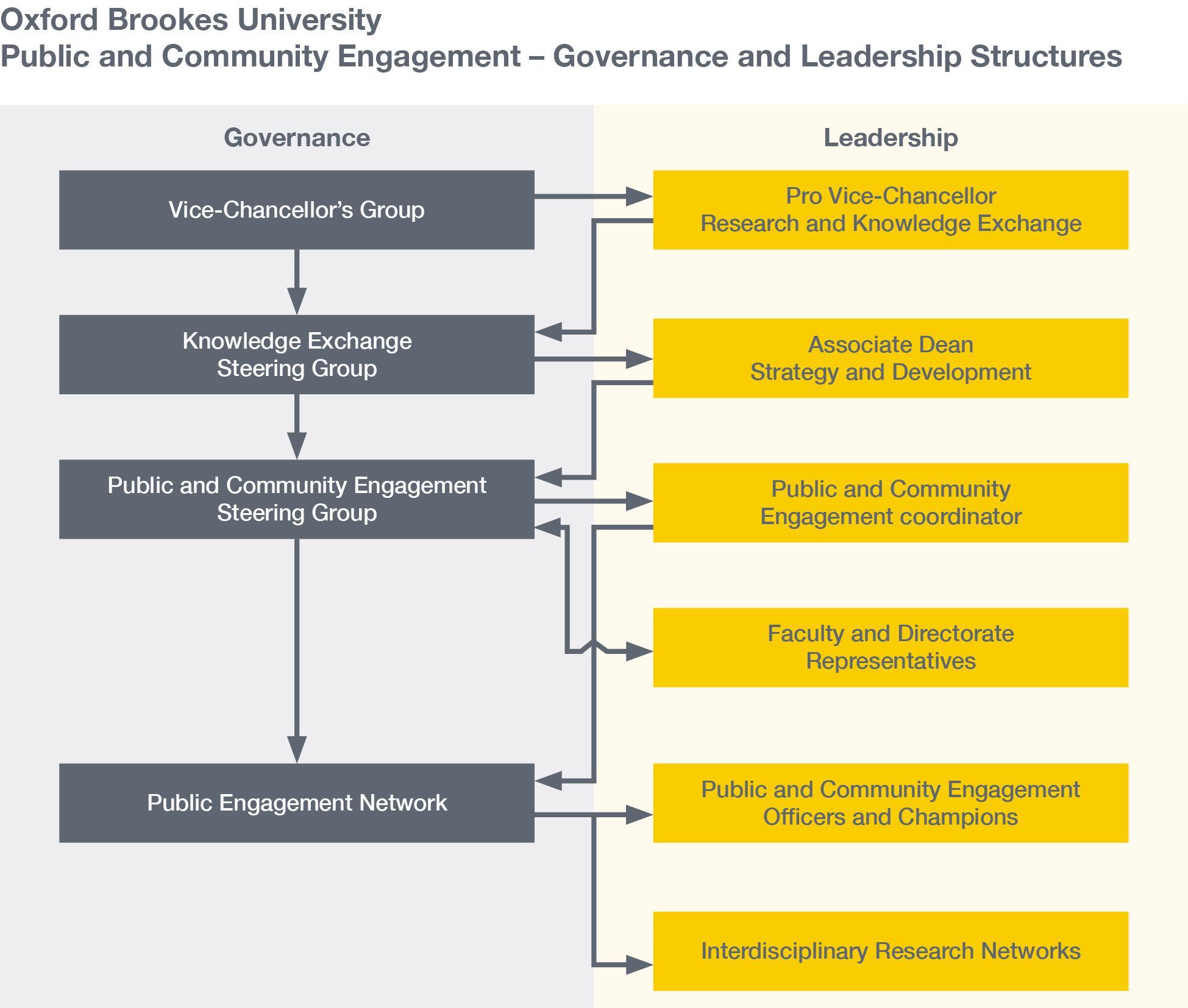
All Faculties and Directorates are represented on the PCE Steering Group, and external advisers bring local and professional expertise, unbiased feedback and fresh perspectives. The group's role is to ensure all PCE related activity is recognised and supported, and is coordinated, collaborative and effective.
The PEN network brings together researchers and staff interested in PCE and supports them to plan, promote, deliver and evaluate public engagement activity.
Aspect 2: Support
Dedicated Personnel
Core support is provided by the RIE Directorate. In addition, staff in Marketing, Recruitment and Engagement (MRE) support day to day engagement with the local community (Community engagement webpages ) and manage the open events programme. MRE also provide support for promotion of PCE internally and externally, e.g., through the PEN network webpages
PCE Leads (and in some Faculties Public Engagement Officers; PEO) undertake, support and promote activity in the Faculties.
Funding
Central Research/QR and HEIF are used to support project-based PCE activity in addition to core funding through MRE and faculties:
PE with research projects are supported via the small PE activity grant scheme. On demand funds of up to £500 are available via a Google form.
Larger projects (up to £15,000) are supported through a bidding and evaluation process.
Many impact research projects with external grant funding are linked to PCE
Engagement activity funding is also available through our seven Interdisciplinary Research & KE Networks
Successful bids for funding will have clear objectives and effective mechanisms for evaluation identified at the outset.
A Public Engagement with Research Champion, who chairs PEN, is funded centrally along with support from a dedicated PCE Officer within RIE.
Faculties fund their own PCE Leads or PEOs and allocate additional budget to Faculty-led events and festivals and to the longer term development of positive collaborative working with community groups and organisations.
External events such as the Headington Festival and Cowley Road Carnival receive university sponsorship.
Major university events such as the Science Bazaar and Think Human Festival receive dedicated annual funding.
Resources and Rewards
The PEN web pages provide links to PCE opportunities, training, support and other resources to support academics in undertaking engaged research. Training has been embedded in our staff development programme EXPLORE@Brookes and in research student programmes.
Media training is available for staff and research students, and each semester we host training sessions to:
help researchers understand the meaning of public engagement with research and how to incorporate and evaluate impact activities
inspire staff through sharing success stories
encourage and inspire staff with no experience of PCE
improve skills for effective engagement.
The PEN Podcast – ‘Oxford Brookes Unscripted’ provides a platform for academics across all faculties to discuss and share their research with the wider community.
In 2022, we ran a PCE Competition for research students, asking them to design an engagement tool to communicate with publics beyond academia and the best projects received funding.
Many academic staff are allocated hours in their workload plans to facilitate knowledge exchange and public engagement activity.
OBU recognises the value of PCE in the Brookes People Award. The Public Engagement with Research Team were runners up in the 2022 Connectedness category and the Public and Community Engagement Coordinator was winner of Colleague of the Year.
The value of PCE is particularly recognised in the Professional Achievement Professorial Promotion pathway which has, as a key criteria, “outstanding and lasting contribution to their academic community and/or links with industry. the public sector or voluntary organisations in a way which distinguishes the candidate”. In addition, public and community engagement activities are recognised across all promotion pathways.
Aspect 3: Activity
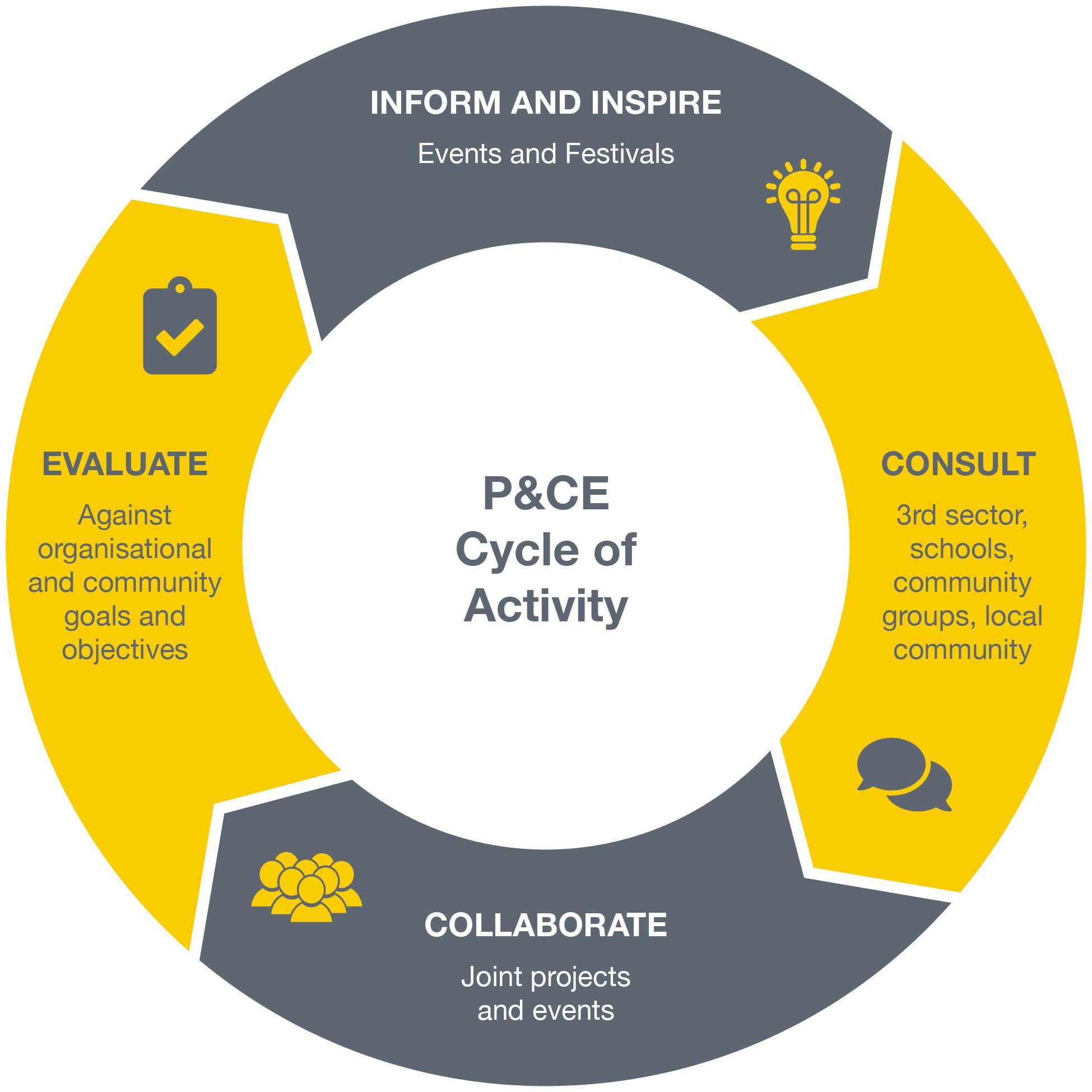
Oxford Brookes works to ensure that public and community engagement activity creates a positive cycle of delivery and development:
Objective - Enrich the life of society through the promotion and sponsorship of cultural events and exhibitions
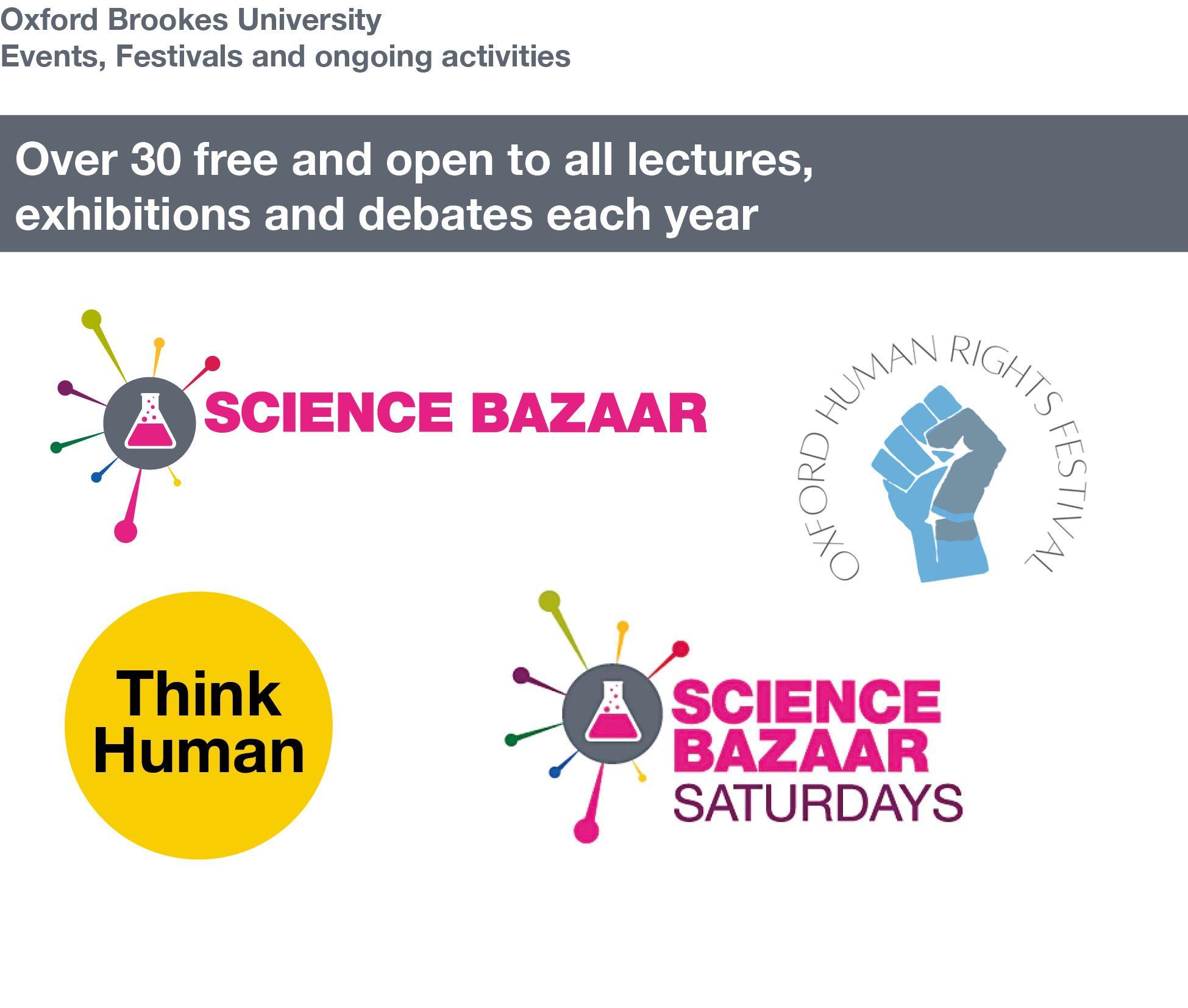
A wide range of free events, lectures, exhibitions and debates are promoted on the Oxford Brookes website.
In addition there are annual events such as the Science Bazaar (running for 10 years) and annual and bi-annual festivals such as the Oxford Human Rights festival (2022 was the 20th anniversary) and the Think Human Festival. (2022 was the third bi-annual festival)
These events form the foundation for Oxford Brookes PCE, informing and inspiring audiences of all ages. Connections are made in the development of events and through engagement at events and they create a platform for consultation and collaborations with organisations, community groups and the local community:
Example outputs:
“Our Food: Our History”: delivered in collaboration with “Flo’s, The Place in the Park”, offered local audiences an opportunity to share inherited family recipes, showcasing East Oxford’s diverse community. The event launched the East Oxford Heritage Cookbook.
The Science Bazaar collaborated with LYNNEBEC and the UK Centre for Ecology & Hydrology to produce “Superpillars Assemble” , an exciting dance workshop for KS1/KS2 pupils to learn about butterflies, moths and their habitats.
Oxford Brookes also supports longer term community projects through grant funding, the provision of space and through the involvement of staff and students. For example:
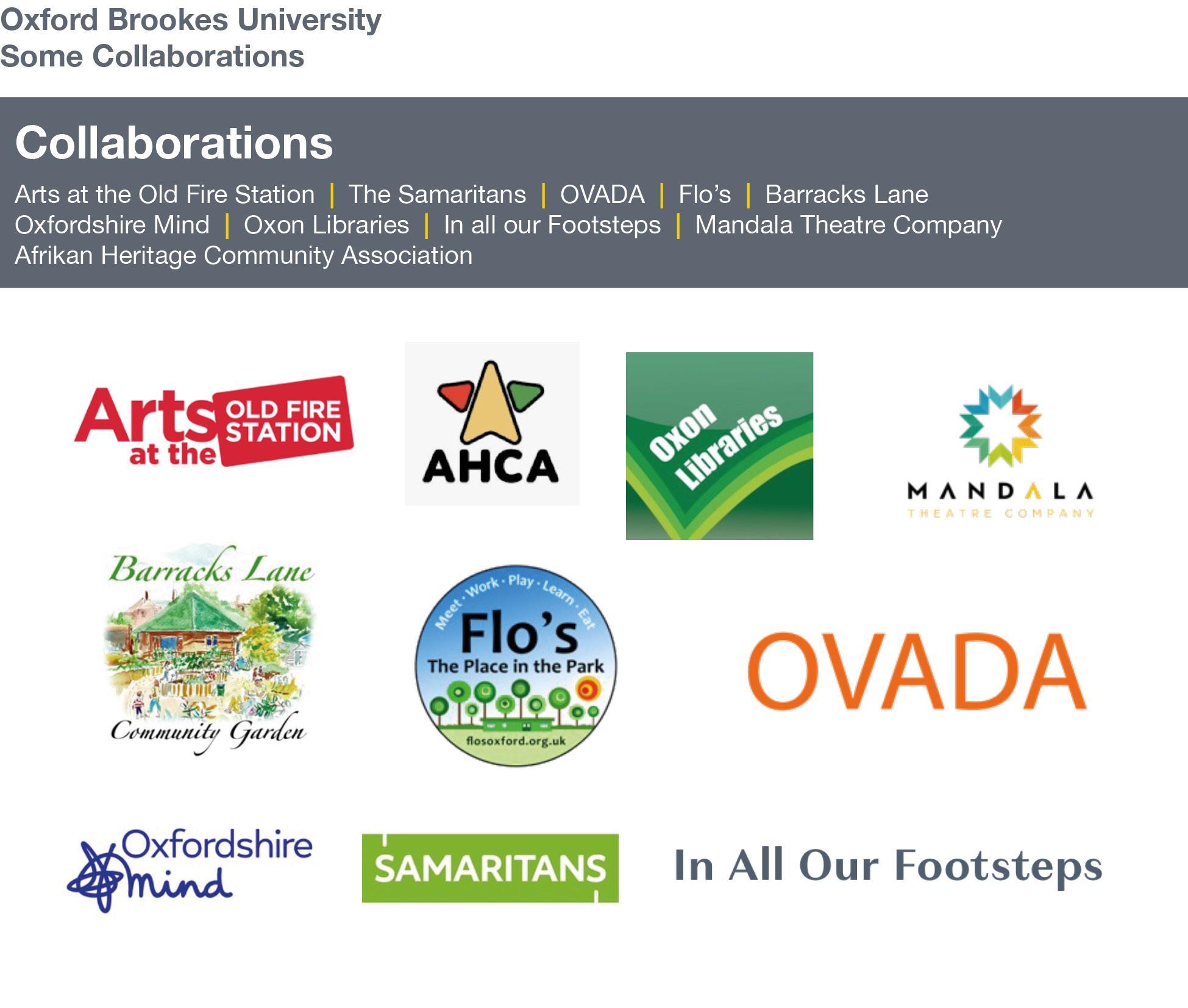
The Black Excellence (BE) Project (a culture, arts and education programme open to 11-18 year olds) delivered by the Afrikan Heritage Community Association (AHCA).
An OBU academic staff member chairs the BE steering committee.
A bid for funding was made and used to employ tutors and purchase materials.
The Arts Department provide space and resources for weekly sessions
Students, staff and alumni support the project from marketing to mentoring.
The BE students took part in TH22. Their work, Young Voices Made Visible, looked at living and learning during the Covid-19 pandemic year and focused on identity and belonging.
Value for money was ensured through a clear articulation at the outset of aims and objectives and a full evaluation after the completion of phase one that reflected on how far they had been met.
The MAD(E) project involves the research, design, and performance of a new play exploring and responding to boys and young men’s experiences and concerns around mental health. Run by the Mandal Theatre company, its development sprang out of meetings at TH22 and the research of an OBU academic. It is part-funded by OBU, and OBU students were involved in its development. MAD(E) development video
Books@Brookes, an initiative co-created by OBU academics and local teachers uses research to inspire Year 12 and 13 students from the seven comprehensive schools within Oxford’s ring road about the value of English Literature degree, and the arts and humanities more generally. A particular focus is students from non-traditional backgrounds.
CSI-Oxfordshire, a project in collaboration with the Centre for Functional Genomics and the Centre for Bioimaging, loans laboratory equipment and reagents to deliver experiments based on Oxford Brookes research to GCSE and A-level students.
Objective - Participate in civic and community forums as a fully engaged stakeholder
Examples :
We are an active partner in, and sponsor external events such as the Headington Festival and Cowley Road Carnival
‘Marmalade’ brings together community organisations, local authorities, educational institutions and citizens, working together to learn how to make the city better for all. In 2022, as part of the Marmalade festival OBU academics launched Oxymoron, which brings together the diverse communities of Oxford to facilitate new, cross-cutting work in literature, art, performance, and critical thinking.
The University is a member of Advanced Oxford, which brings together senior leaders from the region’s major knowledge-intensive businesses, working together to support the long-term development of the innovation ecosystem. Oxford Brookes academics have contributed their EDI expertise to work with Advanced Oxford to improve gender diversity in the innovation ecosystem.
The University is a member of the Oxford Strategic Partnership, which brings together representatives from community, business, and the public and voluntary sectors to facilitate partnership working and to provide direction for the city's future, respond to local priorities and engage more effectively with local concerns.
Oxford Brookes academic and professional staff contribute their knowledge and expertise to the Oxfordshire Inclusive Economy Partnership.This initiative aims to address inequalities across Oxfordshire by bringing together employers, businesses, education, community groups and local governments to share knowledge, expertise and resources to tackle inequalities. Oxford Brookes staff are especially involved with the Inclusive Employers and Education sub-groups to share university expertise on EDI in the workplace and widening participation and improving student attainment, respectively.
Aspect 4: Enhancing practice
A great deal of work has been undertaken over the last three years to improve support for, and the quality of, PCE evaluation:
We offer University wide training on the importance of, the mechanisms for and evaluation of PCE:
PCE training is now established as part of the EXPLORE@Brookes programme - a continuing professional development framework for academics and research staff.
Training on Integrating public engagement into research and evaluating public engagement activities are run annually through EXPLORE and research student training, and in addition workshops which include public engagement evaluation are run for schools and departments.
Bespoke training is delivered by our in-house PCE staff as well as external experts in developing resources and materials for PCE and in their dissemination and evaluation e.g. podules for nursing students.
We are embedding the NCPPE EDGE tool to enhance the quality of evaluation
Dedicated web pages provide guidance and support, and a University Impact Tracker has been developed to enable researchers to capture, record and evaluate the ways in which their research makes positive impacts on individuals, communities and wider society.
The setting of clear objectives for, and the effective evaluation of, activity takes place at a Faculty and project level, e.g:
In the Faculty of HSS, standardised forms for PCE activity support consistent objective setting, monitoring and evaluation which considers the relevance and benefit of the activity to communities and to staff and students taking part.
Science Bazaar activity leaders and visitors complete feedback questionnaires. These are used to make recommendations of improvement at future events.
We are promoting and highlighting the work we undertake more effectively, for example the:
digital festival Hall showcasing the highlights of Think Human 2022,
Think Human webpages. including evaluations of previous festivals
Where we can still improve is in the collation and coordination of the work at a University level so we can more easily provide a picture of the totality of the activity taking place. The reformed PCE steering group will be a key driver for this more collaborative and coordinated approach.
Aspect 5: Building on success
The work undertaken to prepare the first PCE KEF identified a number of areas where PCE could be improved. That work has been used to inform developments over the last three years.
A more visible and coherent governance structure, the creation of more funded PCE facing roles and the recognition of the institutional importance of PCE through dedicated posts in the RIE Directorate.
External stakeholders sit on the PCE Steering group and on steering groups for other PCE activity. For example the TH22 festival steering group included two community representatives.
Regular training in PCE is established as part of the Explore@Brookes programme and research student programmes.
PCE dedicated web pages signpost staff to sources of inspiration, guidance and funding.
An Impact Tracker enables our researchers to capture and record activity.
All bids for funding have to set out clear objectives and identify at the outset how the work will be evaluated.
There is a greater clarity on the need for evaluation reports and these are created and shared on an event by event basis, internally with colleagues at all levels and with the Board of Governors (BOG) via the quarterly BOG report.
The outputs of festivals and events are shared with the wider community through our web pages.
Deeper and more sustained engagement with community groups is taking place, enabling OBU to become more involved in city wide events, for example the annual Marmalade festival
More opportunities for collaborative working and discussion developed through the new structures have enabled continued reflection on practice and how it could be improved. The creation of the PCE Steering group led to broader discussion of an institutional approach to PCE and resulted in the reframing of the group and its terms of reference to ensure greater organisational clarity as to where responsibility for different aspects of PCE rests.
We recognize that while significant improvements have been made, there are initiatives we could undertake to further enhance what we do. One objective from the first KEF that has not yet been met is the collation of impact reports from public engagement activities into a single annual report.
In the future this will be facilitated by the cross university membership of the PCE Steering group and by the development or purchase of a monitoring tool that will be implemented for use across the University. The expectation is that this will increase the visibility and coordination of the wide range of work that is happening, enable staff with similar interests or different perspectives on similar themes to connect and will help ensure a coordinated approach to our communications with external partners, collaborators and audiences.
We are also reviewing how we can embed engagement as a core element of all academic job roles and/or person specifications so it can be recognised more clearly in reward, recognition and promotion initiatives.
Note You are currently viewing the latest version of this narrative statement. View the previous version as published in previous iterations of the KEF (KEF1 and KEF2)