Institutional Context
Summary
Established in 1898, Liverpool School of Tropical Medicine is the first institution in the world dedicated to research and teaching in tropical medicine. Our mission is to positively impact the health and wellbeing of the most disadvantaged populations; working in partnership to build capacity and deliver resilient health systems.
We are a world leader in health-related research – ranked 2nd for the impact of our research (REF2021). Working in partnership with clinicians and industry we operate across the globe; embedded within communities, both UK and internationally, undertaking cutting-edge research and translating findings into clinical practice and policy.
We are highly regarded as a leader in developing scientific capacity and recognised as a world-leading specialist provider by the OFS and Research England.
Institutional context
Liverpool School of Tropical Medicine (LSTM) has been at the forefront of research into infectious, debilitating and disabling diseases worldwide since 1898. As a registered charity, we work in challenging circumstances to improve the health outcomes in disadvantaged populations, through partnership in research and education. We achieve our Knowledge Exchange (KE) mission by delivering effective KE interventions which improve human health, and these are prioritised across the poorest communities.
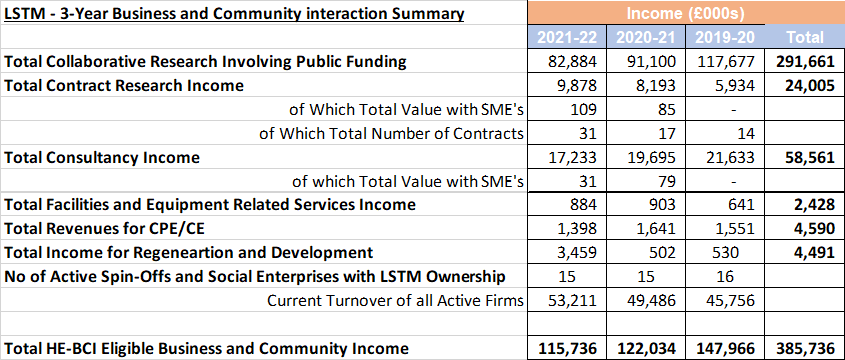
Our translational research specialism continues to improve year on year, with an annual research portfolio of well over £320 million. Our KE eco-system (Table 1) between 2019-2022 demonstrated institutional business and community interactions including ~£300M of collaborative research activity, ~£25M of contract research, ~£60M of consultancy and £2.5M of equipment and facilities income. LSTM attracted ~£5M of regeneration and development funding and maintained on average £50M of turnover across its active spin-offs and social enterprises.
Our core research activities focus on enhancing our knowledge and understanding of cross-cutting global issues that pose a threat to human health and development, and we generate and share knowledge that improves the health, wellbeing, and quality of life for these populations. Through our partnership work in Low- and Middle-Income Countries (LMICs), this is widely recognised as having significant impact, improving health systems, health policy and health outcomes.
Our internationally renowned laboratory research and experimental medicine, often in partnership with industry, delivers the next generation of products. We have strong systems of equitable and accessible IP/technology transfer and commercialisation routes and are equally proud of our work in the UK, and Liverpool City Region, where we have generated a thriving knowledge exchange and innovation eco-system capable of developing the most effective health outcomes for disadvantaged populations.
LSTM established its innovation unit, Infection innovation Consortium (iiCON) in 2020, initially funded through an £18.6M UKRI/Research England Strength in Places programme, bringing together industry, academia, and the NHS in a concerted effort with a clear aim: to save lives globally by accelerating the discovery and development of new treatments, diagnostics, vaccines, and preventative products for infectious diseases.
Across the LSTM group, the Innovative Vector Control Consortium work with industry to develop novel and improved public health insecticides by focusing resources and targeting scientific solutions as they accelerate the process from innovation to impact. iiDiagnostics enables industry engagement and commercial access to the world-leading diagnostics R&D facilities at LSTM. Our subsidiary Well Travelled Clinics Ltd continues to provide pre- and post-travel clinical facility services we also provide a clinical diagnostic parasitology laboratory, which acts as a referral service for the identification of a wide range of human parasites from clinical specimens.
As LSTM transitions through its 125th Anniversary year, KE remains a priority in the new Strategic Plan (23-28) as we build upon our global impact, across the translational spectrum; understanding the mechanisms of resistance and disease, developing new drugs and diagnostics, evaluating the effectiveness of preventative and therapeutic interventions, and understanding how best to integrate solutions into health systems.
For further information, please send queries to KEF@LSTMED.AC.UK
Local Growth and Regeneration
Summary of approach
Established in 1898, Liverpool School of Tropical Medicine is the first institution in the world dedicated to research and teaching in tropical medicine. We set up our first international research centre in 1905, in Brazil followed by Sierra Leone in 1912. Since then, LSTM has been developing global equitable partnerships, tackling the major health challenges facing humanity. We support communities and employers in the Liverpool City Region, and across the UK by undertaking research and knowledge exchange and translate findings into practice and policy. LSTM consists of ten-companies and six active non-profit Non-Governmental Organisations that supports different social, healthcare and capacity interventions. LSTM sits on regional innovation boards and aligns its strategic response to support local growth and regeneration activity.
Aspect 1: Strategy
Liverpool School of Tropical Medicine (LSTM) was founded in 1898 as a response to a call from the Secretary of State to Colonies who oversaw and managed the British Empire. Liverpool was one of the largest trading centres from the slave trade onwards and it suffered from the risk of imported diseases – this was exacerbated by poor conditions in areas surrounding the docks. The need for a dedicated school of tropical medicine came from colonial trade and exploitation, which is a part of Liverpool’s history. LSTM was born out of the need to address the challenges of tropical diseases and it has been at the forefront of translational research and global health leadership training in the region since. Since its early days LSTM has been working to deliver positive impacts for in country healthcare and capacity building – and this remains a key focus of the school’s work today. LSTM's first overseas laboratory was based in Manaus, Brazil, established in 1905 following an expedition led by LSTM staff, in 1900. Later, in 1921, LSTM funded the development of the overseas research laboratory in Freetown, Sierra Leone. Our vision for the future is rooted in equitable partnerships around the world, tackling the major health challenges facing humanity.
Today, LSTM has collaborations across the globe with active research projects in 68 countries in 6 continents. Major LSTM overseas activities include the Malawi-Liverpool-Wellcome (MLW) Programme, LSTM Kenya, LSTM Consulting (USA), LATH South Sudan, Liverpool Health Ventures Ltd, and its subsidiaries Well Travelled Clinics Ltd and Liverpool International Health IP Ltd, iiDiagnostics Ltd. IVCC Ltd and Liverpool School of Tropical Medicine India Private Limited company. LSTM also has an interest in CeSHHAR Zimbabwe, LSTM Malawi, LSTM DRC, Liverpool Initiative for Health Development (Nigeria) LSTM Sierra Leone and LSTM Uganda which are all NGO’s.
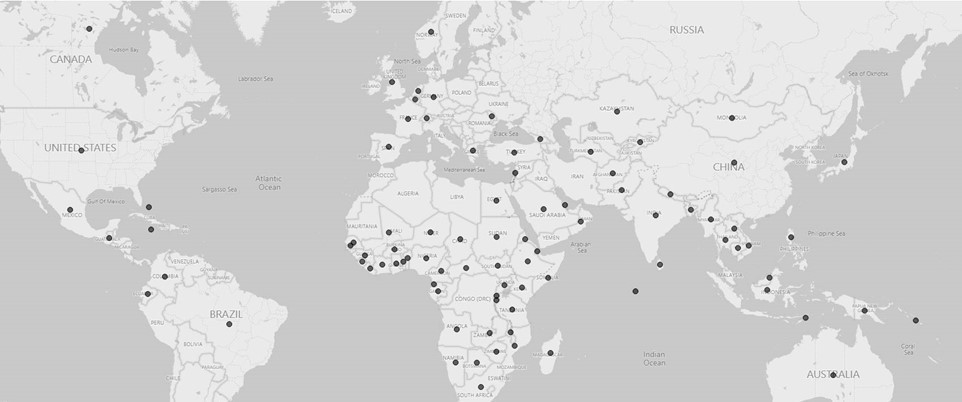
Figure 1 - Locations of active LSTM research collaborations.
LSTM still retains a significant and strategic home within Liverpool’s Knowledge Quarter (KQ), a 450-acre domain innovation and regeneration district, home to some of the world’s most influential players in science, health, technology and education. Our regional partnerships across the Liverpool City Region, ensures that LSTM contributes directly to the vision to be at the forefront of global innovation and invention in life sciences and technology. Our knowledge intensive economy is driving the post pandemic recovery and future growth of the City Region and the 2025 Vision encompasses our shared five main areas of focus: attracting and retaining talent, growing business and attracting inward investment, collaborating with purpose, being a better neighbour and creating a smarter greener city.
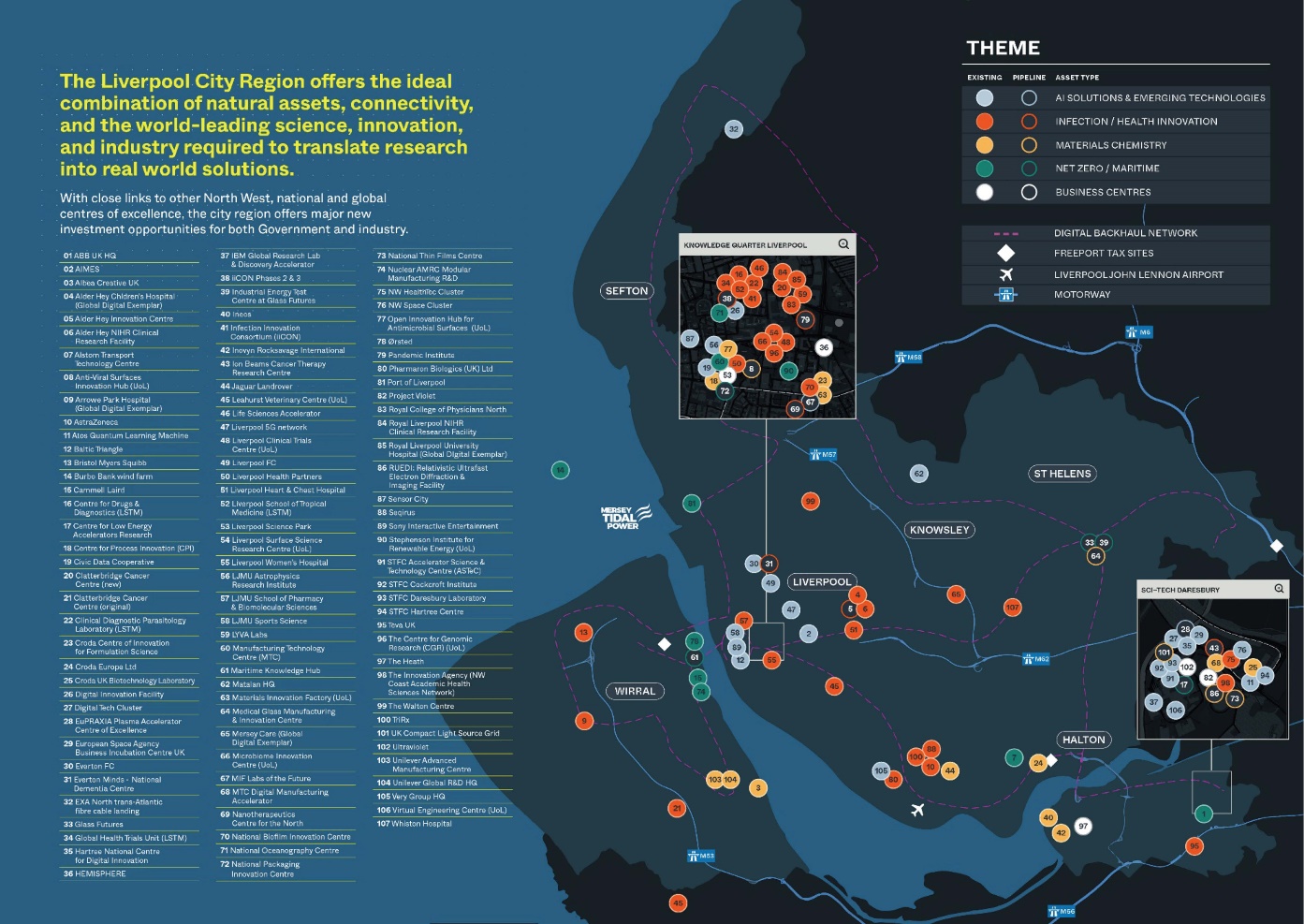
Figure 2 - Regional Science and Innovation eco-system
Liverpool City Region Local Enterprise Partnership (LEP) was created in 2012 to bring together businesses and civic leaders to drive private sector led growth and job creation across a number of growth sectors, including health and Life Sciences. In 2014 The Liverpool City Region Combined Authority (LCR-CA) was formed as an accountable body for all public funding. In 2015, the LCR-CA secured a devolution agreement with the UK Government, securing £900M of funding. This Strategic Investment Fund (SIF) draws together these sources of income including Local Growth Funding which is allocated to LEP areas. LSTM has been successful in accessing ~£4M SIF for strategic economic projects.
LCR’s Innovation Board was established in 2014, making it the first dedicated sub-regional body of its kind in the UK. Its overarching purpose is to provide strategic leadership for the LCR innovation agenda, and drive the translation of knowledge and ideas. Specifically, the Board’s primary objective is to realise the LCR headline ambition, to secure annual R&D investment equal to 5% of LCR GVA by 2030. There is a focus on the science, technology, research & development, and commercialisation opportunities set out within its 2017 innovation prospectus and later updated within the refreshed 2022 Science and Innovation Audit. Since 2017, LSTM has retained a key membership position on the LCR-CA Innovation Board and leads the regional capability response to Infection Prevention and Control. Against this backdrop, a decision was made in 2021 to update the original LSTM priorities within the LCR Science Innovation Audit. The intention was to provide robust, refreshed evidence of the distinctive world-leading innovation specialisms across LSTM ecosystem, in order to:
Inform forward LCR innovation and wider policy and strategy development.
Steer the development and prioritisation of innovation projects and funding.
Provide a framework for achieving the headline 5% R&D investment target.
Highlight how the LCR can contribute to the UK government’s levelling-up, internationalisation, productivity, and growth ambitions.
Underpin advocacy for greater innovation devolution and investment.
LSTM also has four major strategic objectives within its current Strategic Plan (23-28) reflecting its ongoing commitment and ambition to supporting knowledge exchange, local growth, and regeneration across our organisation. Through ensuring these actions are mirrored on a global scale across LSTM’s multiple centres of operations, it not only improves health outcomes but will also contribute to economic regeneration, employment opportunities for residents and attract and retain skilled workers who all contribute to regional economic growth.
Aspect 2: Activity
In March 2020, the world woke up to Covid and a full-blown health crisis that will have lasting implications in terms of how we live and work and what to expect from our health systems. LSTM played a pivotal role in pivoting its operations to that response, working with partners on innovations ranging from vaccinations to diagnostic validations. Such collaborations are part of a long tradition, where our research and knowledge exchange has been used to address global health challenges, from the basic science in our labs through to interventions on the ground and national and international policy change. The combined impacts of climate change, conflict, and rising food prices caused by the war in Ukraine are driving high levels of food insecurity globally. Food and health systems in the African regions are at a breaking point and an estimated 82 million people are impacted. Despite these significant events, LSTM has continued over the last three-years to exercise its global and regional influence in the following key activity areas:
Health systems and workforce strengthening – Our Health Systems and Workforce Strengthening Unit has been engaged in several projects which seek to strengthen health systems and make best use of available human resources. While efforts are in place to address the global shortage of health workers, improving health workforce performance has been neglected.
Health system resilience in fragile settings - LSTM is the lead partner in the ReBUILD for Resilience consortium. Funded by the UK government, ReBUILD for Resilience examines health system resilience in fragile settings experiencing violence, conflict, pandemics, and other shocks. Our staff are working with partners on the ground in challenging and fragile settings, including Lebanon, Myanmar, Nepal, Sierra Leone, Syria, and Yemen. HERD International is our partner in Nepal. Through this partnership, HERD is a research and development agency enhancing strategic engagement with policy practitioners to help generate contextually appropriate evidence for resilient, equitable health systems.
The LSTM-led Infection innovation Consortium (iiCON) programme - has delivered exceptional performance during the 2019-2022 period. iiCON’s primary activity is driving innovation – supporting discovery and commercial development at all stages of the innovation journey and pivoting platforms to respond to public health needs nationally and globally. Its Health Impact agenda works to help shape and inform global health policy and decision making. iiCON, as one of UKRI’s key performing Strength In Places funded programmes, also has nine open-access platforms to support the discovery and development of innovative anti-infectives and as LSTM is now the UK’s established Northern hub for the validation of COVID19 vaccines and diagnostics following its successful vaccine testing program in healthy volunteers, it is leading activity in future Human Challenge Models. Together with the wider asset base, this has enabled LCR to lead national trials and be a key actor in the UK fight against COVID-19 and other emergent diseases.
Regional capacity strengthening activity - is now delivered through LSTM’s/iiCON Merseyside SME support programme, funded by a £6.6M European Regional Development Fund (ERDF) and designed to support regional innovation and invigorate the product development pipeline. Delivered in partnership with University of Liverpool, this platform helps Merseyside SMEs overcome roadblocks to product development in the formulation of infectious disease products by providing access to state-of-the-art equipment and world-leading expertise. iiCON’s platform provides SMEs access to world-class expertise and facilities across three key focus areas to support product development: Screening for AMR Emergence; Novel Surfaces and Materials; and Diagnostic Evaluation.
Improved, aligned activity within the Liverpool City Region - Here in Liverpool, the past 3 years have brought significant global and national changes - Brexit, Net Zero imperatives, Levelling Up, and a renewed Government-led prioritisation on place-based innovation and clusters, all of which present challenges and opportunities. In its emergence as a Capital of Innovation, LSTM and the Liverpool City Region (LCR) has played a pivotal role in defining and driving the City Region’s innovation priorities and actions demonstrated within.
Industrial and Partnership Activity - Through established KQ partnerships, such as the University of Liverpool, Liverpool Health Partners, Liverpool JMU, The Liverpool Universities Foundation NHS Trust, the Science & Technology Facilities Council (STFC), other Research & Development Organisations, LCR Combined Authority, we have embedded a strong regional response to the knowledge economy and have dramatically altered the innovation landscape of Liverpool. As a result, Innovation is now a top priority for LCR and its devolution agenda. This exponential progress is reflected in the LCR’s ambition to invest 5% of GVA in R&D p.a by 2030 – nearly double UK target.
Capital Investment, Regeneration and Employment Activity – Our newly opened (2022) multi-million-pound building, Pembroke House, builds on LSTM’s reputation as a world leader in infectious disease research, knowledge exchange and innovation. In the heart of the city’s KQ as a derelict building and former NHS Records office, the £9M project attracted £6.3M of regeneration funding from the LCR-Single Investment Fund, Office for Students Capital programme and a further iiCON leveraged investment to support enterprise and innovation engagement with industry. LSTM invested £2M into this important project to provide a home for professional, industrial and education training at LSTM.
Aspect 3: Results
The knowledge-based economy is critical in achieving Levelling Up goals such as boosting productivity and creating high value jobs. In the Liverpool City Region (LCR), great strides have been made in bringing together the intellectual capital the region already has in its universities, businesses, and research institutions working towards an ambitious target of R&D making up 5% of regional GVA by 2030.
Establishing Quality and Capability - Globally, there has been an even greater focus on infection prevention and control in part due to the COVID-19 pandemic. LSTM’s long-established research excellence in this sphere is reflected in recent REF 2021 scores, a recognised world leader in health-related research, ranked 2nd overall for the impact of our research (REF2021). LSTM has also continued to deliver global and national impact via life-saving prevention and diagnostic interventions for malaria, HIV, emerging infectious diseases, and COVID-19. LSTM’s 2021-2022 Annual Report, communicated to all staff, students, stakeholders and the Charity Commission, the impact of celebrated knowledge exchange activity within its “Impact, Innovation and Engagement” section.
Regional Innovation impact - Regionally LCR is one of Europe’s largest Health and Life Science clusters with 20% of the LCR workforce contributing £4.1B to GVA, providing jobs for 20% of the region. LSTM also has good links to Cheshire & Warrington’s Sci-Tech Daresbury, one of two Enterprise Zones in the City Region and one of only two national Big Science campuses - with wider regional links also in place to Alderley Park. LCR has the UK’s greatest concentration of translational public R&D in infectious diseases in the UK, and with Cheshire and Warrington draws in £2 billion of funding a year. LCR’s Science and Innovation Audit list the Health and Life Sciences sector as part of their high-growth industries, reporting a 26.2% employment growth between 2015 and 2020.
The LSTM-led Infection innovation Consortium (iiCON) programme - has delivered exceptional performance during the 2019-2022 period most recently reported in its 2022 Annual Report. LSTM’s iiCON programme bridges the gap in the infection innovation ecosystem between industry, academia, and the NHS, to accelerate and support the discovery and development of innovative new anti-infectives, diagnostics, and preventative products. In its first 24 months, iiCON has achieved many of its five-year targets:
>£200 million of investment funding
554 global partners, including 241 overseas firms.
Northern Hub for the Oxford-AstraZeneca COVID-19 vaccine.
COVID-19 lateral flow test validation.
Secured funding in 2022 for the first Robotic Cat-3 Laboratories.
Shaped the WHOs recommendations for insecticide treated mosquito nets for use in malaria prevention.
Brought 12 new products/5 billion units already reaching patients/populations.
241 active projects with industry, working with 170 SMEs based in region.
Secured ~180 new regional jobs and ~395 jobs total.
High Value Job Creation and Capacity Development - LSTM brings its world-class specialisms in medical research, infection and disease, public health and clinical informatics alongside regional partners to create a unique Research, Development and KE eco-system. By establishing ourselves as a hotbed of innovation and new technology, we are enabling and creating high-skilled, well-paid jobs, attracting businesses, entrepreneurs, and opportunities for years to come. LSTM/iiCON have been working to develop the North West’s world-leading infection R&D capabilities. The newly completed Capacity Development Centre at Pembroke House will play a central role in developing the local, national and international workforce required for the future of health and life sciences.
Stakeholder Feedback – LSTM been positively impacting the health and wellbeing of the most disadvantaged communities since 1898. As we enter our 125th year, we are ambitious and optimistic for the future, our Annual Report 2022 summarises our partnership stakeholder landscape. We continue to be a trusted global partner, contributing to local regeneration and growth. Our longstanding Malawi-Liverpool-Wellcome Clinical Research programme is the premier research institute in any low-income country worldwide, providing training clinical researchers, nurses and clinicians at the nearby Queen Elizabeth Central Hospital. MLW employs over 750 staff locally, and LSTM is investing £2M alongside the University of Liverpool and £2.5M from the Wellcome Trust to develop the £10M local regeneration project called the “Creator” for staff and students.
LCR has the capacity, the capability, and the creativity to be at the vanguard of UK - and global - innovation. That is an ambition built on an enviable foundation through our existing, world-leading industry strengths in infectious disease control. As reported by Steve Rotherham, Mayor of the LCR: “Our region is a home to a thriving community of entrepreneurs and innovators. LSTM continue to deliver on those collaborations with academic and industry partners globally, evident throughout its 125-year history, and those collaborations, particularly within the LCR, will help LSTM to address some of the biggest issues in global health in the 125 years to come. This expertise continues to drive investment in R&D in the region, creating jobs and finding health solutions and innovations that benefit people in communities across the world.”
Public & Community Engagement
Summary of approach
Liverpool School of Tropical Medicine (LSTM) is committed to engaging the public about its world-class research, locally, nationally, and internationally, to promote awareness of global health issues and enhance the significance and impact of LSTM’s research with target audiences and to inspire the next generation of scientists and health leaders.
Our main aim with public and community engagement (P&CE) is to foster trust, build capacity, and empower communities with LSTM’s latest research developments, innovation, and interventions. Furthermore, we will listen and discuss the challenges faced by communities within resource-poor settings to set the agenda for our research.
P&CE brings many benefits; ensuring transparency of research, generating trust with communities in which we work and aligning our response to our beneficiaries.
Aspect 1: Strategy
Liverpool School of Tropical Medicine’s (LSTM) strategic approach to Public and Community Engagement (P&CE) is reflected within our Strategic Plan for 2017-2023 and more recently with our refreshed Strategic Plan for 2023-2028. Both documents reference the importance of good P&CE in creating the trusted environment we foster across the globe through our work. Readers will see within our External Relations and Communications Enabling Strategy a strong commitment to prioritising engagement with communities and working in equitable partnerships will ensure the ongoing relevance of our research to deliver the greatest impact and benefit in improving health outcomes.
Figure 1 demonstrates LSTM’s governance arrangements for P&CE, with our Board of Trustees whom set and agree organisational strategy and seek ongoing assurance that LSTM is relevant to its local communities and are open to engagement in its role in delivering public community benefit, which is further echoed through the expectations of the Charity Commission. Our strategic objectives across the organisation are focussed around oversight from our senior executive group, who delegate responsibility for implementing the objectives within a committee and steering group structure.
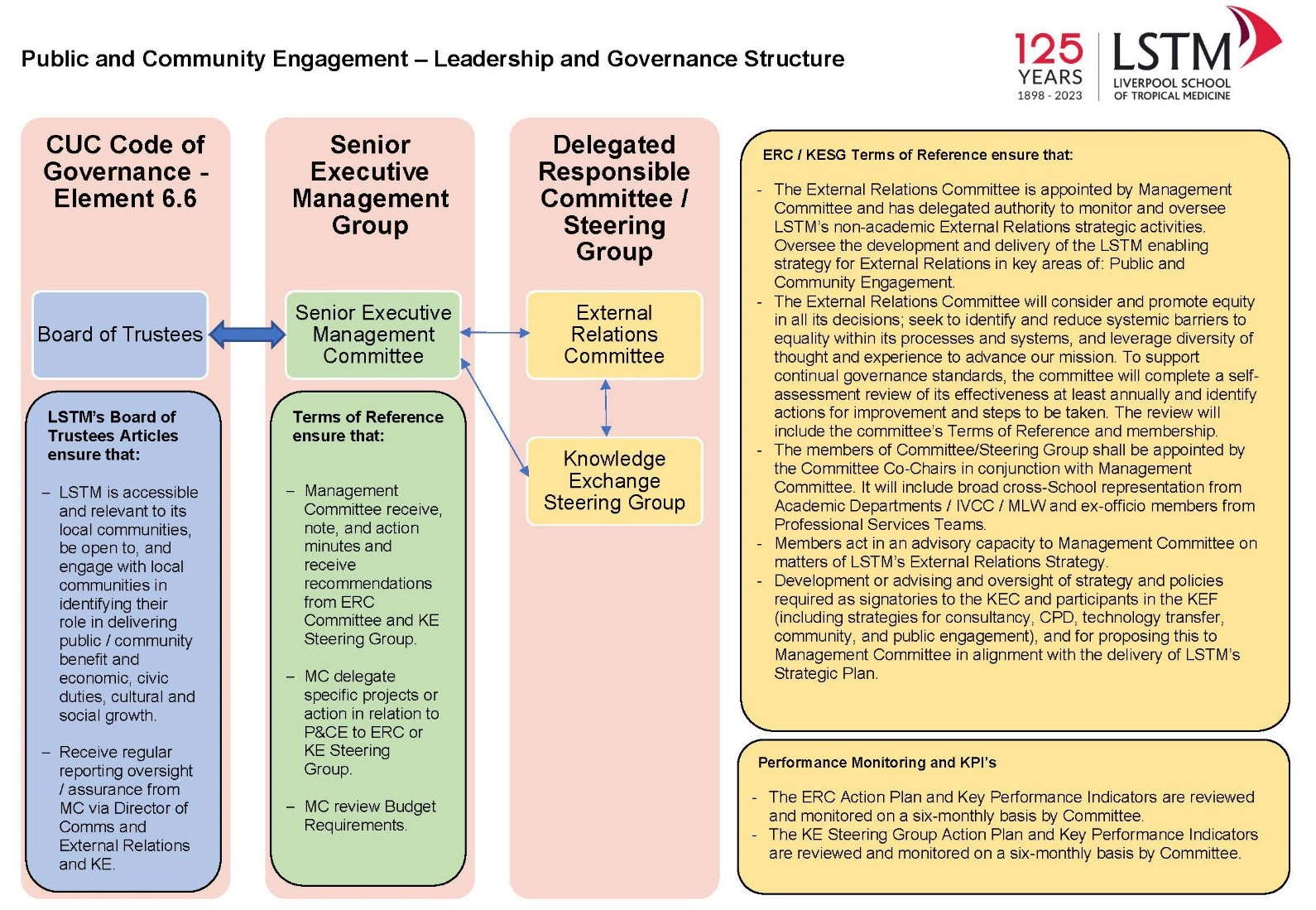
Figure 1 - LSTM P&CE Leadership and Governance Structure
LSTM’s External Relations Committee and KE Steering Group oversee the development and delivery of the strategic objectives related to P&CE, which is set out in their respective terms of reference. These priorities include:
Engage and consult with the wider public and community on LSTM’s world-class research activity and impact, to inspire and inform them both nationally and internationally.
Have strategic oversight for plans and activities to develop, manage and foster strategic relationships with LSTM’s key stakeholders, community groups and their needs at an institutional level.
Oversee the initial, and ongoing, categorisation and prioritisation of LSTM’s public and community relationships.
Appoint specific stakeholder champions for high-value community groups.
Ongoing development and communication of a clear institutional P&CE strategy.
Receives regular reports regarding operational progress towards the External Relations (and P&CE) strategies.
Receive regular updates/reports from the Education and Research Committees concerning their external public and partner activities to ensure alignment and co-ordination of operational plans, where appropriate.
Oversee the External Relations/reputational elements and ensure appropriate mitigations are in place.
Recognise and reward the achievements of staff and students who perform high quality P&CE Knowledge Exchange and Innovation activity.
Promote equity in all its decisions; seek to identify and reduce systemic barriers to equality within its processes and systems, and leverage diversity of thought and experience to advance LSTM’s mission.
LSTM delivers its strategic approach through multiple channels, captured and summarised within its own website P&CE, external and internal strategic documents, and activity related programmes to delivering our shared objectives. Working with people within local communities, the global research community and other UK and international partners is core to our work and critical to how we operate in the future. We remain a trusted partner for Governments, public-, private- and third-sector organisations, charitable foundations and research bodies, and this is essential to expand our influence in setting the Global Health agenda.
Aspect 2: Support
LSTM recognises the benefits and value of P&CE and its role to play in supporting our research, teaching and other activities and we understand that we cannot be successful in our research or other activities without engaging with key audiences. It allows us to achieve our mission, maximise impact and put our institutional values into practice. LSTM has undertaken significant activity to further align its strategic priorities, staff/student support and advice.
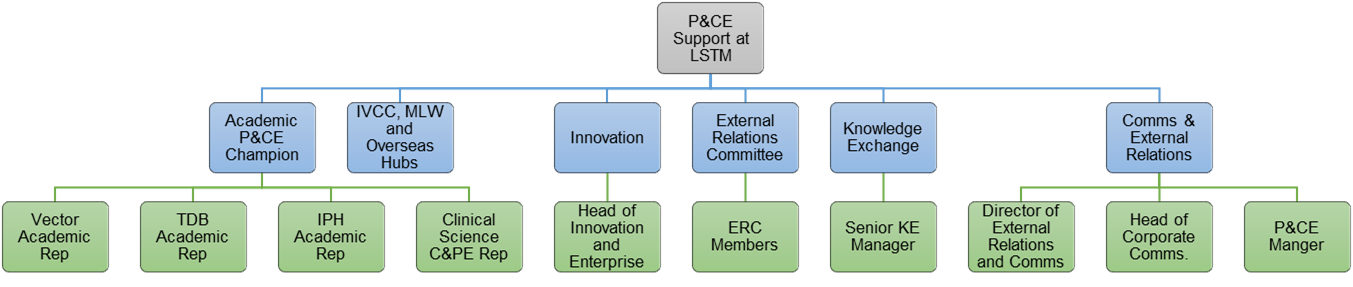
Figure 2 - An Organogram highlighting the key support roles within LSTM.
Figure 2 illustrates the complex supportive arrangements that now exist within LSTM to respond to the needs of effective P&CE. Internal P&CE stakeholders include:
P&CE Academic Champions who lead a community of practice.
Four faculty P&CE leads for faculty and strategy implementation.
LSTM-iiCON representative, bringing together staff, students, industry, the public sector and academia.
External Relations Committee members from Education, Academia, and Knowledge Exchange initiatives.
Global P&CE practice links, including links to IVCC, WTC, MLW and our Kenyan KEMRI programme.
3 FTE support - The Director of Communications provides Senior Executive leadership for ERC as co-chair. Our Head of Corporate Communications and P&CE Manager are critical for operational activity.
LSTM promote equitable treatment and engagement in our activities, value diversity and encourage diverse views. CPE strengthens our commitment to diversity and inclusivity by actively seeking a range of views and building these into our plans and activities. This engagement model provides oversight of P&CE activity and where internal capacity is supplemented, the P&CE team together with LSTM’s ED&I Manager steers projects ensuring consistency.
Our institutional work with students is essential for the success of our P&CE strategy. There is strong evidence of activity developing student P&CE awareness and experience through our ongoing “All About STEM” programme. LSTM develops students as P&CE advocates and now has over 40 STEM ambassadors who act as inspiring role models for young people of all backgrounds.
Capacity strengthening of P&CE at LSTM over the last three years continues to be successful and P&CE champions support projects through peer engagement activity. LSTM’s Wellcome Trust’s Inst. Strategic Support Fund (SSF3) and ITPA funded awards continue to support the core objectives and financial requirements in relation to P&CE. This ensures that LSTM can deliver P&CE workshop with organisations such as the NCCPE to our students, Early Career Researchers and PI’s. Ongoing embedding of the Vitae RDF is planned to further professionalise the access to structured training activities, but engagement continues to be strong across LSTM and between the P&CE Manager and the student body, early career researchers and the wider academic community.
As part of LSTM’s review of recognition and reward it has:
Amended the promotion criteria to include evidence from applicants of contribution to knowledge exchange (including P&CE activities)
Included P&CE as a routine element of job descriptions, workload planning and other related systems.
Launched the LSTM Staff Awards, recognising and rewarding outstanding achievements from staff across all levels, roles, locations and departments, including awards for a Communication and Engagement Champion, Citizenship Award, Collaboration Award, Equity Champion and Mentorship Award.
Aspect 3: Activity
Our regional and global partnerships, connections and networks are a defining feature of LSTM. These collaborative and engaging relationships, built over many years, between academic and development partners, multilaterals, businesses, governments, civic society, public and communities provide strong, inclusive partnerships to find solutions for urgent health challenges and create the dynamic P&CE landscape for us to work within.
LSTM’s objective is to create a diverse programme of P&CE activity to stimulate mutual understanding and foster trust within UK/Global communities about Research. LSTM’s website, YouTube, and Twitter provide access points to engage with LSTM. This strategy was particularly successful during the Covid-19 pandemic.
P&CE activity is structured to meet the outcomes of research and projects are engaged with discussion on how and when this is best undertaken. Parallel activity is driven by strategic partnerships such as Everton in the Community, community led or co-created such as the Liverpool Vaccine Equity programme, student produced such as TEDxLSTM and involve a network of engagement through activities at festivals, local network, community of interest spaces, museums, schools), or by enabling LSTM staff/student collaboration with specialists from different organisations. Seminar and lecture engagement is prominent from staff and students as is Student Blogging providing a peer platform for experience driven communication by PGT/R students.
P&CE Activity within Research Programmes
LSTM’s longest research engagement collaboration, some 70 years with ex-Far East Prisoners of War (FEPOW) led to world-class research into tropical medicine and the effects of captivity. Captive artists was linked to a unique exhibition, “Secret Art of Survival: creativity and ingenuity of British Far East Prisoners of war 1942:1945” which ran at Liverpool Victoria Gallery & Museum.
In September 2022, after 6 years, the Knowledge, Evidence and Learning for Development (K4D) programme in which LSTM partnered, concluded. The K4D programme supported the systematic use of learning and evidence to improve the impact of development and diplomatic policy and programmes. K4D has produced over 1200 rapid evidence reviews, 55 reports on emerging issues, delivered 45 learning journeys, created more than 300 knowledge products and seen over 675K downloads.
During the first wave of Coronavirus in April 2020, LSTM Clinicians wrote of their experiences as frontline healthcare workers in Liverpool. Liverpool was one of the first areas in the UK to be placed under “very high” alert tier 3 in November 2020 and numbers of admissions for Covid-19 were higher than the first wave and intensive care units were close to capacity. Dr Wingfield and Professor Taegtmeyer wrote again of frontline care workers putting their lives and those of their families at risk and how they faced daily staff shortages.
“Galkoff's and the Secret Life of Pembroke Place” was a £2,000,000 heritage lottery funded project in partnership with the National Museums Liverpool to preserve, record and display the heritage of two important sites on the LSTM campus, 558 participants ranging from 3 to 93 years engaged with the project, including over 125 members of Liverpool’s Jewish community. The exhibition can be viewed in the Museum of Liverpool.
Aspect 4: Enhancing practice
Framework of Evaluation
LSTM has long recognised the importance of effective processes that support improved data capture, collection, analysis (monitoring) and evaluation reporting and the value they can bring to the quality and impact review of Knowledge Exchange and P&CE activity. There is good evidence that LSTM have been delivering successful outcomes to significantly funded programme activity successfully for decades (annual portfolio of >£320M) and good practice in meeting programme monitoring and evaluation standards with broad activity and output evaluation models. Our Monitoring and Evaluation Technical Assistance and Research Group (METRe) at LSTM was established in 2010 for this purpose. However, LSTM lacks an integrated system that can be deployed across its environment to capture the large evidence base while minimising reporting burden for staff or duplication of effort. LSTM have identified this to be an essential aspect of building P&CE practice capability and since the last iteration of the KEF, have now launched a series of strategic interventions to address and work to improve this aspect of its practice, leading with:
Improved Data Collection - An ‘activity dashboard’ was launched in 20/21 and includes a range of KE practice evidence (including Meetings/Workshops with beneficiaries, participatory research, co-production, ‘in person’ engagement and social media engagement to inform P&CE). This is used by staff to collate and record P&CE activity for use in promotion criteria and reward recognition assessment.
Review of Programme Data/Evaluation Models - a collection and analysis project of KE data (including P&CE activities). The new Current Research Information System (CRIS) system project will provide a location for recording data, to be monitored in relation to outcomes and evaluation purposes.
Utilising standards of collection and reporting already established within Researchfish M&E processes, LSTM is collecting information now on the outcomes and the impact of its research. Researchers add their outputs and outcomes throughout the year – including all P&CE activities – and submit during funder collection periods. Currently, over 40% of LSTM research grants are required to report through ResearchFish; aligning data reporting against this platform will minimise duplication and additional burden on staff.
Evidence of P&CE impact, which goes beyond the dissemination of research activity and the numbers of people engaged, is reviewed by the P&CE Manager at LSTM.
Strategic, Research Outcomes and KPI’s
Where KPI’s on LSTM’s P&CE impact evaluation are available, such as through Researchfish platform, there is strong evidence to show that at a project level outcomes, outputs, and impacts are demonstrating engagement, sentiment feedback, and interaction. Records of nearly 800 outputs and 453 unique engagement activities in the 2019 – 2022 reporting period illustrate where LSTM record this evidence and the impact of its evaluation. This is leading LSTM research teams to:
better understand public attitudes relating to an emerging area of research,
better understand the public as potential end users or consumers of research,
stimulating researchers to reflect on the social implications of their research,
promoting stronger stakeholder engagement with NGOs and civil society and
contributing to wider public debate about emerging research and technologies.
Aspect 5: Building on success
LSTM’s charitable purpose is for public benefit and it aims to fulfil these responsibilities through having due regard for the Charity Commission’s Public Benefit guidance, by publishing its Annual Report to communicate this and demonstrating the benefits that LSTM brings from public funding. The primary benefits are, the advancement of education and research, and advancing health and saving lives. The AGM brings together staff, Board of Trustees, partners, civic representatives and the wider public in the celebration of LSTMs achievements and provides insight into ongoing engagement within the region, national and global communities.
Having a defined governance and leadership structure (see Figure 3) across P&CE has significantly improved the culture of continuous improvement at LSTM. The Senior Executive can clearly delegate responsibility to Committees, giving autonomy to the Committee and Steering Group with oversight of the strategic goals of the P&CE agenda at LSTM.
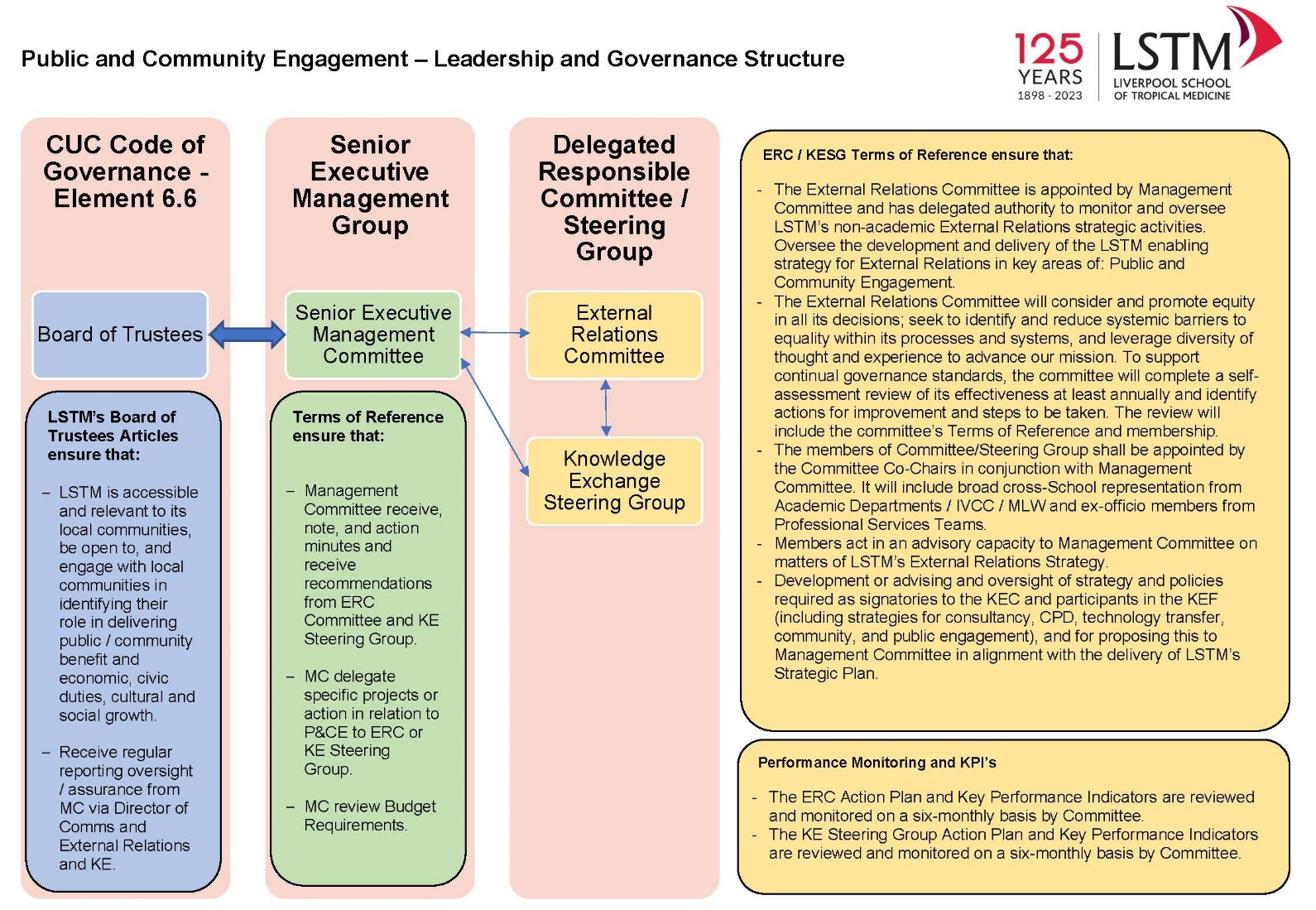
Figure 3 – LSTM Key governance and accountability mechanisms.
There remain good, embedded examples were responding to the needs of our communities, e.g. during covid-19, has improved the impact of science communication to the broader community. Nationally, feedback from major media outlets has driven the “Follow the Science” narrative, and the public have continued to turn to LSTM for reassurance but Health Systems in general have been significantly set back on a UK-wide and global basis.
This has enabled LSTM to use the platform to the public through media and industry to promote our work in diagnostics, drug discovery and Human Challenge intervention models, which will be so important for unifying global intelligence. LSTM and its partners have collaborated on The Pandemic Institute in Liverpool, a global institute to accelerate the response to current and future pandemics, unifying intelligence and generating scientific excellence with societal impact for all.
LSTM’s internal mechanism of P&CE strategy review against its upcoming 2023-28 Strategic Plan refresh will shortly be underway as will the revised implementation plan embedded within the overall KE Concordat response.
P&CE self-assessment against the NCCPE EDGE tool has been completed alongside the narratives for KEF3 submission. There is good evidence of dialogue, engagement and co-production of emerging P&CE strategy updates, collated within the External Relations committee and KE Steering group. Staff conference agendas have also improved engagement, but it recognises that capacity issues have only recently been addressed within LSTM. LSTM also recognises that there is desire to gather further evidence from staff and community surveys to support the objectives of the P&CE strategy and to enhance and deliver its implementation with a wider team.
LSTM have created an environment where creativity and innovation flourish, where staff and students are immersed in the culture of P&CE early on in their careers and, consequently, increasing staff and student numbers participating in P&CE. This includes fostering the importance of P&CE within LSTM and providing mentorship for P&CE activities creating a supportive and stimulating environment. As we work towards the signing of the NCCPE’s Manifesto for P&CE and registering for the NCCPE’s Engage Watermark LSTM will continue to build on success.
Note You are currently viewing the latest version of this narrative statement. View the previous version as published in previous iterations of the KEF (KEF1 and KEF2)